The city of Milwaukee will require new commercial developments to include a 15-foot "street frontage zone" to encourage walking.


"As more and more apartment buildings take hold across Milwaukee, the Department of City Development (DCD) is updating the zoning code to clarify how the first floor should be designed," reports Jeramey Jannene.
"A new policy will require that street-activating uses, be it [sic] an apartment lobby, fitness center, community room or commercial space, be at least 15 feet deep," adds Jannene.
The changes to the city's frontage requirements will impact most developments on commercial corridors, depending on the zoning designation of the development.
"The Zoning, Neighborhoods & Development Committee unanimously approved the change as part of an omnibus update to the city’s zoning code," according to Jannene. The article cites a 2015 article by Laura Bliss in making the case for the walkability effects of first-floor design requirements.
Read the full story: City Adjusts Zoning for First Floor Design

Zoning Code Update Makes the Nightly News in Cleveland
The potential of form-based codes to re-legalize the historic fabric of Cleveland is explained for the nightly news audience.
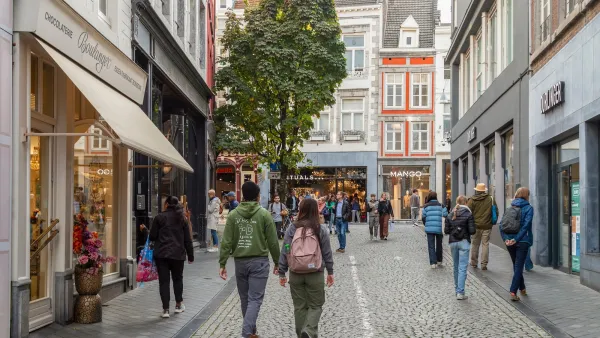
Planning for Love, Part 3: Enhancing human connection through walkability
In the third and final installment of this series, author Hannah Kosoff examines what her research findings say about modern dating and urban form.

Planning for Love, Part 2: What happens to dating in a car-centric world?
A survey of over 150 adults about their dating lives reveals stark differences based on their neighborhood's walkability.

Planetizen Federal Action Tracker
A weekly monitor of how Trump’s orders and actions are impacting planners and planning in America.

California plans to bury El Niño’s downpour
If the state plays its cards right, it may be able to store a billion acre-feet of El Niño’s water in aquifers.

Desperate measures: Advocates weigh draining Lake Powell to fill Colorado River
Draining the reservoir could reduce evaporation losses by a couple hundred thousand acre-feet.

Mamdani’s pied-à-terre tax survives legal challenge
A panel of judges found that the plaintiffs failed to demonstrate injury as a result of New York City's implementation of the tax.

Eastern Nebraska is running out of electricity
Data centers and electrification are straining eastern Nebraska’s grid, throttling economic development.

Seattle passes record-breaking transit services expansion
Proposition 1 will double the city’s transit tax to add 95,000 more bus trips and preserve 180,000 bus trips annually.

FREE Course: Walkable City 1: Why Walkability?
After describing his path towards focusing on walkability as the essence of good planning, Jeff Speck marches through his five principal reasons for making more walkable places.
Reinventing Malls: Planning Alchemy—Turning Gray Fields Into Gold
The course focuses on the opportunities and imperatives that shape reinvention of mall sites.

City of Rosemead
Rutgers University, Edward J. Bloustein School of Planning and Public Policy
One Hundred Miles
University of Michigan School for Environment and Sustainability (SEAS)
Hunter College, City University of New York (CUNY)
The Architects Foundation
City of Cambridge
Montrose County
The Pocatello Development Authority