The city has proposed a "safe lot" for homeless residents living out of their cars, but the cost could run above $1,000 a person.


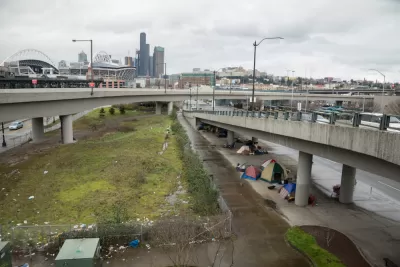
Seattle Times Columnist Danny Westneat weighs in a proposed "safe lot" in Seattle, "where homeless folks living in their cars can park off the street for the night."
The "safe lot" idea has been germinating in Seattle for a long time already, but now that the official proposal is here, it's mostly an example of government overspending, according to Westneat.
"Only this being Seattle, it’s projected to cost the city $382,000. That’s for overnight parking in one lot in the U District, holding 20 to 30 cars. Which means each spot would cost $1,000 to $1,500 a month – in the ballpark of what it costs to rent a studio apartment."
Westneat traces the origin of the idea, back to his own involvement in a story on the subject 15 years ago, and notes the other cities around the country that have implemented a similar program. (On that latter point, San Francisco is the most recent city to propose such a lot.)
"We don’t even have to travel to California to learn how," writes Westneat to explain that it should be much cheaper and easier to implement this idea. "Lake Washington United Methodist Church in Kirkland has been hosting up to 55 car-campers per night in its church parking lot since 2011 – which makes it one of the largest providers to the vehicular homeless on the West Coast."
For an indication of why the difference in cost arises, Westneat notes that the church uses volunteer labor, while the city will have to staff 24-hour security to appease neighbors.
FULL STORY: Parking spots for the homeless in Seattle, finally. But at a thousand bucks a month?


A 'Safe' Parking Lot for the Homeless Proposed in San Francisco
If approved, a new facility in San Francisco will allow homeless people living in RVs and vans a safe place to park. Access to support services will also be available at the site.
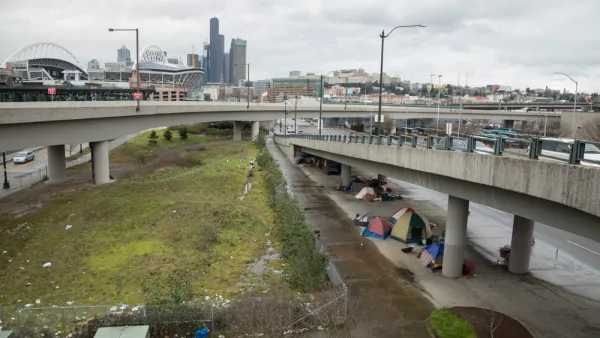
Seattle Regional Homelessness Authority Plan Moves Forward, but Faces Controversy
A proposal for a regional entity to oversee homeless services in King County is running into jurisdictional conflicts.
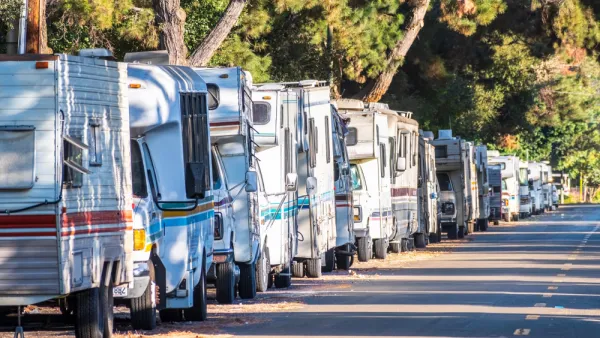
First Safe Parking Lot for the Homeless Opens in San Francisco
With more than 1,700 people living out of vehicles on the streets of San Francisco, the city is in the process of opening a new safe parking facility that woll allow 30 vehicles to park for up to 90 days.

Planetizen Federal Action Tracker
A weekly monitor of how Trump’s orders and actions are impacting planners and planning in America.

The state-sanctioned urbicide of Austin
People don’t kill cities. Freeways do.

US to reduce Colorado River water deliveries to Mexico
A new Colorado Treaty amendment reduces Mexico’s Colorado River water allocation by 250,000 acre feet.

Baltimore to break ground on $50 million Transit Priority Project
The project will bring faster bus trips, safer streets and better bike connections to Baltimore.

Airbnb launches $250 million 'last-dollar financing' housing accelerator, makes first investment in Austin
The company will put $6.4 million towards affordable housing development in Texas’ capital.

Guerilla urbanists are building DIY bus stop benches in Chicago
A before-and-after of one of the bus stops with a new bench. The new benches are not officially sanctioned or permitted, but the residents who placed them hope they will be the start of a network of DIY benches across the city.

FREE Course: Walkable City 1: Why Walkability?
After describing his path towards focusing on walkability as the essence of good planning, Jeff Speck marches through his five principal reasons for making more walkable places.
Reinventing Malls: Planning Alchemy—Turning Gray Fields Into Gold
The course focuses on the opportunities and imperatives that shape reinvention of mall sites.

Eagle County Government
Harvard University Graduate School of Design
Nashville Planning Department
The Architects Foundation
University of Cincinnati Online
The Pocatello Development Authority
The Urban Renewal Agency of the City of Pocatello
Journal of the American Planning Association