The city's monorail has operated separately from other systems in the region, but now riders can pay fares using the ORCA cards that work for other transit systems in the region.


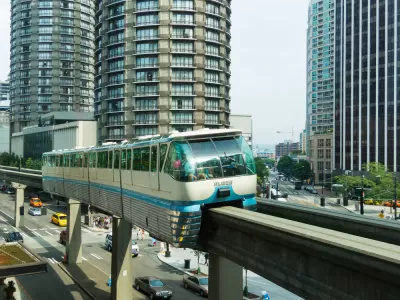
Ryan Packer reports that ORCA cards, the Seattle-area transit smart card system, can now be used on the Seattle Monorail. "The monorail has long operated virtually on its own outside of the regular transit system, relegating it to more of a tool for tourism than a practical choice for transit riders to and from Uptown and Downtown."
While the monorail fares have increased, riders will now be able to transfer to buses and light rail on other transit systems without paying separate fares. An agreement between the Seattle City Council and the operator of the Seattle Monorail will freeze fares until 2022.
The agreement also requires the operator to make capital investments to improve stations, including better station and platform access and relocation of gates and ticket machines. "Collectively, the improvements could essentially double capacity of the monorail to 6,000 riders per hour per direction," notes Packer.
FULL STORY: Monorail Now Functionally Part of Seattle’s Public Transit System


‘The Power of the Kraken:’ Seattle Monorail Ridership Spikes for Hockey Games
Seattle’s new professional hockey team is drawing legions of enthusiastic fans. Around a quarter of them are taking public transit, such as the city’s often-maligned monorail, to games.
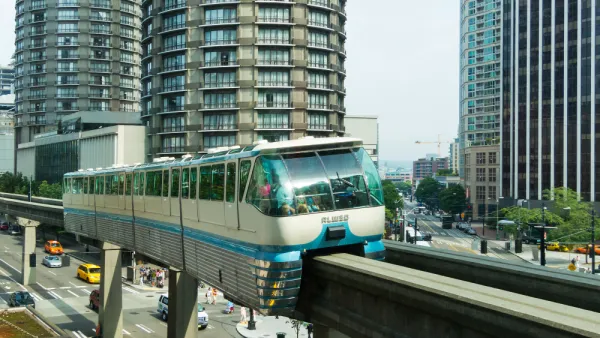
Seattle Monorail Celebrates 60 Years
"There's nothing on earth like a genuine, bona fide, electrified, six-car monorail."
East Link Light Rail Plans Provoke Controversy in Seattle Suburb
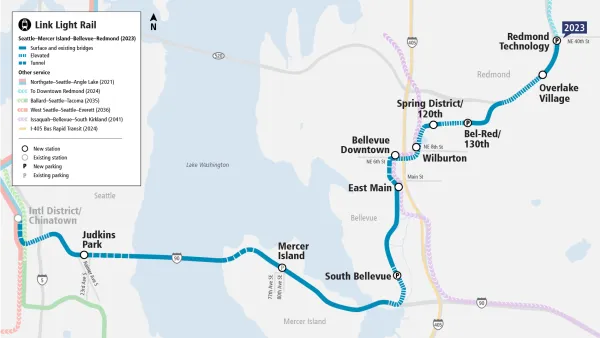
A proposal to link local and regional buses with the East Link light rail expansion in Mercer Island, already under construction, threatens to boil over into the courtroom.

Planetizen Federal Action Tracker
A weekly monitor of how Trump’s orders and actions are impacting planners and planning in America.

The state-sanctioned urbicide of Austin
People don’t kill cities. Freeways do.

US to reduce Colorado River water deliveries to Mexico
A new Colorado Treaty amendment reduces Mexico’s Colorado River water allocation by 250,000 acre feet.

5 New England states march closer to 800 megawatt wind energy project
Securing federal approval for the project may be complicated under the Trump administration, which has historically been hostile towards domestic wind power.

Baltimore to break ground on $50 million Transit Priority Project
The project will bring faster bus trips, safer streets and better bike connections to Baltimore.

Airbnb launches $250 million 'last-dollar financing' housing accelerator, makes first investment in Austin
The company will put $6.4 million towards affordable housing development in Texas’ capital.

FREE Course: Walkable City 1: Why Walkability?
After describing his path towards focusing on walkability as the essence of good planning, Jeff Speck marches through his five principal reasons for making more walkable places.
Reinventing Malls: Planning Alchemy—Turning Gray Fields Into Gold
The course focuses on the opportunities and imperatives that shape reinvention of mall sites.

Eagle County Government
Harvard University Graduate School of Design
Nashville Planning Department
The Architects Foundation
University of Cincinnati Online
The Pocatello Development Authority
The Urban Renewal Agency of the City of Pocatello
Journal of the American Planning Association