A $6 million project in Asheville, North Carolina will include the purchase of new hybrid and diesel buses and an update of the city’s transit center.


The Asheville City Council has approved a $6 million bus improvement project. "The purchase of seven new buses, the overhaul of the Asheville Redefines Transit Station and the amending of a management contract come after City Council named transit a top priority in early 2019," Joel Burgess reports for the Asheville Citizen Times.
This project represents a scaled-down version of what the city had laid out in a master plan, which called for a ten million dollar upgrade to bus services. The difference, in part, is a decision to buy hybrid and diesel buses rather than electric as the plan had initially called for. The council elected to move away from electric buses when it was decided that the city would be better served by shorter 30-foot buses than by the 50-foot buses made by Proterra, Asheville's previous supplier (thought 30-foot electric buses are available from other suppliers).
FULL STORY: Asheville moving ahead with $6M in bus system improvements


Range Anxiety: Electric Buses Still Aren't Ready to Scale
Money intended for electric buses in Indianapolis will instead be spent on diesel buses.
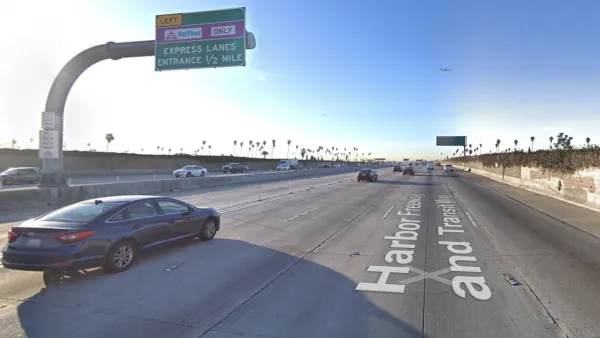
Los Angeles Express Lane Revenue to Fund Electric Double-Decker Buses
Solo drivers who paid a variable toll to use the 10 and 110 freeways in Los Angeles provided $1.4 million to assist in the purchase of the nation's first electric double-decker buses, to be operated by Foothill Transit
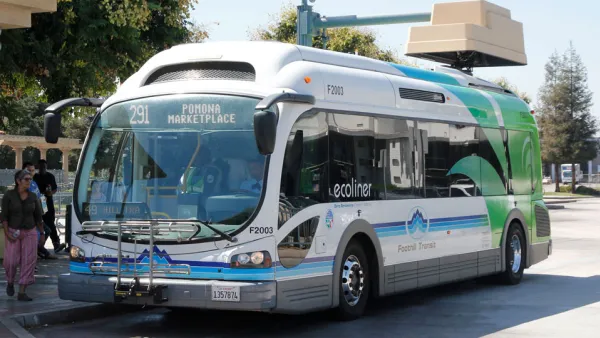
Electric Transit Becoming the New Norm in California
Electrification is at a tipping point in California, expanding into the heavy-duty sector with the buy-in of transit agencies across the state.

Planetizen Federal Action Tracker
A weekly monitor of how Trump’s orders and actions are impacting planners and planning in America.

The state-sanctioned urbicide of Austin
People don’t kill cities. Freeways do.

US to reduce Colorado River water deliveries to Mexico
A new Colorado Treaty amendment reduces Mexico’s Colorado River water allocation by 250,000 acre feet.

5 New England states march closer to 800 megawatt wind energy project
Securing federal approval for the project may be complicated under the Trump administration, which has historically been hostile towards domestic wind power.

Baltimore to break ground on $50 million Transit Priority Project
The project will bring faster bus trips, safer streets and better bike connections to Baltimore.

Airbnb launches $250 million 'last-dollar financing' housing accelerator, makes first investment in Austin
The company will put $6.4 million towards affordable housing development in Texas’ capital.

FREE Course: Walkable City 1: Why Walkability?
After describing his path towards focusing on walkability as the essence of good planning, Jeff Speck marches through his five principal reasons for making more walkable places.
Reinventing Malls: Planning Alchemy—Turning Gray Fields Into Gold
The course focuses on the opportunities and imperatives that shape reinvention of mall sites.


Eagle County Government
Harvard University Graduate School of Design
Nashville Planning Department
The Architects Foundation
University of Cincinnati Online
The Pocatello Development Authority
The Urban Renewal Agency of the City of Pocatello
Journal of the American Planning Association