The city of Seattle took advantage of a new state law to donate three underused parcels to affordable housing developers.


"Seattle is transferring three parcels of surplus city land to nonprofit developers at no cost, becoming the first city to take advantage of a state program [pdf] to make underutilized public land available for affordable housing development," reports Katherine Kashimova.
Nonprofit developer Homestead Community Land Trust will develop 16 townhomes on a parcel in Judkins Park, including ten affordable townhomes.
"The transfer of two other pieces of land owned by City Light – one in Phinney Ridge and another in Loyal Heights – is expected to be approved by the City Council in the coming days. Those will go to Homestead and to Habitat for Humanity to build 27 affordable condominiums and townhomes for qualifying low- and middle-income families," reports Kashimova.
The city most recently completed a land inventory in March 2019 [pdf], identifying "dozens of large pieces of underused or vacant city-owned land potentially suitable for housing development," so there could be more such land deals and affordable housing development plans in the future.
FULL STORY: Seattle donates three underused parcels to develop affordable housing

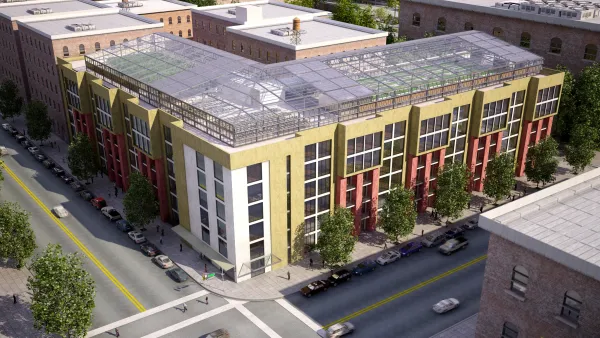
Seattle to Use Surplus Public Land for Affordable Housing
New municipal and state laws have made it possible for Seattle to sell excess land to affordable housing developers at below-market rates, or even to give it away.
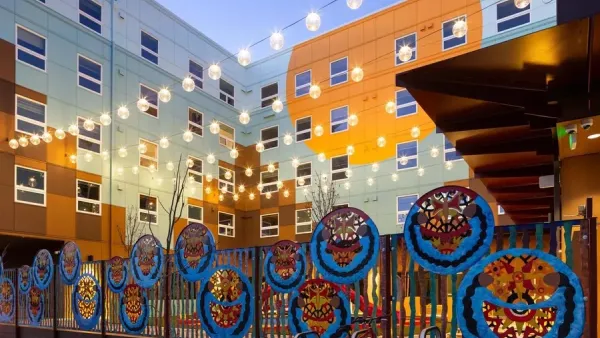
Seattle church complex includes 87 affordable homes
The Columbia City Church of Hope deeded part of its property to an affordable housing developer after limiting in-person congregation during the pandemic.
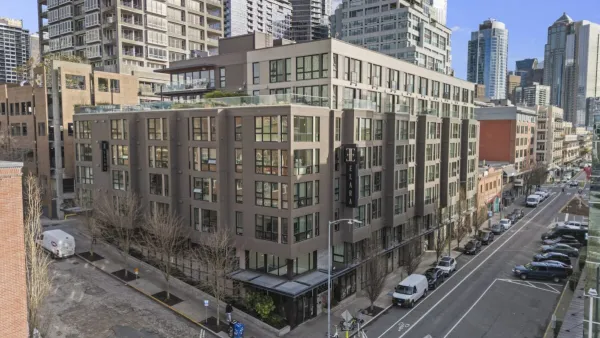
Seattle social housing agency can now issue bonds
The new Seattle Social Housing Developer funds affordable housing through a tax on the city's highest-paying companies.

Planetizen Federal Action Tracker
A weekly monitor of how Trump’s orders and actions are impacting planners and planning in America.

The state-sanctioned urbicide of Austin
People don’t kill cities. Freeways do.

US to reduce Colorado River water deliveries to Mexico
A new Colorado Treaty amendment reduces Mexico’s Colorado River water allocation by 250,000 acre feet.

5 New England states march closer to 800 megawatt wind energy project
Securing federal approval for the project may be complicated under the Trump administration, which has historically been hostile towards domestic wind power.

Baltimore to break ground on $50 million Transit Priority Project
The project will bring faster bus trips, safer streets and better bike connections to Baltimore.

Airbnb launches $250 million 'last-dollar financing' housing accelerator, makes first investment in Austin
The company will put $6.4 million towards affordable housing development in Texas’ capital.

FREE Course: Walkable City 1: Why Walkability?
After describing his path towards focusing on walkability as the essence of good planning, Jeff Speck marches through his five principal reasons for making more walkable places.
Reinventing Malls: Planning Alchemy—Turning Gray Fields Into Gold
The course focuses on the opportunities and imperatives that shape reinvention of mall sites.

Eagle County Government
Harvard University Graduate School of Design
Nashville Planning Department
The Architects Foundation
University of Cincinnati Online
The Pocatello Development Authority
The Urban Renewal Agency of the City of Pocatello
Journal of the American Planning Association