Columbus achieved something no other U.S. city has managed: moving out of non-compliance with federal air quality standards for ground-level ozone.


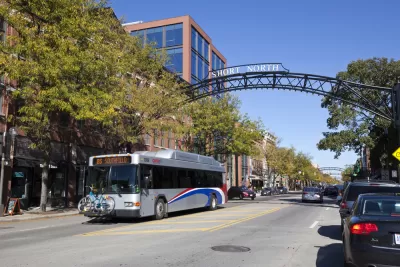
Jason Plautz reports: "The U.S. Environmental Protection Agency (EPA) declared that Columbus, OH is the first city to move out of non-compliance with federal air quality standards for ground-level ozone, after three years of monitoring data showed the air has finally reached safe levels."
The city has attained 2015 standards, and as a result, "will no longer be subject to certain permitting restrictions and other economic penalties to reduce air pollution." The city credits increased public transit use and investments in clean energy for their success in improving air quality.
Other cities are taking steps backwards, however. "[The] EPA has already proposed downgrading Denver, CO to a 'serious' non-attainment status for the 2008 ozone standard, and is set to propose hat areas around Chicago, Dallas-Fort Worth, Houston, San Diego, New York City, Connecticut and Nevada also be downgraded for violating that standard," according to Plautz.

San Antonio Ramps Up Air Quality Efforts After Poor Showing
San Antonio's soon-to-be-adopted air quality plan will focus on transportation to reduce the city's air pollution.

Appeals Court: California Emissions Standards Upheld
The U.S. Environmental Protection Agency and the California Air Resources Board, the nation's two most powerful environmental regulatory agencies, won an important round in federal court last week. But the emissions standards battle may not be over.

Air Quality Slips After Decades of Progress
Southern California has long been leader in air quality management, but lately the news has not been good.

The state-sanctioned urbicide of Austin
People don’t kill cities. Freeways do.

US to reduce Colorado River water deliveries to Mexico
A new Colorado Treaty amendment reduces Mexico’s Colorado River water allocation by 250,000 acre feet.

New Jersey’s second-largest city bans standalone data centers
Jersey City will continue to allow co-location facilities, such as those meant for research institutions that store their own data.

Amtrak not solely to blame for New Jersey commuter rail's unreliability, report finds
A new study from the Garden State Initiative found that NJ Transit’s budget grew 20% across a 4 year period, but reliability declined significantly over the same period.

EPA erases limits on planet-warming pollution from power plants
Under Monday’s plan, power plants would still have some limits on how much mercury, arsenic and other contaminants they can emit.

Phoenix announces new on-demand transit service, more frequent RAPID buses
Both new services will launch in October, and are part of Phoenix's Project Effective Access Solutions for Easing Congestion.

FREE Course: Walkable City 1: Why Walkability?
After describing his path towards focusing on walkability as the essence of good planning, Jeff Speck marches through his five principal reasons for making more walkable places.
Reinventing Malls: Planning Alchemy—Turning Gray Fields Into Gold
The course focuses on the opportunities and imperatives that shape reinvention of mall sites.

Eagle County Government
Harvard University Graduate School of Design
Nashville Planning Department
The Architects Foundation
University of Cincinnati Online
The Pocatello Development Authority
The Urban Renewal Agency of the City of Pocatello
Journal of the American Planning Association