A recently published mapping project is the first step toward California leveraging some of it surplus land for the purposes of developing affordable housing.


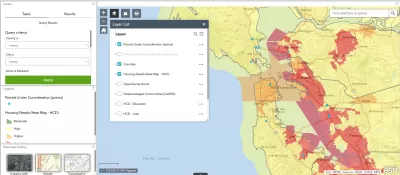
California's Department of General Services (DGS) and Department of Housing and Community Development (HCD) have created a map of surplus state-owned properties with the potential for development as affordable housing development.
The map is the result of an executive order by California Governor Gavin Newsom, issued in January 2019, ordering the creation of the map.
"State properties that were under-utilized or excess to need were identified and then screened to determine which sites would be potentially suitable for affordable housing development," according to a press release announcing the new map.
"The resulting GIS-enabled map is searchable, fully interactive, showing each site identified in the inventory, with a 'heat map' overlay indicating where housing is most needed in the state."
The press release also promises that DGC and HCD will begin in September 2019 to issue requests for proposals for development of some of the sites.
Read the full story: Department of General Services, Department of Housing and Community Development Announce Interactive Map Identifying State-Owned

California Governor's Budget Supports Infill Development
Governor Newsom's new budget proposes incentives for developers to build housing in existing urban areas away from fire-prone zones to reduce fire risk and add to the state's insufficient housing stock.

Sports Stadiums as a Battleground for Affordable Housing
Thanks to new enforcement powers, California's Department of Housing and Community Development can now cite cities for failing to meet affordable housing requirements in stadium redevelopment projects.

State Audit Faults California's Affordable Housing Development Processes
The California State Auditor's office is proposing an overhaul of the state's approach to affordable housing development, citing the cost burdens of the housing market as proof of the necessity for change.

Planetizen Federal Action Tracker
A weekly monitor of how Trump’s orders and actions are impacting planners and planning in America.

California plans to bury El Niño’s downpour
If the state plays its cards right, it may be able to store a billion acre-feet of El Niño’s water in aquifers.

Desperate measures: Advocates weigh draining Lake Powell to fill Colorado River
Draining the reservoir could reduce evaporation losses by a couple hundred thousand acre-feet.

Mamdani’s pied-à-terre tax survives legal challenge
A panel of judges found that the plaintiffs failed to demonstrate injury as a result of New York City's implementation of the tax.

Eastern Nebraska is running out of electricity
Data centers and electrification are straining eastern Nebraska’s grid, throttling economic development.

Seattle passes record-breaking transit services expansion
Proposition 1 will double the city’s transit tax to add 95,000 more bus trips and preserve 180,000 bus trips annually.

FREE Course: Walkable City 1: Why Walkability?
After describing his path towards focusing on walkability as the essence of good planning, Jeff Speck marches through his five principal reasons for making more walkable places.
Reinventing Malls: Planning Alchemy—Turning Gray Fields Into Gold
The course focuses on the opportunities and imperatives that shape reinvention of mall sites.

City of Rosemead
Rutgers University, Edward J. Bloustein School of Planning and Public Policy
One Hundred Miles
University of Michigan School for Environment and Sustainability (SEAS)
Hunter College, City University of New York (CUNY)
The Architects Foundation
City of Cambridge
Montrose County
The Pocatello Development Authority