Julián Castro, Democratic candidate for president and former secretary of the U.S. Department of Housing and Urban Development, chose a side regarding the controversial rezoning proposal making its way through the Des Moines City Council.



Kim Norvell reports: "Julián Castro, a Democratic candidate for president, said cities like Des Moines should provide more opportunities for affordable housing when updating their zoning and building codes."
Advocates have been expressing concern about the potential for proposed changes to the city's 54-year-old zoning code to make housing more expensive to build in the city throughout the summer, as local news outlets have tracked the zoning changes.
Recently, however, national urbanism media has picked up on the talking points of housing advocates: Streetsblog USA call the proposed changes a "possibly racist" example of downzoning. CityLab also uses the word downzoning to describe the reformed zoning code and definitely implies that the zoning changes are specifically designed to keep growth in the city at bay. Capps also presents the thinking of Des Moines planners in suggesting the changes: the city wants to be able to compete with suburbs.
Into that now national context, Castro the presidential candidate emerges. "Castro, speaking Tuesday at an affordable housing town hall on the east side, said he was made aware of Des Moines' efforts earlier in the day. He met with city officials to discuss the plan," according to Norvell.
"Castro said he would reserve judgment until he reads it in its entirety. But, based on what he'd heard, Castro said he would encourage the city to be more flexible in its approach to allow for more affordable housing."
FULL STORY: Julián Castro: Cities like Des Moines should encourage more affordable housing, not less

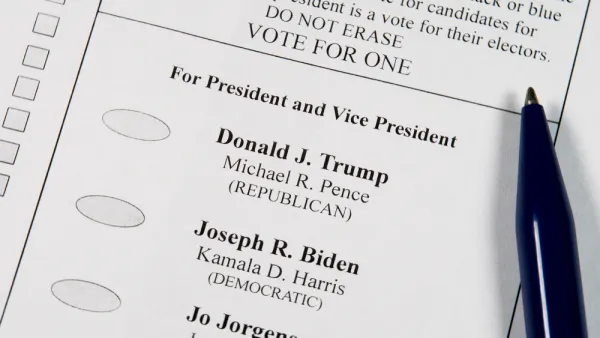
Potential Presidential Election Outcomes for U.S. Transportation Policy
Experts opine on the consequences of the presidential election for U.S. transportation policy.
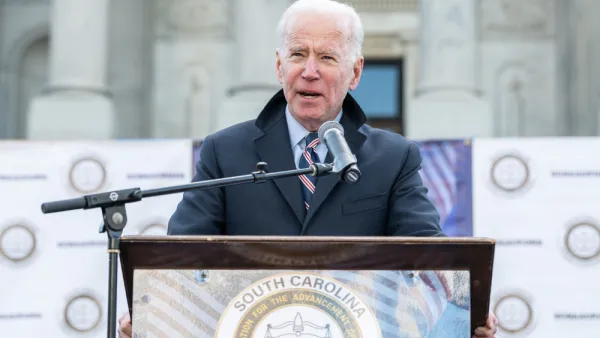
What Could a Joe Biden Presidency Accomplish on Affordable Housing?
Democratic presidential candidates made the housing crisis part of their platforms. What might a President Biden do to ease the shortage?

Satirizing Mayors Who Campaign for President During a Flood
The Onion took some shots at presidential hopeful and New York City Mayor Bill de Blasio after summer rain showers flooded streets and sent water cascading into the city's subway system.

The state-sanctioned urbicide of Austin
People don’t kill cities. Freeways do.

US to reduce Colorado River water deliveries to Mexico
A new Colorado Treaty amendment reduces Mexico’s Colorado River water allocation by 250,000 acre feet.

New Jersey’s second-largest city bans standalone data centers
Jersey City will continue to allow co-location facilities, such as those meant for research institutions that store their own data.

Amtrak not solely to blame for New Jersey commuter rail's unreliability, report finds
A new study from the Garden State Initiative found that NJ Transit’s budget grew 20% across a 4 year period, but reliability declined significantly over the same period.

EPA erases limits on planet-warming pollution from power plants
Under Monday’s plan, power plants would still have some limits on how much mercury, arsenic and other contaminants they can emit.

Phoenix announces new on-demand transit service, more frequent RAPID buses
Both new services will launch in October, and are part of Phoenix's Project Effective Access Solutions for Easing Congestion.

FREE Course: Walkable City 1: Why Walkability?
After describing his path towards focusing on walkability as the essence of good planning, Jeff Speck marches through his five principal reasons for making more walkable places.
Reinventing Malls: Planning Alchemy—Turning Gray Fields Into Gold
The course focuses on the opportunities and imperatives that shape reinvention of mall sites.

Eagle County Government
Harvard University Graduate School of Design
Nashville Planning Department
The Architects Foundation
University of Cincinnati Online
The Pocatello Development Authority
The Urban Renewal Agency of the City of Pocatello
Journal of the American Planning Association