After Denver voters rejected the "Right to Survive" initiative in May, the city is looking for new ways to "do better" for its homeless population.


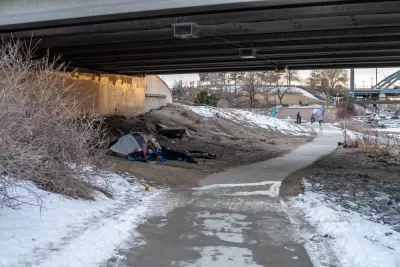
"Denver voters recently rejected Initiative 300, which would have granted new rights for people to take shelter in public spaces," according to an article Andrew Kenney, but the city is looking for ways to live up to its promise to "do better" for homeless people in the city despite the failure of that inititive.
So far, the replacement plan involves spending about $10.7 million on new services for homeless shelters in the city, attempting to make shelters more of a 24/7 support environment.
"Instead of scrambling for beds, people could be assigned beds for longer periods. Instead of waking up at dawn, they could be allowed to stay during the day and store belongings at the shelters. And the shelter system could loosen its strict schedules, making it easier for working people to get in at off-peak hours," writes Kenney to explain the possibilities.
The plans are still speculative, with more details expected to emerge in the coming months.
FULL STORY: Denver plans friendlier homeless shelter system after failure of “Right to Survive”

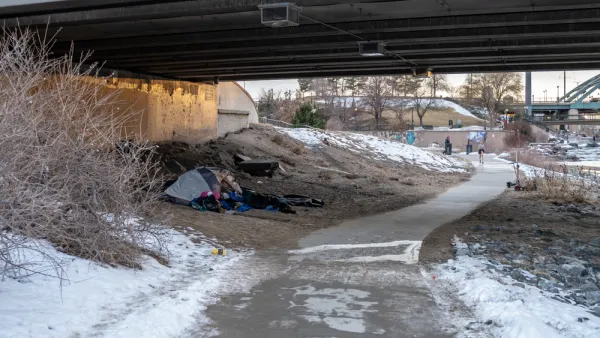
'Right to Survive' Homeless Initiative Fails With Denver Voters
Denver's "Right to Survive" initiative highlights just how troubling and problematic policy approaches to homelessness can be.

Denver to Restructure Homeless Services After Audit
The city will commit new funding and potentially a new department to better manage its homeless services.
Judge halts 'hasty' HUD changes to homelessness grants
Service providers said the sudden changes would have imperiled thousands of Americans and forced more people into homelessness.

Planetizen Federal Action Tracker
A weekly monitor of how Trump’s orders and actions are impacting planners and planning in America.

The state-sanctioned urbicide of Austin
People don’t kill cities. Freeways do.

US to reduce Colorado River water deliveries to Mexico
A new Colorado Treaty amendment reduces Mexico’s Colorado River water allocation by 250,000 acre feet.

5 New England states march closer to 800 megawatt wind energy project
Securing federal approval for the project may be complicated under the Trump administration, which has historically been hostile towards domestic wind power.

Baltimore to break ground on $50 million Transit Priority Project
The project will bring faster bus trips, safer streets and better bike connections to Baltimore.

Airbnb launches $250 million 'last-dollar financing' housing accelerator, makes first investment in Austin
The company will put $6.4 million towards affordable housing development in Texas’ capital.

FREE Course: Walkable City 1: Why Walkability?
After describing his path towards focusing on walkability as the essence of good planning, Jeff Speck marches through his five principal reasons for making more walkable places.
Reinventing Malls: Planning Alchemy—Turning Gray Fields Into Gold
The course focuses on the opportunities and imperatives that shape reinvention of mall sites.

Eagle County Government
Harvard University Graduate School of Design
Nashville Planning Department
The Architects Foundation
University of Cincinnati Online
The Pocatello Development Authority
The Urban Renewal Agency of the City of Pocatello
Journal of the American Planning Association