Legislation approved this week finally brings the city of San Francisco up to date with state laws approved in 2016.


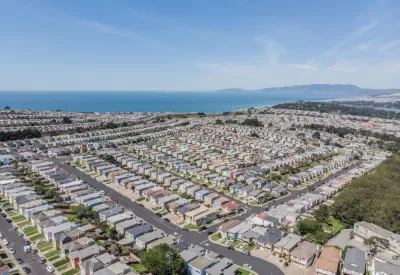
"The [San Francisco] Board of Supervisors gave final approval June 18 to legislation that could gradually increase housing density citywide, especially in western neighborhoods, with many of the new units being rent controlled," reports Noah Arroyo.
Arroyo elaborates on the specifics of the legislation approve this week:
The legislation, sponsored by Supervisor Ahsha Safai, will allow an accessory dwelling unit — often called an ADU or in-law unit — to be built as part of a new single-family home. Previously, the additional units could be added only after the main dwelling was built. It could also expedite the approval process for units that satisfy all local design requirements by removing the public’s ability to appeal them. The changes make San Francisco’s ADU program conform with state regulations.
The article includes more details of the conversation at the hearing that produced the vote. Also noted, is the legislation's effect in rendering moot a lawsuit brought by the California Renters Legal Advocacy and Education Fund, led by prominent member of the YIMBY movement and former candidate for supervisor in San Francisco, Sonja Trauss.
"The pro-building group sued San Francisco in December because its Accessory Dwelling Unit program failed to follow the state’s requirements that builders be able to incorporate extra units into new construction, and that the units satisfying all local zoning laws be exempt from 'discretionary review' — a process in which members of the public can ask city staff to consider whether a project should proceed," explains Arroyo.
FULL STORY: City Takes Step That Could Expand Housing on the Westside

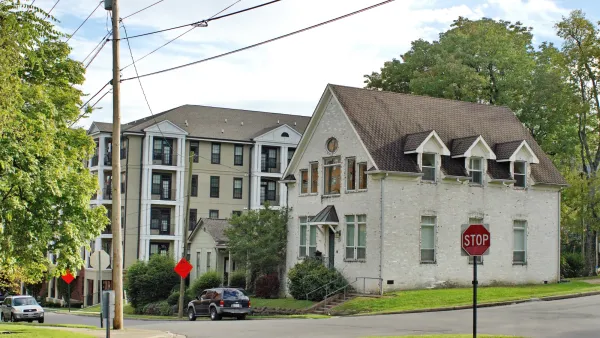
Nashville Allows More Detached ADUs, Courtyard Apartments
The city has been considering a series of zoning reform bills designed to diversify housing options.

Report Shows San Francisco’s ‘Family Zoning’ Plan Would Produce Less Than Half of Needed Housing Units
The city’s economic analysis reveals that a rezoning proposal would yield from 8,504 to 14,646 units, well below the number required by the state.

Maine Forces Cities to Allow at Least 2 ADUs on Residential Lots
A new state law bars local jurisdictions from restricting ADUs in residential areas.

Planetizen Federal Action Tracker
A weekly monitor of how Trump’s orders and actions are impacting planners and planning in America.

The state-sanctioned urbicide of Austin
People don’t kill cities. Freeways do.

US to reduce Colorado River water deliveries to Mexico
A new Colorado Treaty amendment reduces Mexico’s Colorado River water allocation by 250,000 acre feet.

5 New England states march closer to 800 megawatt wind energy project
Securing federal approval for the project may be complicated under the Trump administration, which has historically been hostile towards domestic wind power.

Baltimore to break ground on $50 million Transit Priority Project
The project will bring faster bus trips, safer streets and better bike connections to Baltimore.

Airbnb launches $250 million 'last-dollar financing' housing accelerator, makes first investment in Austin
The company will put $6.4 million towards affordable housing development in Texas’ capital.

FREE Course: Walkable City 1: Why Walkability?
After describing his path towards focusing on walkability as the essence of good planning, Jeff Speck marches through his five principal reasons for making more walkable places.
Reinventing Malls: Planning Alchemy—Turning Gray Fields Into Gold
The course focuses on the opportunities and imperatives that shape reinvention of mall sites.

Eagle County Government
Harvard University Graduate School of Design
Nashville Planning Department
The Architects Foundation
University of Cincinnati Online
The Pocatello Development Authority
The Urban Renewal Agency of the City of Pocatello
Journal of the American Planning Association