Ongoing research into the loss of coastal property assets has been expanded to the state of Texas.


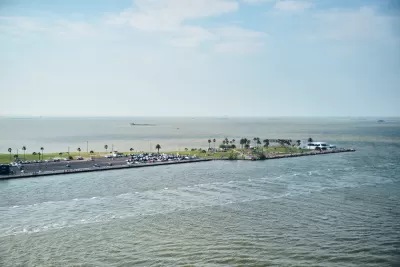
Perla Trevizo shares the findings of a study by First Street Foundation and Columbia University that calculates the cost of sea level in 18 other coastal states. Trevizo focuses on Texas for the Houston Chronicle after researchers added Texas property data to its expanding dataset.
The bad news: Homeowners have already lost $76.4 million in potential property value, with the biggest losses coming in Galveston.
Using a combination of real estate transactions and tidal flooding exposure, [the study] found that from 2005 to 2017, homes in Galveston lost $9.1 million in potential value, followed by Jamaica Beach (which lost $8.6. million) and the Bolivar Peninsula ($8.1 million). It’s not necessarily that these coastal homes decreased in value by these amounts, the authors say, but that they didn’t appreciate as much as similar homes not exposed to tidal flooding. Researchers factored in square footage, proximity to amenities and economic trends like the 2008 housing recession.
Trevizo's article includes more details about sea level rise in Texas.
Read the full story: Study: Sea level rise causes Texas coastal homeowners to lose millions in potential property value

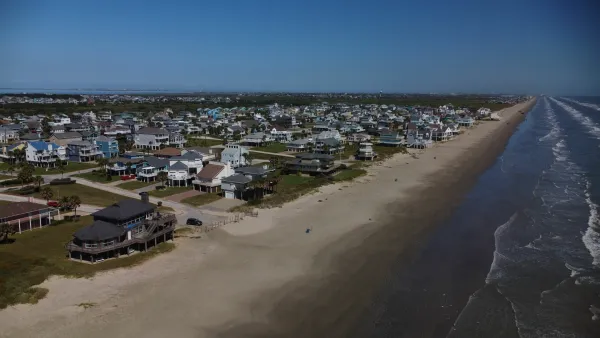
Looking for a Beach House? Check Your Risk First.
A new report from the insurance industry names the historic town of Galveston, Texas as the riskiest place to buy a beach house in the United States.
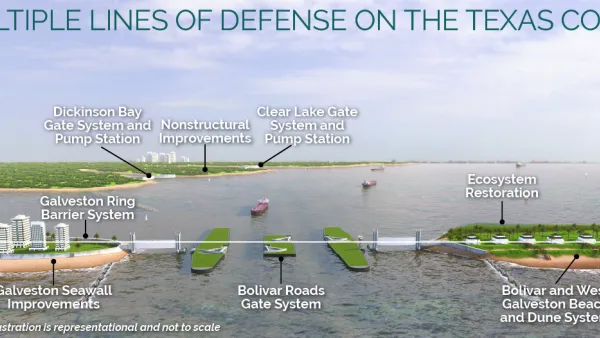
Revised Plans for Massive 'Ike Dike' Plan Revealed
A $26.2 billion proposal to protect the coastal area around Galveston has evolved since its first iteration in 2018.
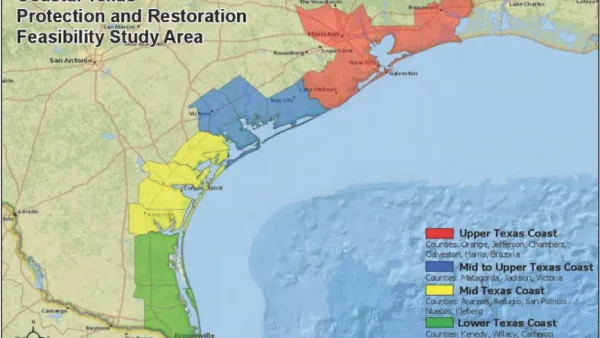
$31 Billion Hurricane Protection Plan Proposed for Texas
The U.S. Army Corps of Engineers has proposed a suite of coastal infrastructure projects—i.e., floodgates and seawalls—to shore up the coast of Texas against Hurricane- and sea level rise-aided water.

Planetizen Federal Action Tracker
A weekly monitor of how Trump’s orders and actions are impacting planners and planning in America.

The state-sanctioned urbicide of Austin
People don’t kill cities. Freeways do.
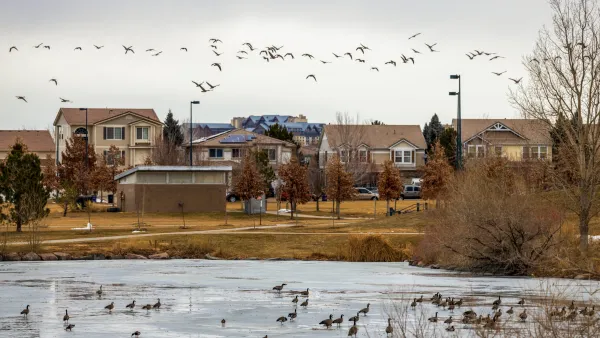
Colorado’s Largest Data Center Could Rise Next to Homes — Without a Public Hearing
The proposed campus would consume 11 times the power of Denver International Airport; as it has across the country, opposition mounts.
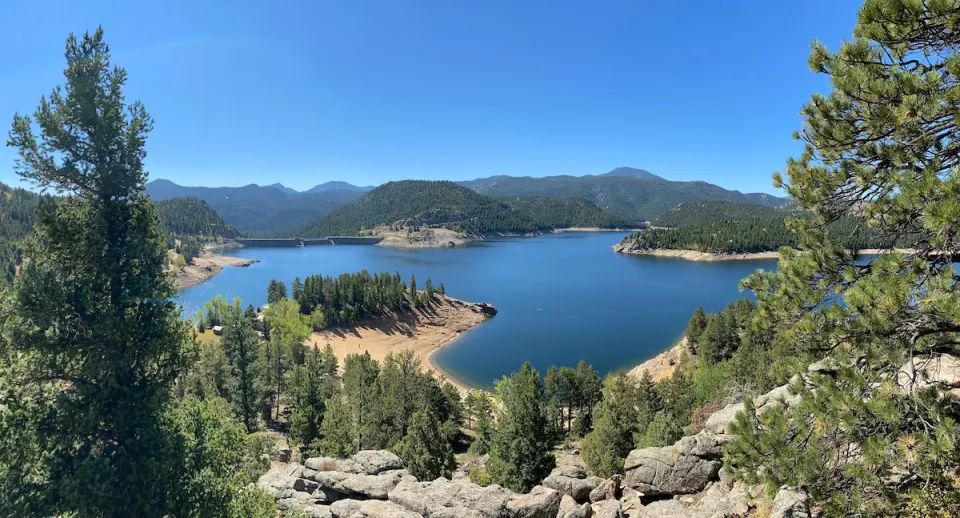
Judges permit Denver to divert 77,000 acre feet from the Colorado River for reservoir expansion
Overuse and climate change have caused the Colorado River’s water levels to plummet.

Amtrak, CN end decades-long dispute with eight-year agreement
The new operating agreement establishes an updated framework for the companies to work together, including processes to resolve disputes.
Raised interest rates may kill financially vulnerable construction projects
The chief economist at ConstructConnect warns that if construction project owners are negatively impacted by the raised rates, it could result in delayed payments to contractors.

FREE Course: Walkable City 1: Why Walkability?
After describing his path towards focusing on walkability as the essence of good planning, Jeff Speck marches through his five principal reasons for making more walkable places.
Reinventing Malls: Planning Alchemy—Turning Gray Fields Into Gold
The course focuses on the opportunities and imperatives that shape reinvention of mall sites.

Greater Baltimore Committee
Eagle County Government
Harvard University Graduate School of Design
The Architects Foundation
University of Cincinnati Online
The Pocatello Development Authority
The Urban Renewal Agency of the City of Pocatello
Journal of the American Planning Association