A plan to remake the St. Paul riverfront, and potentially revitalize the downtown office market, took its first steps forward this week.


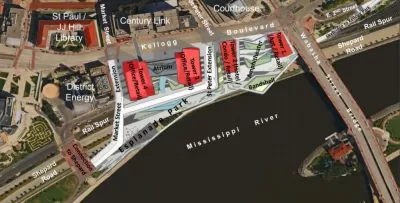
"Ramsey County commissioners received their first update this week on a developer’s grand plan to develop downtown St. Paul’s riverfront, with notable exception: how much it will cost," reports Tad Vezner.
Ramsey County owns Riverfront Properties, a nearly five-acre site located along the bluff overlooking the Mississippi River in downtown Saint Paul, and has been searching for a developer to redevelop the site after beginning deconstruction of the prison buildings on the site in 2015.
Now Los Angeles-based AECOM is pitching the development of an "open air shelf" on the site. "Four towers — one of them potentially as tall as St. Paul’s highest building, Wells Fargo Place, at about 40 stories — would anchor the 12-acre site with a mix of apartments, retail, offices and a boutique hotel. Surrounding it could be such open-air features as a bandshell and tiered, shaded areas to sit and watch the river," according to Vezner.
Read the full story: Ramsey County gets update on developer’s plan to redevelop St. Paul riverfront

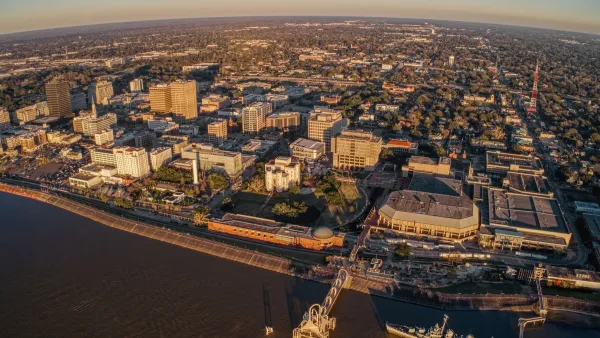
Baton Rouge master plan aims to triple downtown population
The Louisiana capital wants to entice developers to its riverfront district.
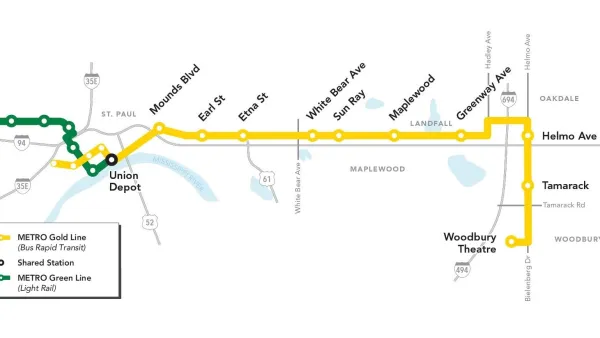
Downtown St. Paul Loop Back in the Gold Line BRT Plan
A two-mile loop to be included in the planned Gold Line bus rapid transit route had been at risk due to political opposition. Now it's included in the preferred alternative presented for federal funding.
Bus Rapid Transit Extension at Risk in St. Paul
A looping in Downtown St. Paul is at risk after Ramsey County commissioners threaten to scuttle the project.

Planetizen Federal Action Tracker
A weekly monitor of how Trump’s orders and actions are impacting planners and planning in America.

California plans to bury El Niño’s downpour
If the state plays its cards right, it may be able to store a billion acre-feet of El Niño’s water in aquifers.

Chicago breaks ground on $3 billion megadevelopment
The new neighborhood, titled Foundry Park, will one day host 3,700 residences.

California High-Speed Rail Authority CEO resigns after $600,000 scandal
Under Ian Choudri, the authority used taxpayer dollars to fund first class flights and trips to nightclubs.

Want to study the Missouri River? Soon, you may need unanimous approval from 10 states
Legislation would require 10 governors’ permission to study or build projects moving water outside the basin.

Desperate measures: Advocates weigh draining Lake Powell to fill Colorado River
Draining the reservoir could reduce evaporation losses by a couple hundred thousand acre-feet.

FREE Course: Walkable City 1: Why Walkability?
After describing his path towards focusing on walkability as the essence of good planning, Jeff Speck marches through his five principal reasons for making more walkable places.
Reinventing Malls: Planning Alchemy—Turning Gray Fields Into Gold
The course focuses on the opportunities and imperatives that shape reinvention of mall sites.

City of Rosemead
Rutgers University, Edward J. Bloustein School of Planning and Public Policy
One Hundred Miles
Hunter College, City University of New York (CUNY)
The Architects Foundation
University of Cincinnati Online
City of Cambridge
Montrose County
The Pocatello Development Authority