A new mobility task force report looks to guide the city toward a more multimodal transportation system that addresses accessibility and congestion.


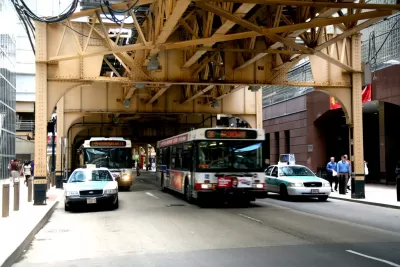
Mayor Rahm Emanuel’s mobility task force has released a report with a slew of recommendations to guide transportation planning in Chicago. The 20-member task force, made up of public- and private-sector representatives and government officials, started its work last September.
"Among the goals of the task force was a system that is better for the environment, reduces dependence on single-occupant vehicle trips and makes the city easier to live in," reports Mary Wisniewski. The report’s 50 recommendations include proposals for an electric scooter pilot program, data requirements and regulations for ride-share operations, and transit upgrades.
Chicago is preparing to elect a new mayor and a number of new city council members next month. Mayor Emanuel and transportation advocates hope the new elected officials will move forward with the task force’s recommendations.
Read the full story: Next mayor should pick mobility chief to handle issues like electric scooters, self-driving cars: report
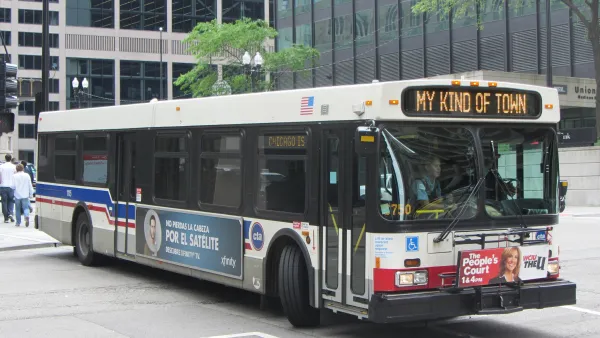
Bus Advocates: Chicago BRT Plan Could Be Better
The Central Loop BRT project, scheduled to break ground this month, will improve commuter travel times. But a collection of compromises means many ideal BRT components won't be installed.

America's 'roundabout city' is in … Indiana?
Carmel, Indiana has built over 150 roundabouts as part of a broader mobility and development strategy.
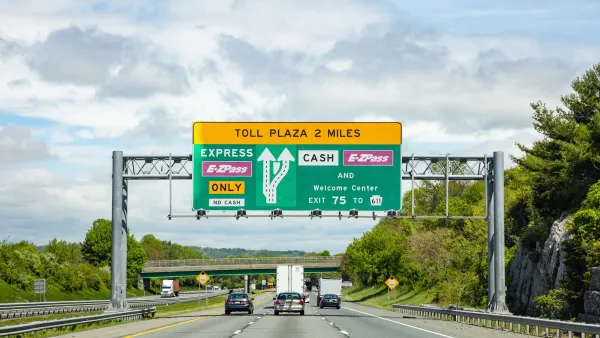
What do We Want, Speed or Affordability?
Conventional planning assumes that travellers want to save time, but evidence indicates that they usually prefer to save money. How can planning better reflect these preferences?

Planetizen Federal Action Tracker
A weekly monitor of how Trump’s orders and actions are impacting planners and planning in America.

Eastern Nebraska is running out of electricity
Data centers and electrification are straining eastern Nebraska’s grid, throttling economic development.

Study reveals best places in the U.S. for cycling, walking
New research from Streetlight Data examines bicycle and pedestrian miles per capita in the 100 largest U.S. cities by population.

Federal government nominates new FTA administrator
Mark Aesch is currently the founder and CEO of a transportation management consulting firm.

Developers reveal $10 billion stadium plan as ‘Hail Mary’ to keep Bears in Chicago
The plan would also boast a public park, high- and mid-rise buildings and a youth sports complex.

As Texas embraces carbon storage, a Black community questions the risks
Texas now issues permits for companies to store carbon dioxide underground. East Texas residents fear safety risks, and skeptics doubt the climate benefits.

FREE Course: Walkable City 1: Why Walkability?
After describing his path towards focusing on walkability as the essence of good planning, Jeff Speck marches through his five principal reasons for making more walkable places.
Reinventing Malls: Planning Alchemy—Turning Gray Fields Into Gold
The course focuses on the opportunities and imperatives that shape reinvention of mall sites.

City of Charlotte
City of Rosemead
Rutgers University, Edward J. Bloustein School of Planning and Public Policy
University of Michigan School for Environment and Sustainability (SEAS)
Hunter College, City University of New York (CUNY)
The Architects Foundation
City of Cambridge
The Pocatello Development Authority
The Urban Renewal Agency of the City of Pocatello