New political leadership in the state of Ohio has Cincinnati regional leaders hoping for big state funding for a project to repair and replace the Western Hill Viaduct.


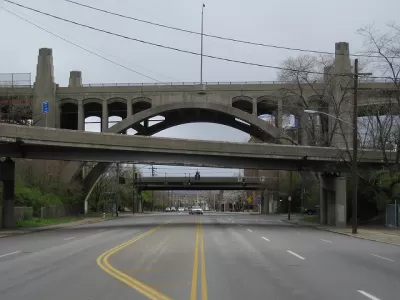
Political leaders at county level are mobilizing to replace the Western Hills Viaduct in Cincinnati, Ohio.
Hannah Sparling reports on the status of the project, after a county coalition including U.S. Rep. Steve Chabot, R-Westwood; Hamilton County Commissioner Todd Portune, a Democrat from Green Township; Cincinnati City Councilman P.G. Sittenfeld, a Democrat from East Walnut Hills; and Hamilton County Engineer Ted Hubbard put out a statement expressing support for a replacement viaduct as a top priority project for the region. The coalition also announced intentions to work with newly elected Ohio Gov. Mike DeWine and the state legislature to pursue state funding.
"Officials have been talking about replacing the Western Hills Viaduct since 2009, but it shot to the top of the to-do list in 2017 after a chunk of concrete fell from the lower deck onto a truck," reports Sparling.
The project is expected to cost $355 million in total, and so far, the project has received $5 million in funding from the federal government.
FULL STORY: Will Cincinnati finally get a new Western Hills Viaduct?

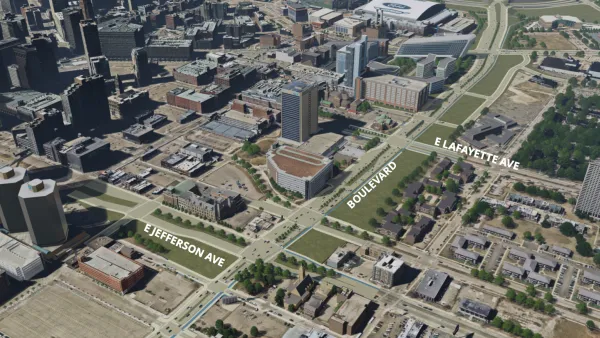
$1.5 Billion Awarded for Transportation Projects, Including $100 Million to Remove a Detroit Freeway
The latest round of federal infrastructure funding includes the largest contribution to emerge, so far, from the 2021 infrastructure bill for the removal of an urban freeway.
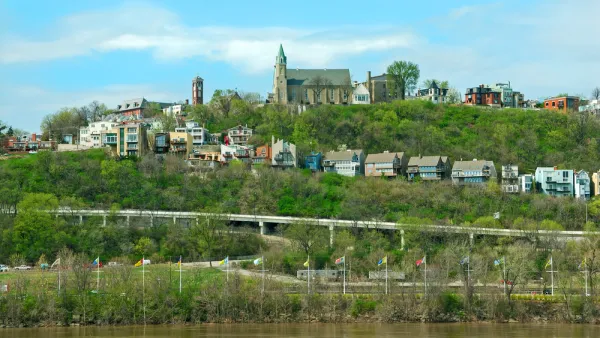
Cincinnati Beats Wall Street Investors on the Sale of 195 Homes
The Port of Greater Cincinnati Development Authority is making sure that large, institutional investors won't continue to corner the rental housing market in Hamilton County.
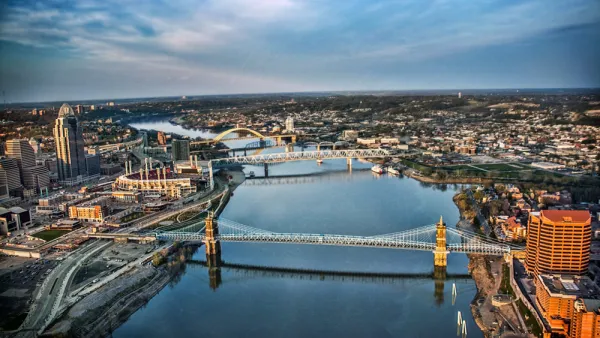
Two Bridges Across the Ohio River in Cincinnati Closed on the Same Day
Two of the transportation connections between Ohio and Kentucky in the Cincinnati metropolitan area were closed on the same day, leaving one side of the Ohio River cut off from the other.

The state-sanctioned urbicide of Austin
People don’t kill cities. Freeways do.

US to reduce Colorado River water deliveries to Mexico
A new Colorado Treaty amendment reduces Mexico’s Colorado River water allocation by 250,000 acre feet.

New Jersey’s second-largest city bans standalone data centers
Jersey City will continue to allow co-location facilities, such as those meant for research institutions that store their own data.

Amtrak not solely to blame for New Jersey commuter rail's unreliability, report finds
A new study from the Garden State Initiative found that NJ Transit’s budget grew 20% across a 4 year period, but reliability declined significantly over the same period.

EPA erases limits on planet-warming pollution from power plants
Under Monday’s plan, power plants would still have some limits on how much mercury, arsenic and other contaminants they can emit.

Phoenix announces new on-demand transit service, more frequent RAPID buses
Both new services will launch in October, and are part of Phoenix's Project Effective Access Solutions for Easing Congestion.

FREE Course: Walkable City 1: Why Walkability?
After describing his path towards focusing on walkability as the essence of good planning, Jeff Speck marches through his five principal reasons for making more walkable places.
Reinventing Malls: Planning Alchemy—Turning Gray Fields Into Gold
The course focuses on the opportunities and imperatives that shape reinvention of mall sites.

Eagle County Government
Harvard University Graduate School of Design
Nashville Planning Department
The Architects Foundation
University of Cincinnati Online
The Pocatello Development Authority
The Urban Renewal Agency of the City of Pocatello
Journal of the American Planning Association