Want to know what the weather will feel like after climate change takes hold? There might be a hotter and drier place already on the planet that can offer clues.


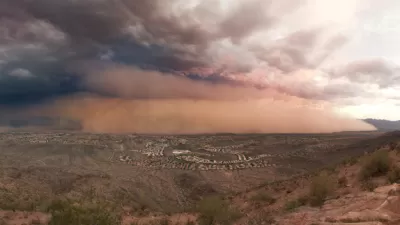
Robinson Meyer shares news of a new paper and interactive tool that attempts to reveal the climate change twin cities of places in the United States and North America—that is, "the city whose modern-day weather gives the best clue to what conditions will feel like in 2080."
"[The paper] finds that global warming will be like relocating American cities more than 500 miles away from their current location, on average, mostly to the south and toward the country’s interior," according to Meyer.
For instance, the Philadelphia of 2080 will feel like the Memphis of 2019, and the Memphis of 2080, in turn, will feel like the College Station of 2019.
One of the researchers on the paper is quoted in the article saying "everything gets warmer." Some places also get drier. Still other places will feel nothing at all like any place in the present.
Read the full story: The East Coast Is Going to Get Arkansas-ified
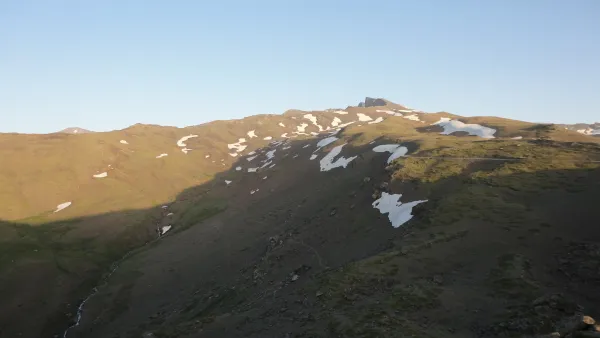
Remembering the Weather of Winters Past
The measurable effects of climate change are a tangible reminder of trends over time that otherwise can be hard to recall.
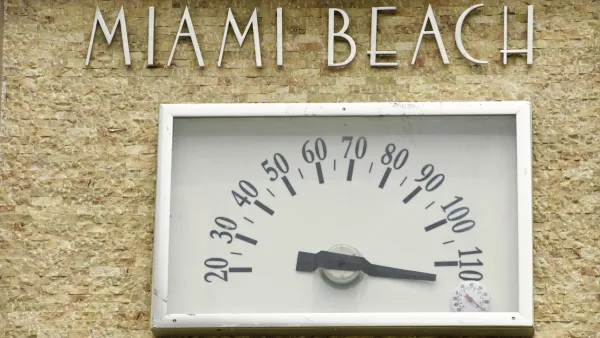
Designing for Heat Waves
Climate change means cities around the world will have to deal with a growing number of heat waves.
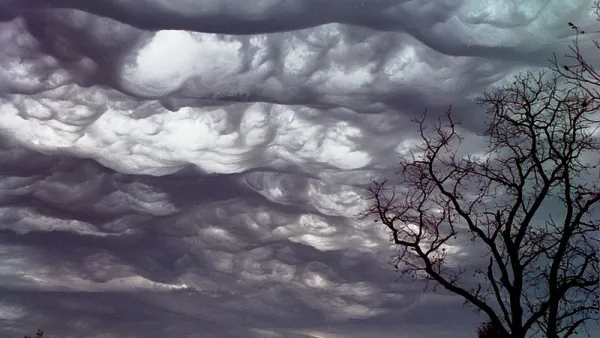
Meet the New Clouds Included in a Long-Awaited Update of the International Cloud Atlas
For the first time in 30 years, a crop of new clouds will enter the canon of cloud varieties recognized by meteorologists all over the world. This is also a good time to talk about climate change.

Planetizen Federal Action Tracker
A weekly monitor of how Trump’s orders and actions are impacting planners and planning in America.

California plans to bury El Niño’s downpour
If the state plays its cards right, it may be able to store a billion acre-feet of El Niño’s water in aquifers.

Desperate measures: Advocates weigh draining Lake Powell to fill Colorado River
Draining the reservoir could reduce evaporation losses by a couple hundred thousand acre-feet.

Mamdani’s pied-à-terre tax survives legal challenge
A panel of judges found that the plaintiffs failed to demonstrate injury as a result of New York City's implementation of the tax.

Eastern Nebraska is running out of electricity
Data centers and electrification are straining eastern Nebraska’s grid, throttling economic development.

Seattle passes record-breaking transit services expansion
Proposition 1 will double the city’s transit tax to add 95,000 more bus trips and preserve 180,000 bus trips annually.

FREE Course: Walkable City 1: Why Walkability?
After describing his path towards focusing on walkability as the essence of good planning, Jeff Speck marches through his five principal reasons for making more walkable places.
Reinventing Malls: Planning Alchemy—Turning Gray Fields Into Gold
The course focuses on the opportunities and imperatives that shape reinvention of mall sites.

City of Rosemead
Rutgers University, Edward J. Bloustein School of Planning and Public Policy
One Hundred Miles
University of Michigan School for Environment and Sustainability (SEAS)
Hunter College, City University of New York (CUNY)
The Architects Foundation
City of Cambridge
Montrose County
The Pocatello Development Authority