The trend should serve as a "wake-up call" for housing policy, researchers say.



Families using federal housing vouchers are funneled to low-income, racially segregated neighborhoods even when affordable homes are available in "higher opportunity" areas, a new study shows.
Across the country, the Washington Post reports, "just 5 percent of metropolitan families using vouchers live in high-opportunity neighborhoods even though those areas account for 18 percent of all affordable rentals." And it's Black and Latino voucher holders who most consistently end up in neighborhoods that lack access to quality schools, jobs, and transit.
To address the barriers that keep aid recipients out of wealthier neighborhoods, researchers from the Center on Budget and Policy Priorities and the Poverty & Race Research Action Council recommend specific tweaks to local voucher programs: calculating aid to reflect prices in specific ZIP codes and offering greater subsidies for apartments in more expensive communities. They also note that while some jurisdictions have outlawed source-of-income discrimination, federal law does not require landlords to accept housing vouchers. The Trump administration has opposed recent attempts to move HUD toward these strategies.


Section 8 Not Welcome
More landlords are refusing Section 8 vouchers for housing, neither willing to deal with the federal bureaucracy nor to risk missing out on the peak windfall of an expansive rental market.
Missouri Governor Reverses Anti-Discrimination Housing Policies
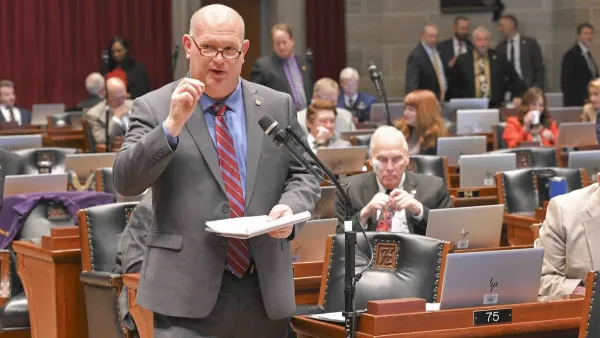
A new state law bars cities from prohibiting source-of-income discrimination against tenants using Section 8 housing vouchers.

Missouri Law Would Ban Protections for Housing Voucher Users
A state law seeks to overturn source-of-income discrimination bans passed by several Missouri cities.

Planetizen Federal Action Tracker
A weekly monitor of how Trump’s orders and actions are impacting planners and planning in America.

The state-sanctioned urbicide of Austin
People don’t kill cities. Freeways do.

US to reduce Colorado River water deliveries to Mexico
A new Colorado Treaty amendment reduces Mexico’s Colorado River water allocation by 250,000 acre feet.

5 New England states march closer to 800 megawatt wind energy project
Securing federal approval for the project may be complicated under the Trump administration, which has historically been hostile towards domestic wind power.

Baltimore to break ground on $50 million Transit Priority Project
The project will bring faster bus trips, safer streets and better bike connections to Baltimore.

Airbnb launches $250 million 'last-dollar financing' housing accelerator, makes first investment in Austin
The company will put $6.4 million towards affordable housing development in Texas’ capital.

FREE Course: Walkable City 1: Why Walkability?
After describing his path towards focusing on walkability as the essence of good planning, Jeff Speck marches through his five principal reasons for making more walkable places.
Reinventing Malls: Planning Alchemy—Turning Gray Fields Into Gold
The course focuses on the opportunities and imperatives that shape reinvention of mall sites.

Eagle County Government
Harvard University Graduate School of Design
Nashville Planning Department
The Architects Foundation
University of Cincinnati Online
The Pocatello Development Authority
The Urban Renewal Agency of the City of Pocatello
Journal of the American Planning Association