Some people in downtown Charleston, South Carolina report have trouble finding parking, the city's first comprehensive parking study shows that even at peak times the area is well under capacity.


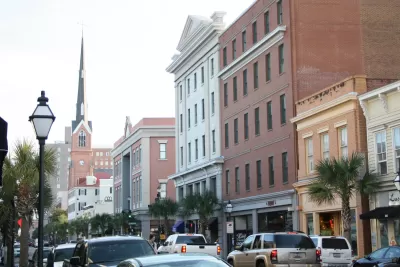
The city of Charleston has an oversupply of parking, according to a recently completed study. Some lots fill up and some neighborhoods have more on-street parking permits than on-street parking spaces. "But the entire peninsular parking system — garages, surface parking, private parking and on-street spaces — doesn’t typically fill up beyond about 75 to 80 percent of capacity," according to an article in the Post and Courier.
The city’s downtown peninsula is the hardest place in the region to find parking, but the study shows that even that part of the city has excess capacity. The paper speculates that the city would be better off investing future resources in public transit or other transportation assets. "That excess capacity carries both direct and indirect costs for residents by eating up valuable real estate and reinforcing car dependency — and the associated congestion, accidents and expensive traffic fixes," the Post and Courier argues.
Read the full story: Study shows downtown has plenty of parking, but finding it can be tricky

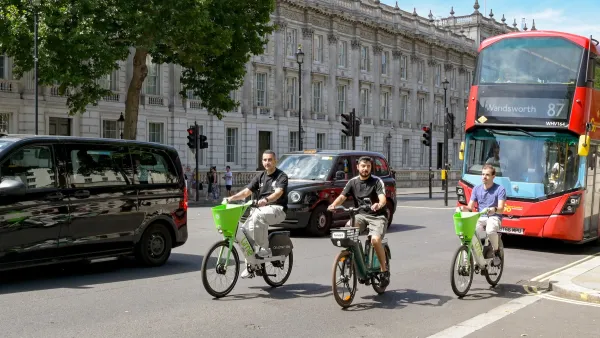
Bike use in London grew by 43% since 2019, but car use remains roughly the same
The city's efforts to reduce car use have stalled despite ambitious programs like congestion pricing and low-traffic neighborhoods.
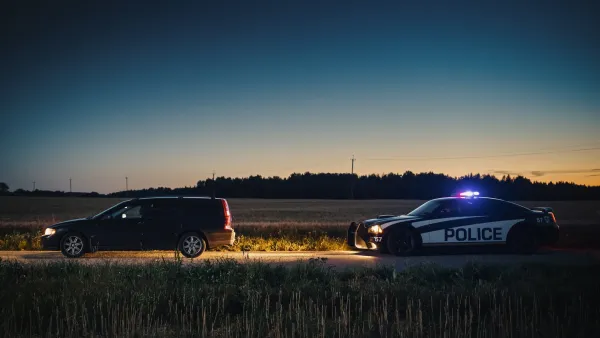
Yes, another thing that car dependency makes worse: DUIs
In the land of the free (and the cars), design incites drinking and driving.

Cost of living too high? Planners to the rescue!
Excessive costs of living force many people to work more than optimal hours, leaving less time for family and fun. Local policies that favor affordable housing and transportation increase freedom, opportunity and happiness.

Planetizen Federal Action Tracker
A weekly monitor of how Trump’s orders and actions are impacting planners and planning in America.

The state-sanctioned urbicide of Austin
People don’t kill cities. Freeways do.

US to reduce Colorado River water deliveries to Mexico
A new Colorado Treaty amendment reduces Mexico’s Colorado River water allocation by 250,000 acre feet.

Nation's most wind-powered state turns to coal as data centers increase energy demand
For the first time in decades, Iowa has increased its generation of coal power.

NYC cools commuters with city's first rain garden above a bus stop
New York City officials say the plants in the rain garden can absorb 16 gallons of rainwater during heavy storms.

Brightline West’s future may rely on $6 billion federal loan
The company has until Nov. 2 to make a $400 million equity investment into its proposed high-speed rail line.

FREE Course: Walkable City 1: Why Walkability?
After describing his path towards focusing on walkability as the essence of good planning, Jeff Speck marches through his five principal reasons for making more walkable places.
Reinventing Malls: Planning Alchemy—Turning Gray Fields Into Gold
The course focuses on the opportunities and imperatives that shape reinvention of mall sites.

Eagle County Government
Harvard University Graduate School of Design
Nashville Planning Department
The Architects Foundation
University of Cincinnati Online
The Pocatello Development Authority
The Urban Renewal Agency of the City of Pocatello
Journal of the American Planning Association