One of the symbols of Pittsburgh's status as the Steel City and the City of Bridges will be closed for repairs for all of 2019 and a good portion of 2020 as well.


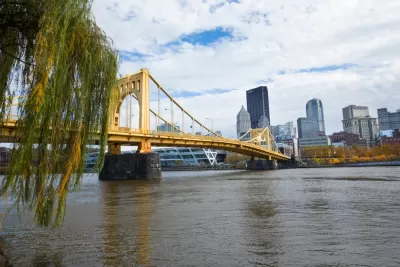
"The Rachel Carson Bridge, formerly known as the Ninth Street Bridge, will close for more than a year for rehabilitation work beginning in February," reports the Pittsburgh Post-Gazette.
The 1926 bridge spans the Allegheny River, where it's one of a collection that clearly signifies Pittsburgh's reputation as the City of Bridges.
According to the article, the $23.3 million repair project will shut down the bridge on February 11, with the closure persisting until summer of 2020. "[W]orkers are expected to replace the concrete desk; make structural steel repairts [sic]; repaint the bridge in Aztec Gold; replace the current lighting with "architectural lighting" similar to the original; replace expansion dams and drainage; and replace the sidewalks."
Also, "the county said the reopened bridge will have three traffic lanes and wider shoulders rather than the current four lanes (two in each direction)."
Read the full story: Rachel Carson Bridge to close for more than a year beginning Feb. 11
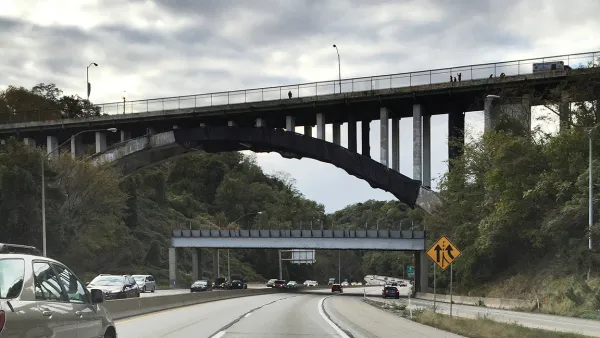
A Beloved Bridge Destroyed in the City of Bridges
The Greenfield Bridge could also be considered infamous, but it's for history to decide now.
PennDOT Proposes Bridge Tolls to Fund Critical Repairs
With gas tax revenues projected to fall this fiscal year due to the pandemic, the Pennsylvania Department of Transportation argues it needs additional revenue to bridge its growing funding gap and repair crucial infrastructure.
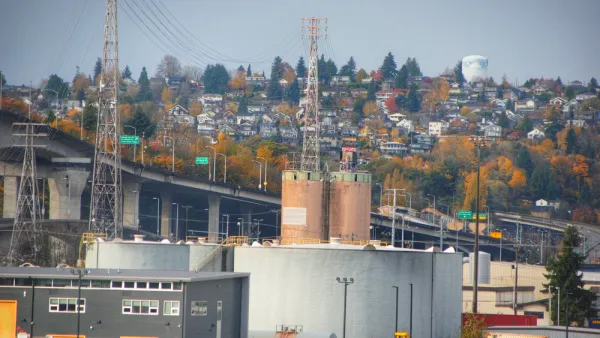
Scrambling to Replace the Heavily Used West Seattle Bridge
The West Seattle High-Rise Bridge Safety Project is in high gear, more than six months after the city's most heavily trafficked bridge was closed suddenly for safety risks.

Planetizen Federal Action Tracker
A weekly monitor of how Trump’s orders and actions are impacting planners and planning in America.

California plans to bury El Niño’s downpour
If the state plays its cards right, it may be able to store a billion acre-feet of El Niño’s water in aquifers.

Desperate measures: Advocates weigh draining Lake Powell to fill Colorado River
Draining the reservoir could reduce evaporation losses by a couple hundred thousand acre-feet.

Los Angeles just elected an urban planner as its mayor
Transportation analysts are optimistic that Raman will be more aggressive in addressing transit issues than Bass.

Mamdani’s pied-à-terre tax survives legal challenge
A panel of judges found that the plaintiffs failed to demonstrate injury as a result of New York City's implementation of the tax.

Eastern Nebraska is running out of electricity
Data centers and electrification are straining eastern Nebraska’s grid, throttling economic development.

FREE Course: Walkable City 1: Why Walkability?
After describing his path towards focusing on walkability as the essence of good planning, Jeff Speck marches through his five principal reasons for making more walkable places.
Reinventing Malls: Planning Alchemy—Turning Gray Fields Into Gold
The course focuses on the opportunities and imperatives that shape reinvention of mall sites.

City of Rosemead
Rutgers University, Edward J. Bloustein School of Planning and Public Policy
One Hundred Miles
University of Michigan School for Environment and Sustainability (SEAS)
Hunter College, City University of New York (CUNY)
The Architects Foundation
City of Cambridge
Montrose County
The Pocatello Development Authority