With gas tax revenues projected to fall this fiscal year due to the pandemic, the Pennsylvania Department of Transportation argues it needs additional revenue to bridge its growing funding gap and repair crucial infrastructure.


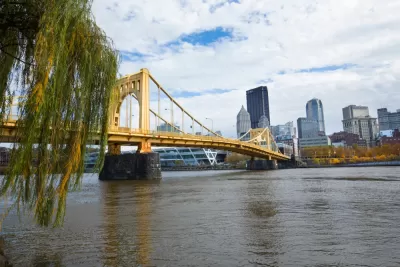
The Pennsylvania Department of Transportation (PennDOT) is starting a campaign to garner support for new bridge tolls, which the department deems crucial for raising enough revenue to rebuild or upgrade nine of the state's most important bridges. "Under its Pennsylvania Pathways program to find other revenue sources for transportation projects, PennDOT announced Thursday it will prepare federal paperwork to begin charging tolls of $1 to $2." The department hopes the virtual public meetings it plans to hold will be "an opportunity to convince the public about PennDOT’s funding crisis, the importance of using tolls to fund the work, and the potential reduction in state-funded local road work if the agency doesn’t find other revenue sources," reports Ed Blazina in the Pittsburgh Post-Gazette.
With the state relying on federal and state gas taxes for 74% of its revenue, the recent drop in travel and growth of electric and fuel-efficient vehicles have led to a growing gap in funding for infrastructure projects. Tolling is an effective and increasingly popular way to replace lost revenue. "Across the country, 195 roads, 137 bridges and 15 tunnels generate about $22 billion annually through tolls." Ken McClain, director of PennDOT’s Alternative Funding Program, says the department has an "enormous responsibility" to the people who drive on the state's bridges and roads every day. "We cannot afford to let these major bridges fail," he said. "If tolling is approved at all nine sites, the funds will pay for $1.6 billion to $2.2 billion worth of work and allow the agency to use gas tax money for other projects."
FULL STORY: PennDOT begins the task of selling the importance of bridge tolls

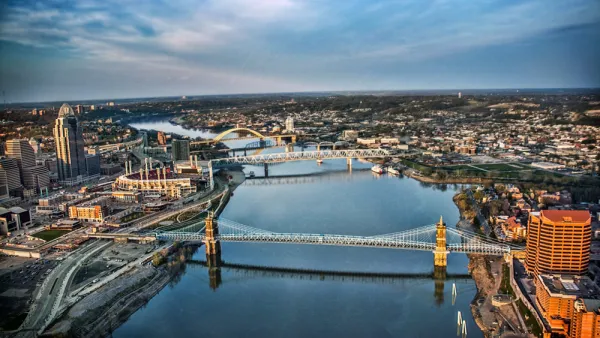
Two Bridges Across the Ohio River in Cincinnati Closed on the Same Day
Two of the transportation connections between Ohio and Kentucky in the Cincinnati metropolitan area were closed on the same day, leaving one side of the Ohio River cut off from the other.
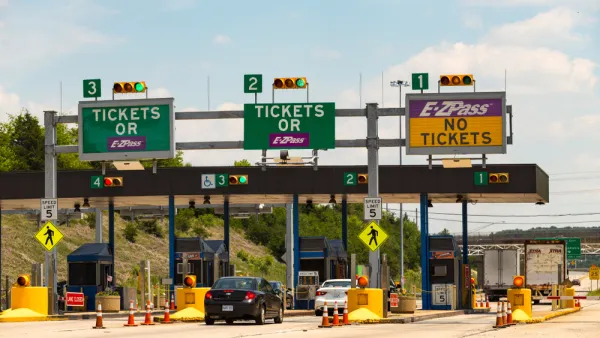
Dire Financial Straits at the Pennsylvania Department of Transportation
The Pennsylvania Turnpike, the state Liquid Fuels Tax, state police, municipal finances, public transit—all play a role in Pennsylvania's big transportation funding mess.
Why does Maryland's gas tax change every year?
The state's annual gas tax update may still not be enough to keep up with changes in the transportation sector and rising project costs.

Planetizen Federal Action Tracker
A weekly monitor of how Trump’s orders and actions are impacting planners and planning in America.

The state-sanctioned urbicide of Austin
People don’t kill cities. Freeways do.

US to reduce Colorado River water deliveries to Mexico
A new Colorado Treaty amendment reduces Mexico’s Colorado River water allocation by 250,000 acre feet.

5 New England states march closer to 800 megawatt wind energy project
Securing federal approval for the project may be complicated under the Trump administration, which has historically been hostile towards domestic wind power.

Baltimore to break ground on $50 million Transit Priority Project
The project will bring faster bus trips, safer streets and better bike connections to Baltimore.

Airbnb launches $250 million 'last-dollar financing' housing accelerator, makes first investment in Austin
The company will put $6.4 million towards affordable housing development in Texas’ capital.

FREE Course: Walkable City 1: Why Walkability?
After describing his path towards focusing on walkability as the essence of good planning, Jeff Speck marches through his five principal reasons for making more walkable places.
Reinventing Malls: Planning Alchemy—Turning Gray Fields Into Gold
The course focuses on the opportunities and imperatives that shape reinvention of mall sites.

Eagle County Government
Harvard University Graduate School of Design
Nashville Planning Department
The Architects Foundation
University of Cincinnati Online
The Pocatello Development Authority
The Urban Renewal Agency of the City of Pocatello
Journal of the American Planning Association