Richmond, Virginia has achieved a big ridership bump, without a big investment.


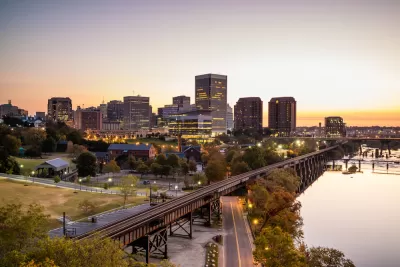
Since a system redesign and adding new bus rapid transit (BRT) route, ridership has climbed 21 percent in the city of Richmond, Virginia. Meanwhile, ridership is falling in many U.S. cities, especially on buses. The Greater Richmond Transit Company system achieved these ridership improvements with a modest increase to its annual budget, some county and city capital funds, and a TIGER grant from the federal government. The most important change was the opening of its new seven-mile Bus Rapid Transit line, "The Pulse," which includes three miles of dedicated lanes and many of the features that make BRT faster than conventional bus service," Angie Schmitt reports for Streetsblog USA.
With less than a quarter of a million people, the city shows how medium-sized communities can use strategic investments to make big transit improvements. In Richmond's case, the addition of BRT was coupled with a redesign of the bus routes. "The new routes offer increased service frequency on five lines. The redesign, which does require riders to transfer more frequently, was cost-neutral for the agency," Schmitt writes. While riders sometimes push back against these types of route redesigns, not wishing to switch buses, the rework has been popular so far.
FULL STORY: Richmond Shows How to Boost Transit in a Smaller City

Richmond Seeks to Expand Bus Rapid Transit
After seeing impressive ridership growth, Richmond's transit agency wants to expand bus rapid transit to more destinations in the region.
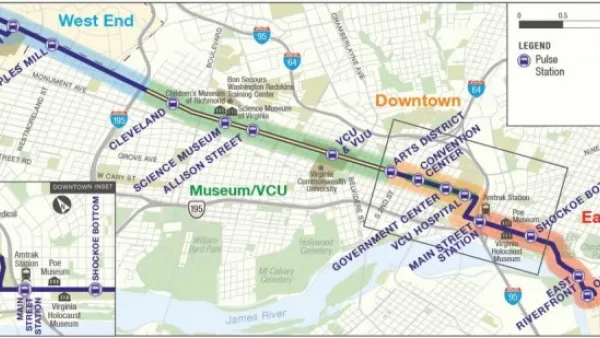
Meet Pulse, Richmond Virginia's New Bus Rapid Transit
Pulse BRT, the second BRT system in the state of Virginia, runs down Broad Street and offers a mix of best practices and practicality to push the mode beyond what many cities are able to realize.
Big Transit Plans Approved for Richmond, Virginia
The city of Richmond has decided to turn potential to reality by approving, among other big transit changes, five new bus rapid transit routes.

The state-sanctioned urbicide of Austin
People don’t kill cities. Freeways do.

US to reduce Colorado River water deliveries to Mexico
A new Colorado Treaty amendment reduces Mexico’s Colorado River water allocation by 250,000 acre feet.

New Jersey’s second-largest city bans standalone data centers
Jersey City will continue to allow co-location facilities, such as those meant for research institutions that store their own data.

Amtrak not solely to blame for New Jersey commuter rail's unreliability, report finds
A new study from the Garden State Initiative found that NJ Transit’s budget grew 20% across a 4 year period, but reliability declined significantly over the same period.

EPA erases limits on planet-warming pollution from power plants
Under Monday’s plan, power plants would still have some limits on how much mercury, arsenic and other contaminants they can emit.

Phoenix announces new on-demand transit service, more frequent RAPID buses
Both new services will launch in October, and are part of Phoenix's Project Effective Access Solutions for Easing Congestion.

FREE Course: Walkable City 1: Why Walkability?
After describing his path towards focusing on walkability as the essence of good planning, Jeff Speck marches through his five principal reasons for making more walkable places.
Reinventing Malls: Planning Alchemy—Turning Gray Fields Into Gold
The course focuses on the opportunities and imperatives that shape reinvention of mall sites.

Eagle County Government
Harvard University Graduate School of Design
Nashville Planning Department
The Architects Foundation
University of Cincinnati Online
The Pocatello Development Authority
The Urban Renewal Agency of the City of Pocatello
Journal of the American Planning Association