William H. Frey reveals the most important takeaways from the recent population data released by the U.S. Census, and recommends the country focus on caring for an aging population and leveraging immigration for economic growth.



"While 2018 was a year of economic revival with historically low unemployment and rising wage growth, demographic indicators stand in contrast, seemingly ushering in an era of population growth stagnation," according to an article by William H. Frey.
That's the findings of Frey's analysis of Census Bureau population statistics for the fiscal year ending in July 2018. "Their data show that the national rate of population growth is at its lowest since 1937, a result of declines in the number of births, gains in the number of deaths, and that the nation’s under age 18 population has declined since the 2010 census," according to Frey.
Frey credits the long-term effects of the great recession and the country's aging population for the trend. The significance of the trend, however, means that policy makers must begin facing the challenges of an aging population like already at work in countries like Japan, Germany, and Italy.
"In particular, it requires a more serious discussion of U.S. immigration policy because of the future contributions that immigrants will make to growing America’s society and economy," concludes Frey.
FULL STORY: US population growth hits 80-year low, capping off a year of demographic stagnation

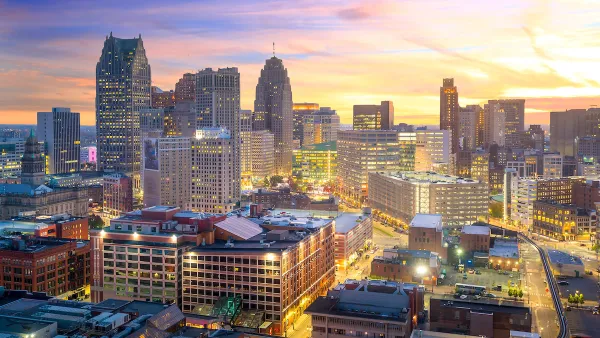
Detroit and Michigan on the Upswing
It's been 66 years since the Motor City last grew its population. Census data released last month revealed an increase of nearly 2,000 people last year, nearly half the state's population growth.

The 15 Fastest-Growing Cities in the US
The U.S. Census Bureau released new 2023 population estimates on May 16 showing a slew of data for cities of all sizes and regions. Do you know the population change last year for the 15 largest cities in your state?

Population Losers
California's population dipped below 39 million as of July, according to the Census Bureau, after seeing its net domestic migration loss this year exceed last year's. Only New York has seen a greater loss as a percentage of population.

Planetizen Federal Action Tracker
A weekly monitor of how Trump’s orders and actions are impacting planners and planning in America.

The state-sanctioned urbicide of Austin
People don’t kill cities. Freeways do.

US to reduce Colorado River water deliveries to Mexico
A new Colorado Treaty amendment reduces Mexico’s Colorado River water allocation by 250,000 acre feet.

5 New England states march closer to 800 megawatt wind energy project
Securing federal approval for the project may be complicated under the Trump administration, which has historically been hostile towards domestic wind power.

Baltimore to break ground on $50 million Transit Priority Project
The project will bring faster bus trips, safer streets and better bike connections to Baltimore.

Airbnb launches $250 million 'last-dollar financing' housing accelerator, makes first investment in Austin
The company will put $6.4 million towards affordable housing development in Texas’ capital.

FREE Course: Walkable City 1: Why Walkability?
After describing his path towards focusing on walkability as the essence of good planning, Jeff Speck marches through his five principal reasons for making more walkable places.
Reinventing Malls: Planning Alchemy—Turning Gray Fields Into Gold
The course focuses on the opportunities and imperatives that shape reinvention of mall sites.

Eagle County Government
Harvard University Graduate School of Design
Nashville Planning Department
The Architects Foundation
University of Cincinnati Online
The Pocatello Development Authority
The Urban Renewal Agency of the City of Pocatello
Journal of the American Planning Association