A recent APTA study illuminates public opinion on mobility as a service, autonomous vehicles, and more.


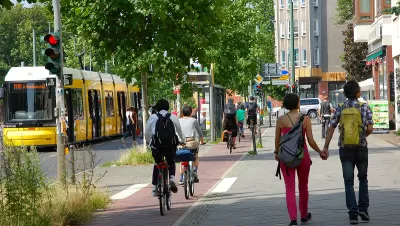
American commuters are open to new mobility options like ride-hailing, bikeshare, e-scooters, and more, but overwhelmingly see public transit as the core support for any multimodal transportation network, according to a new study from the American Public Transportation Association (APTA).
In the survey, 74 percent of millennials embraced the mobility as a service framework—saying they would use an app to plan and pay for multiple legs of a trip across travel modes and agencies. About 88 percent of millennials also said commute lengths were important to them, suggesting support for transit-oriented development.
Responses from all demographics showed mixed feelings toward autonomous vehicles, leading the study authors to recommend that public transit agencies pioneer adoption of AV technologies in fleets that could provide connections to public transit and fill gaps in service.
FULL STORY: Nearly 80% of commuters see public transit as backbone of mobility

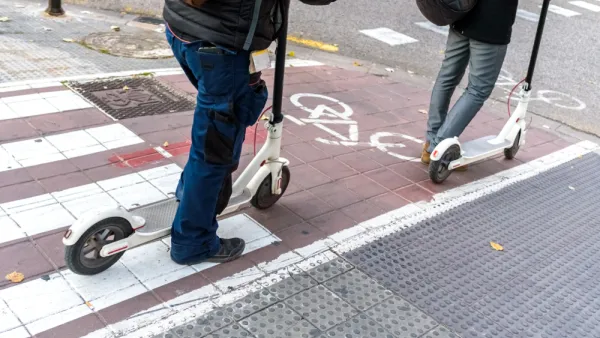
Planning for New Mobilities: Preparing for Innovative Transportation Technologies and Services
New mobilities—emerging transportation technologies and services—have tantalizing potential. They allow people to scoot, ride, and fly like never before. However, they can also impose surprising problems. How should communities prepare?
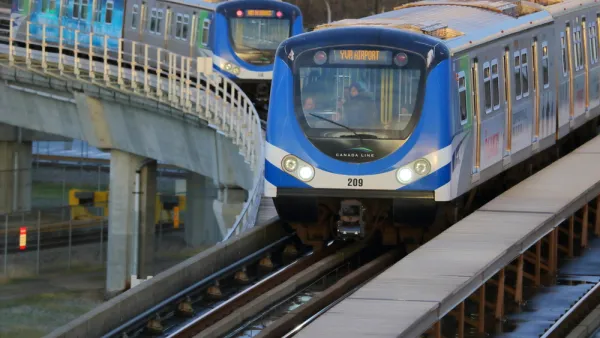
Report: Vancouver Leads North American Cities in Transit Ridership Growth
Vancouver's success in growing its ridership of public transit is thanks, in no small part, to large investments in rail and bus service.
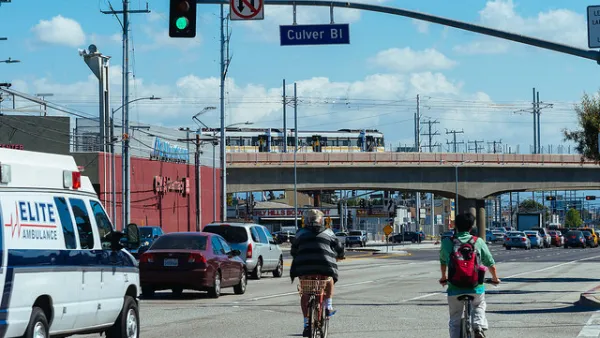
Designing a Multi-Modal, User-Focused TOD Vision for Los Angeles' Expo Line
Facing explosive development interest around its Metro station, the small city of Culver on L.A.’s Westside is taking steps to shape its mobility future.

Planetizen Federal Action Tracker
A weekly monitor of how Trump’s orders and actions are impacting planners and planning in America.

The state-sanctioned urbicide of Austin
People don’t kill cities. Freeways do.

US to reduce Colorado River water deliveries to Mexico
A new Colorado Treaty amendment reduces Mexico’s Colorado River water allocation by 250,000 acre feet.

5 New England states march closer to 800 megawatt wind energy project
Securing federal approval for the project may be complicated under the Trump administration, which has historically been hostile towards domestic wind power.

Baltimore to break ground on $50 million Transit Priority Project
The project will bring faster bus trips, safer streets and better bike connections to Baltimore.

Airbnb launches $250 million 'last-dollar financing' housing accelerator, makes first investment in Austin
The company will put $6.4 million towards affordable housing development in Texas’ capital.

FREE Course: Walkable City 1: Why Walkability?
After describing his path towards focusing on walkability as the essence of good planning, Jeff Speck marches through his five principal reasons for making more walkable places.
Reinventing Malls: Planning Alchemy—Turning Gray Fields Into Gold
The course focuses on the opportunities and imperatives that shape reinvention of mall sites.

Eagle County Government
Harvard University Graduate School of Design
Nashville Planning Department
The Architects Foundation
University of Cincinnati Online
The Pocatello Development Authority
The Urban Renewal Agency of the City of Pocatello
Journal of the American Planning Association