Critics say the new operations facility will make some of the city’s problems even worse.


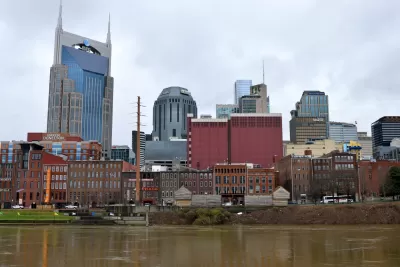
Cari Wade Gervin reports that Amazon’s announcement of an operations center coming to Nashville was met with some skepticism. Concerns have emerged about how the company’s new facility will affect Nashville, particularly around affordable housing and traffic congestion.
Amazon will be located at the Nashville Yards, a 15-acre commercial and residential development in downtown Nashville. Amazon has pointed to the $230 million investment it says the operations center will be bringing to Nashville, along with 5,000 new jobs.
“Yet [Metro Council Member Bob] Mendes questions how much tax revenue the city will see from the company, as it is renting space (and thus not paying property taxes) and that space is located in a development district where the profits from sales tax go to paying down the city’s new convention center’s bond debt,” reports Gervin.
Local activists also say they are not convinced that many of the new Amazon jobs will go to Nashville residents. In addition, the city’s housing costs are rising, and they are worried that the affordable housing shortage and gentrification will be exacerbated as high-tech workers move into Nashville.
FULL STORY: Will Amazon be good for Nashville?

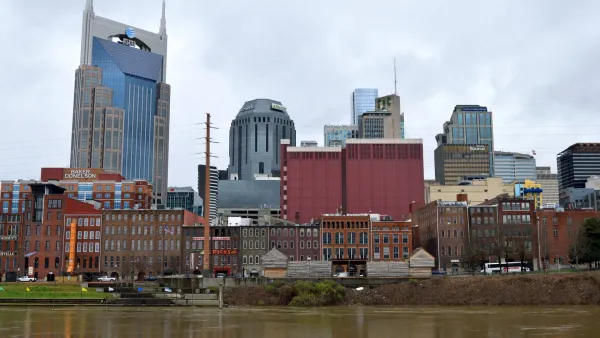
A Boom in Nashville, but Fast Growth Could Bring Problems
Nashville has a great deal going for it, but rising housing costs and gentrification could take it down a darker path.
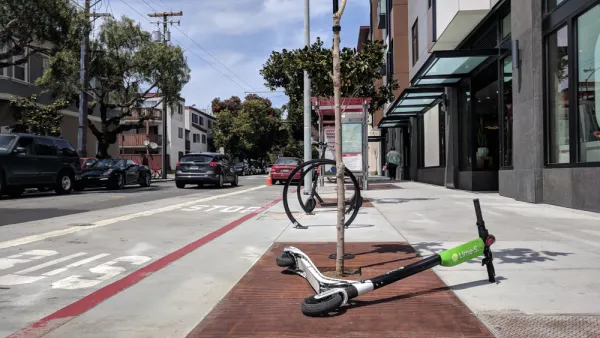
Op-Ed: Cities, Get the Scooters Under Control
Scooters are a useful addition to the mobility landscape, but cities need to address the many safety issues that come along with them.
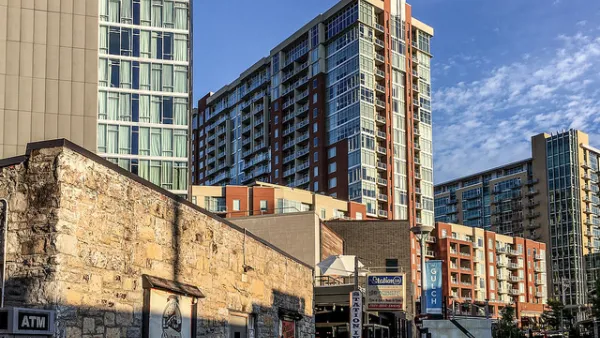
Details of Nashville's Deal With Amazon Revealed
Nashville was a surprise benefactor of the Amazon HQ2 announcement earlier this month. Amazon will definitely benefit from the deal as well.

The state-sanctioned urbicide of Austin
People don’t kill cities. Freeways do.

US to reduce Colorado River water deliveries to Mexico
A new Colorado Treaty amendment reduces Mexico’s Colorado River water allocation by 250,000 acre feet.

New Jersey’s second-largest city bans standalone data centers
Jersey City will continue to allow co-location facilities, such as those meant for research institutions that store their own data.

Amtrak not solely to blame for New Jersey commuter rail's unreliability, report finds
A new study from the Garden State Initiative found that NJ Transit’s budget grew 20% across a 4 year period, but reliability declined significantly over the same period.

EPA erases limits on planet-warming pollution from power plants
Under Monday’s plan, power plants would still have some limits on how much mercury, arsenic and other contaminants they can emit.

Phoenix announces new on-demand transit service, more frequent RAPID buses
Both new services will launch in October, and are part of Phoenix's Project Effective Access Solutions for Easing Congestion.

FREE Course: Walkable City 1: Why Walkability?
After describing his path towards focusing on walkability as the essence of good planning, Jeff Speck marches through his five principal reasons for making more walkable places.
Reinventing Malls: Planning Alchemy—Turning Gray Fields Into Gold
The course focuses on the opportunities and imperatives that shape reinvention of mall sites.

Eagle County Government
Harvard University Graduate School of Design
Nashville Planning Department
The Architects Foundation
University of Cincinnati Online
The Pocatello Development Authority
The Urban Renewal Agency of the City of Pocatello
Journal of the American Planning Association