Housing costs are rising in Atlanta, while available affordable housing has decreased. The Atlanta Housing Authority needs to ramp up construction after a lull in development.


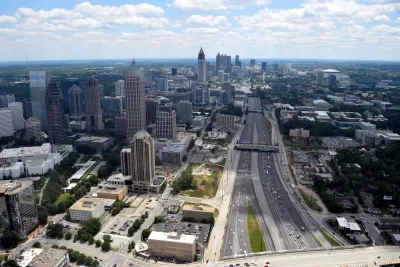
Max Blau reports that Atlanta doesn’t have the affordable housing it needs, and the Atlanta Housing Authority now finds itself playing catch-up after not building new units for a number of years.
“From 2009 to 2016, the city permitted the construction of more than 25,000 new luxury apartments. But nearly all of Atlanta Housing’s 400-plus acres of undeveloped property stayed vacant,” says Blau. After the Great Recession, then-mayor Kasim Reed tangled with Renee Glover, head of the authority, and construction was delayed.
In 2016, the authority proposed Herndon Square, a mixed-use, mixed-income redevelopment project. Mayor Keisha Lance Bottoms, who took office this year, has pledged to put $1 billion into affordable housing.
Observers say the Atlanta Housing Authority is part of a larger affordable housing crisis in the city, but it is integral to closing the gap. “Georgia State sociology professor Deirdre Oakley believes the authority must get back to building—and fast. The longer the authority waits, she says, the more responsibility it holds for the lack of rentals for low-income residents,” reports Blau.
Blau also notes that the authority did start taking steps to address affordable housing:
Before she [Bottoms] took office, the Atlanta Housing board had already passed a policy to prioritize helping people who live in census tracts where new development threatens to displace them, including in neighborhoods adjacent to the BeltLine like West End, Pittsburgh, and Reynoldstown. Authority officials have also looked into acquiring or investing in affordable housing units currently operated by MARTA and the BeltLine.
In addition to the Herndon Square project, slated for completion in 2021, the authority has three other projects planned, including a redevelopment project at the Civic Center.
FULL STORY: Atlanta’s housing authority stopped building rental units for nearly a decade. Can it make up for lost time?

Atlanta Housing Targets 10,000 Affordable Units in Five Years
Atlanta Housing plans to use a combination of development and preservation to ensure 10,000 affordable housing units in the next five years.

First Wave of Affordable Housing Bonds Ratified in Atlanta
A down payment on a $100 million investment in affordable housing is moving forward in Atlanta.

Affordable Housing Bond Sale Proposal Under Review in Atlanta
A new proposal could lead to legislation that sweeps $100 million into Atlanta's housing market to build affordable housing and purchase key land for future development.

The state-sanctioned urbicide of Austin
People don’t kill cities. Freeways do.

US to reduce Colorado River water deliveries to Mexico
A new Colorado Treaty amendment reduces Mexico’s Colorado River water allocation by 250,000 acre feet.

New Jersey’s second-largest city bans standalone data centers
Jersey City will continue to allow co-location facilities, such as those meant for research institutions that store their own data.

Amtrak not solely to blame for New Jersey commuter rail's unreliability, report finds
A new study from the Garden State Initiative found that NJ Transit’s budget grew 20% across a 4 year period, but reliability declined significantly over the same period.

EPA erases limits on planet-warming pollution from power plants
Under Monday’s plan, power plants would still have some limits on how much mercury, arsenic and other contaminants they can emit.

Phoenix announces new on-demand transit service, more frequent RAPID buses
Both new services will launch in October, and are part of Phoenix's Project Effective Access Solutions for Easing Congestion.

FREE Course: Walkable City 1: Why Walkability?
After describing his path towards focusing on walkability as the essence of good planning, Jeff Speck marches through his five principal reasons for making more walkable places.
Reinventing Malls: Planning Alchemy—Turning Gray Fields Into Gold
The course focuses on the opportunities and imperatives that shape reinvention of mall sites.

Eagle County Government
Harvard University Graduate School of Design
Nashville Planning Department
The Architects Foundation
University of Cincinnati Online
The Pocatello Development Authority
The Urban Renewal Agency of the City of Pocatello
Journal of the American Planning Association