The occupants of homeless tents in San Diego haven't been moving to permanent housing in the numbers city officials had hoped.


"San Diego’s homeless tents have fallen far short of contractual targets to move their clients into permanent housing," reports Lisa Halverstadt.
"Through the end of May, just 12 percent of homeless clients staying in the three tents in Barrio Logan, East Village and Midway had moved onto permanent housing, far short of the 65 percent goal city leaders set when they approved the tents."
According to Halverstadt, the results aren’t particularly surprising, given the new program's experimental approach. Non-profits Alpha Project, Father Joe’s Villages, and Veterans Village of San Diego were hesitant to include the targets, and critics say the targets were set arbitrarily.
Despite one councilmember calling the program a "complete failure," the council voted to extend the program's contract in May.
Read the full story: Why the Homeless Tents Are Moving Far Fewer People Into Housing Than Leaders Hoped

California Proposal to Shelter Homeless on Cruise Ship
Oakland is looking at the possibility of housing homeless people in unconventional quarters.
The Four Kinds of Housing that Help the Homeless
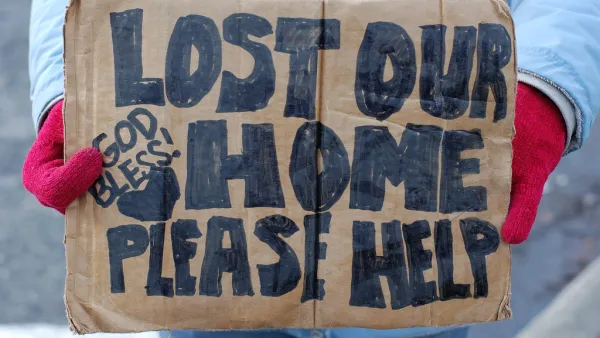
Projects to add housing resources to help give homeless people a roof over the head have run into all sorts of public opposition—often times fueled by ignorance of how different kinds of homeless housing options work.
San Diego Not Even Close to Meeting Permanent Housing Goals for Homeless
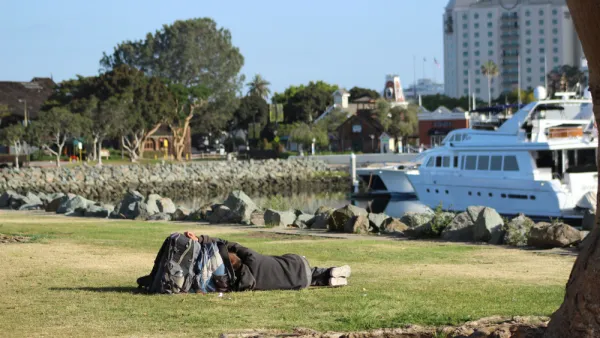
The city’s new $6.5 million "bridge shelters" are providing a place to stay, but not accomplishing what they set out to do.

Planetizen Federal Action Tracker
A weekly monitor of how Trump’s orders and actions are impacting planners and planning in America.

California plans to bury El Niño’s downpour
If the state plays its cards right, it may be able to store a billion acre-feet of El Niño’s water in aquifers.

Desperate measures: Advocates weigh draining Lake Powell to fill Colorado River
Draining the reservoir could reduce evaporation losses by a couple hundred thousand acre-feet.

Chicago voters approve permanent festival grounds, penalty for vacant property owners
Currently, major summer and fall festivals take over public parks for weeks at a time, drawing criticism from nearby residents

NYC votes to cut outdoor dining red tape, speed up permitting
New York City also voted to allow the Department of Transportation to begin work on urgent projects before notifying elected officials.

California appears to reject Prop. 45
The proposition would have expanded the projects that qualify for a streamlined environmental review, effectively paring down the California Environmental Quality Act.

FREE Course: Walkable City 1: Why Walkability?
After describing his path towards focusing on walkability as the essence of good planning, Jeff Speck marches through his five principal reasons for making more walkable places.
Reinventing Malls: Planning Alchemy—Turning Gray Fields Into Gold
The course focuses on the opportunities and imperatives that shape reinvention of mall sites.

City of Rosemead
Rutgers University, Edward J. Bloustein School of Planning and Public Policy
One Hundred Miles
Hunter College, City University of New York (CUNY)
The Architects Foundation
University of Cincinnati Online
City of Cambridge
Montrose County
The Pocatello Development Authority