Most people living in Boston's most expensive condominiums aren't from Boston, according to new research.


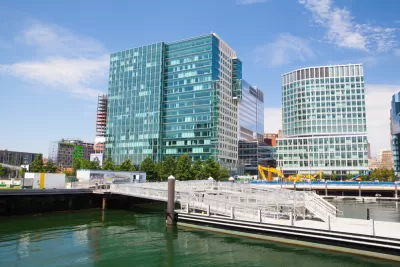
Tim Logan shares news of research from the Institute for Policy Studies in the Washington, D.C., which finds deficiencies in the city of Boston's luxury housing market.
"Many buyers of condominiums in the new luxury towers sprouting around Boston are either part-time residents or investors — sometimes with no clear connections to Boston," explains Logan of the study's findings, and "the city’s high-end building boom is doing little to help local residents."
After examining property records for 1,800 condos in 12 newer luxury buildings in Boston, researchers "found that more than one-third of the units are owned by limited liability companies, trusts, and other business entities that allow buyers to obscure their identities."
"Just 36 percent of owners requested the property tax exemption the city offers homeowners — a sign that the owners may live elsewhere most of the time," according to Logan.
The findings push back on the pro-development idea that new housing at the higher end of the market filters housing supply down to more affordable prices.
Since Logan broke the news of the study, Boston Mayor Marty Walsh told WGBH News that "plans to look at his policies affecting high-end construction," but isn’t interested in a tax on high-end real estate transactions.
FULL STORY: Boston’s new luxury towers appear to house few Bostonians


Study: Market-Rate Development Filters Into Naturally Occurring Affordable Housing
New research sheds new light on one of the most hotly debated questions in planning and development.
New Market-Rate Housing Lowers Rents for Everyone, According to New Research
A study published by a German researcher adds ammunition to the cause of improving housing affordability by legalizing and building new supply.

Housing Costs More Than a Matter of Supply and Demand
Does new market rate housing increase the average cost of housing, by inducing demand, or does it help stabilize the housing market by offering new supply? The debate continues in San Francisco.

Planetizen Federal Action Tracker
A weekly monitor of how Trump’s orders and actions are impacting planners and planning in America.

The state-sanctioned urbicide of Austin
People don’t kill cities. Freeways do.

US to reduce Colorado River water deliveries to Mexico
A new Colorado Treaty amendment reduces Mexico’s Colorado River water allocation by 250,000 acre feet.

Amtrak not solely to blame for New Jersey commuter rail's unreliability, report finds
A new study from the Garden State initiative found that NJ Transit’s budget grew 20% across a 4 year period, but reliability declined significantly over the same period.

EPA erases limits on planet-warming pollution from power plants
Under Monday’s plan, power plants would still have some limits on how much mercury, arsenic and other contaminants they can emit.

Phoenix announces new on-demand transit service, more frequent RAPID buses
Both new services will launch in October, and are part of Phoenix's Project Effective Access Solutions for Easing Congestion.

FREE Course: Walkable City 1: Why Walkability?
After describing his path towards focusing on walkability as the essence of good planning, Jeff Speck marches through his five principal reasons for making more walkable places.
Reinventing Malls: Planning Alchemy—Turning Gray Fields Into Gold
The course focuses on the opportunities and imperatives that shape reinvention of mall sites.

Eagle County Government
Harvard University Graduate School of Design
Nashville Planning Department
The Architects Foundation
University of Cincinnati Online
The Pocatello Development Authority
The Urban Renewal Agency of the City of Pocatello
Journal of the American Planning Association