New York City's Green Roof Property Tax Abatement Program has failed to take off, but if it were targeted toward the areas that need stormwater infrastructure and green spaces the most, it could be made too big to ignore.


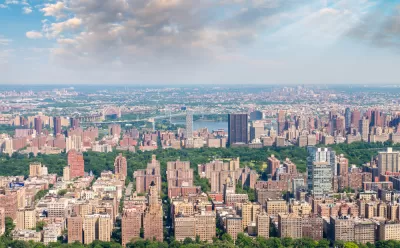
A tax incentive for green roofs in America's most populated city been used seven times in nine years. Meanwhile the city spends millions dealing with stormwater, which can flood sewers and bring raw sewage up to the city streets. "The city is failing to take advantage of a perfectly good solution to this. By transforming barren roofs into verdant spaces, we can improve water quality, slash energy use, foster biodiversity and provide more enjoyable space," write Scott Stringer and Danielle Spiegel-Feld.
New York, like many large American cities, offers a tax credit to encourage the creation of green roofs, but that hasn't been much help. The city has only awarded its credit seven times in the nine-year existence of the Green Roof Property Tax Abatement Program. The state government allocated a million dollars a year to the city to support this initiative, but the city has struggled to use anywhere near that amount.
"The program should be restructured to provide a more targeted tax credit to a rotating group of neighborhoods that struggle with regular sewer overflows or a lack of green space," Stringer and Spiegel-Feld argue. Targeting specific neighborhoods could allow the city to offer more generous incentives and bring the roofs to the areas of the city that need them the most.
Read the full story: Greening the city from the top down

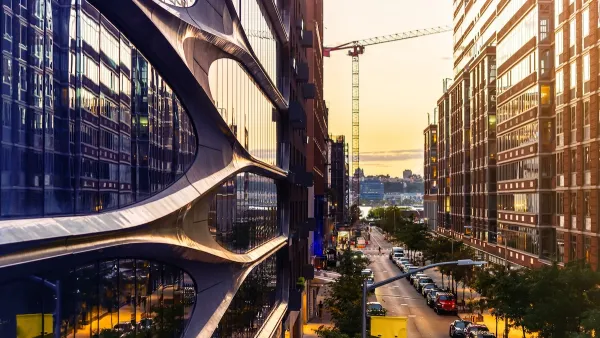
NYC to Gain 50K New Housing Units by Year’s End
Thanks to a now-expired tax incentive, the city is seeing a record number of new homes being built.
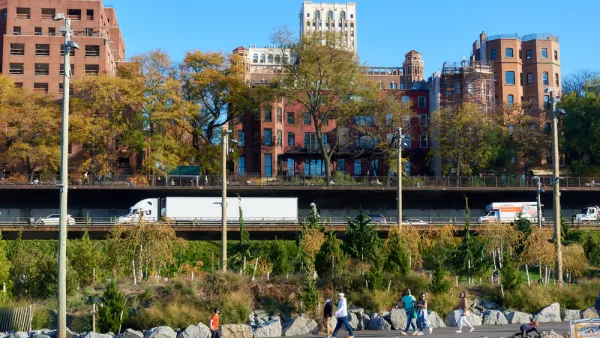
Expressway Expansion Could Threaten Brooklyn Bridge Park
Supporters of the waterfront park worry NYCDOT’s plan to potentially widen the Brooklyn-Queens Expressway could reduce green space in “one of the most expensive urban parks ever built.”
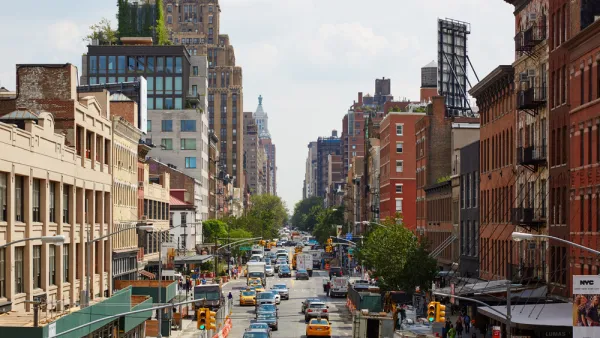
NYC 25x25 Plan Would Reclaim ‘13 Central Parks’ From Cars
A plan backed by New York City Mayor Eric Adams would repurpose 25 percent of the city’s street space for multimodal transportation and pedestrian plazas.

Planetizen Federal Action Tracker
A weekly monitor of how Trump’s orders and actions are impacting planners and planning in America.

The state-sanctioned urbicide of Austin
People don’t kill cities. Freeways do.

US to reduce Colorado River water deliveries to Mexico
A new Colorado Treaty amendment reduces Mexico’s Colorado River water allocation by 250,000 acre feet.

Nation's most wind-powered state turns to coal as data centers increase energy demand
For the first time in decades, Iowa has increased its generation of coal power.
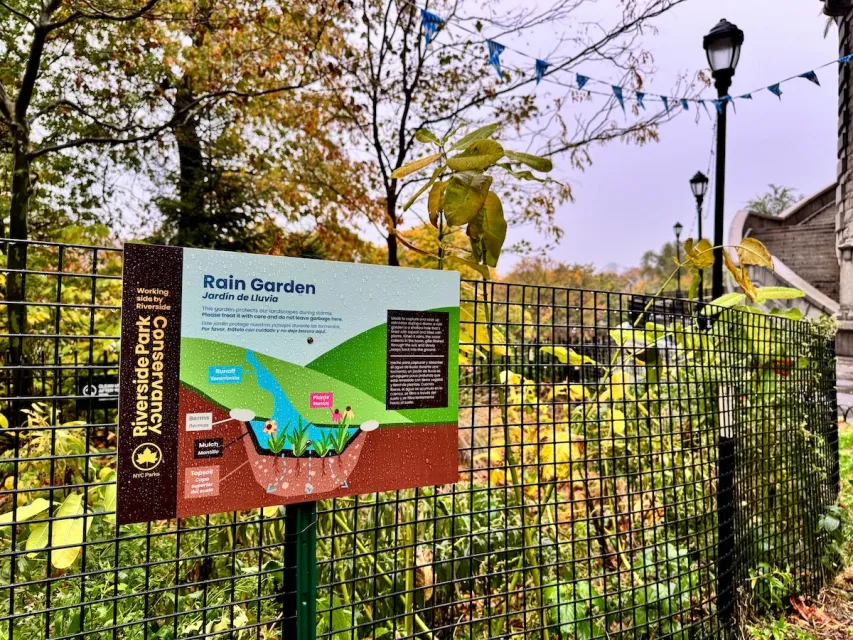
NYC cools commuters with city's first rain garden above a bus stop
New York City officials say the plants in the rain garden can absorb 16 gallons of rainwater during heavy storms.

Brightline West’s future may rely on $6 billion federal loan
The company has until Nov. 2 to make a $400 million equity investment into its proposed high-speed rail line.

FREE Course: Walkable City 1: Why Walkability?
After describing his path towards focusing on walkability as the essence of good planning, Jeff Speck marches through his five principal reasons for making more walkable places.
Reinventing Malls: Planning Alchemy—Turning Gray Fields Into Gold
The course focuses on the opportunities and imperatives that shape reinvention of mall sites.

Greater Baltimore Committee
Eagle County Government
Harvard University Graduate School of Design
The Architects Foundation
University of Cincinnati Online
The Pocatello Development Authority
The Urban Renewal Agency of the City of Pocatello
Journal of the American Planning Association