A third straight summer spent in a haze of smoke from nearby wildfires is taking a psychological toll on Seattle residents. A political response is also taking shape.


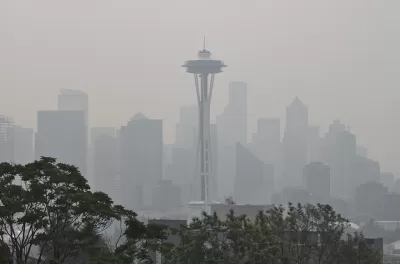
David Kroman writes about a third consecutive summer of smoke in Seattle as smoke from wildfires in Canada and the Cascade Mountains blanket the city.
This is the worst year yet. University of Washington weather expert Cliff Mass reported that, on Monday afternoon, a Puget Sound Clean Air Agency site in the city recorded the highest levels of smoke for a one-hour period since monitoring began about two decades ago. Last Wednesday, he reported that two spots in the region had recorded the worst 24 hours of air quality on record for either spot.
The poor quality has put a serious damper on summer. Tourists can't see the surrounding city and mountain ranges from the Space Needle, the local Major league Soccer Team cancelled its summer camps, planes have been delayed, and residents have been urged to stay indoors. "Seattle Mayor Jenny Durkan issued a press release urging residents to stay indoors and avoid driving, but some residents turned to their cars, adding to the smoke, to avoid spending time outside," according to Kroman.
As noted by Kroman, Gov. Jay Inslee seized the moment by advocating for Initiative 1631, which would implement a new carbon tax if approved by voters in November. King 5 News reported on a press conference where the governor discussed that legislation in reference to the air quality emergency.
The Seattle chapter of the Sierra Club also released a call to action in response to the smoke, calling for free public transit on bad air quality days, increased tolls for driving over bridges and surcharges for commercial parking, and more.
"The Sierra Club also strongly encourages everyone to support action to move our region, our state, our country, and our planet off of fossil fuels, in order to address the underlying causes of these massive firestorms. That begins with supporting the passage of Initiative 1631 in November," according to the blog post issuing the call to action.
Read the full story: Seattle Is Choking on a Cloak of Wildfire Smoke
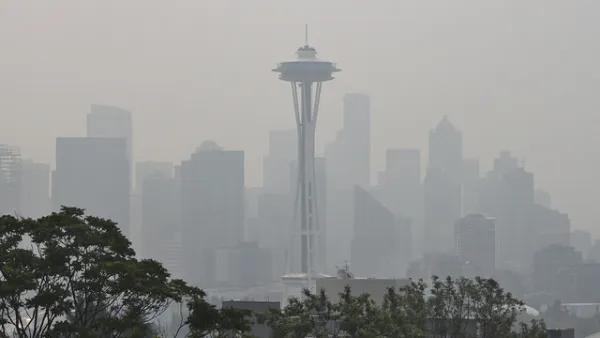
Seattle Clean-Air Shelters to Provide Relief to Residents
Wildfires have caused the city’s air quality to plummet in recent years. The new shelters will give residents a break when the air is not fit to breathe.
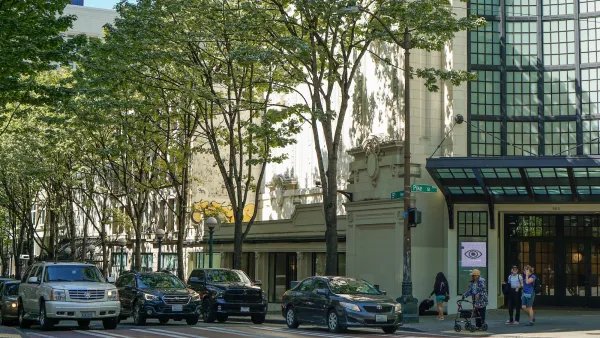
Washington Urban Forestry Program Faces 'Existential' Budget Cut
A proposed budget eliminates funding for a key urban forestry program that funds greening efforts across the state.
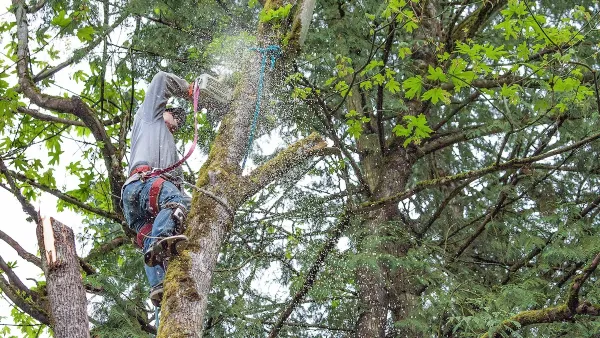
Seattle Conflict Between Trees and Housing Heats up
A 2023 update to Seattle’s tree ordinance has led to sharp increase in the number of trees being cut down for redevelopment, prompting advocates to call for better protection of the city’s tree canopy.

Planetizen Federal Action Tracker
A weekly monitor of how Trump’s orders and actions are impacting planners and planning in America.

California plans to bury El Niño’s downpour
If the state plays its cards right, it may be able to store a billion acre-feet of El Niño’s water in aquifers.

Desperate measures: Advocates weigh draining Lake Powell to fill Colorado River
Draining the reservoir could reduce evaporation losses by a couple hundred thousand acre-feet.

Chicago voters approve permanent festival grounds, penalty for vacant property owners
Currently, major summer and fall festivals take over public parks for weeks at a time, drawing criticism from nearby residents

NYC votes to cut outdoor dining red tape, speed up permitting
New York City also voted to allow the Department of Transportation to begin work on urgent projects before notifying elected officials.

California appears to reject Prop. 45
The proposition would have expanded the projects that qualify for a streamlined environmental review, effectively paring down the California Environmental Quality Act.

FREE Course: Walkable City 1: Why Walkability?
After describing his path towards focusing on walkability as the essence of good planning, Jeff Speck marches through his five principal reasons for making more walkable places.
Reinventing Malls: Planning Alchemy—Turning Gray Fields Into Gold
The course focuses on the opportunities and imperatives that shape reinvention of mall sites.

City of Rosemead
Rutgers University, Edward J. Bloustein School of Planning and Public Policy
One Hundred Miles
Hunter College, City University of New York (CUNY)
The Architects Foundation
University of Cincinnati Online
City of Cambridge
Montrose County
The Pocatello Development Authority