The popular game Minecraft offers deep lessons what building in the virtual world means in the real world.



Wil Wiles explores the world of Minecraft for deeper meaning—and there's plenty to explore.
The question is not simply personal. As the landscapes found within computer games have become more elaborate, they have become more important, and so has the time we spend within them. Arguably, these virtual places have become as significant as the real environments of the outer world, and they are attracting increasing critical attention as both art and narrative; for instance, in the new magazine Heterotopias, which looks at the “spaces and architecture of virtual worlds,” and does so in unabashedly intellectual terms.
Wiles's exploration of Minecraft with that as his premise is afforded plenty of space by Places Journal, and his insights are just as expansive as the game itself, touching on society's changing appreciation of landscapes, the history of the utility humans have drawn from landscapes, the creation of places, and how video games and virtual realities complicate all of these forces.
Read the full story: Minecraft and Me
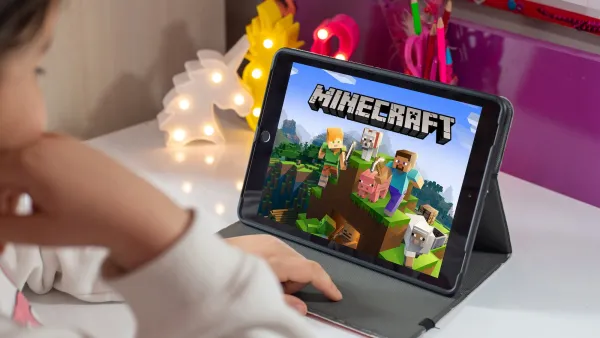
Children in 55 countries are redesigning their cities in Minecraft
A U.N.-backed program lets students and community members reimagine sites in their neighborhoods in the game — and translate them into real-life buildings.
Popular Video Game Makes Planners Out of Schoolchildren
Not heard of Minecraft yet? Than you must not have a 10-year-old child in your house. Luckily, Sarah Goodyear does, and for our benefit, she describes the popular children's video game that explores real-world urban planning ideas.

USDOT is hiring thousands of gamers for air traffic control jobs
Sec. Duffy says the FAA has reached 94% of its staffing goal for air traffic controllers.

Desperate measures: Advocates weigh draining Lake Powell to fill Colorado River
Draining the reservoir could reduce evaporation losses by a couple hundred thousand acre-feet.

Eastern Nebraska is running out of electricity
Data centers and electrification are straining eastern Nebraska’s grid, throttling economic development.

Malls are becoming the midtowns of the future
Mall and office park redevelopments are a generational opportunity to create new nodes of urbanity.

NYC breaks ground on anti-flooding infrastructure project
New York City's new system will reduce stormwater flows to local sewers by 90%.

One Kentucky town’s secret to affordable housing
The Smoketown Community Land Trust has already built seven affordable homes for community members.

Houston gains petal-shaped cooling infrastructure to make streets more ‘delightful’
The city has installed the pavilions along 15 blocks in Houston.

FREE Course: Walkable City 1: Why Walkability?
After describing his path towards focusing on walkability as the essence of good planning, Jeff Speck marches through his five principal reasons for making more walkable places.
Reinventing Malls: Planning Alchemy—Turning Gray Fields Into Gold
The course focuses on the opportunities and imperatives that shape reinvention of mall sites.

City of Rosemead
Rutgers University, Edward J. Bloustein School of Planning and Public Policy
One Hundred Miles
University of Michigan School for Environment and Sustainability (SEAS)
Hunter College, City University of New York (CUNY)
The Architects Foundation
City of Cambridge
Montrose County
The Pocatello Development Authority