U.S. PIRG's list of 'Highway Boondoggles' puts Maryland's $9 billion I-270 expansion among the worst projects in the country.


Maryland earns the dubious accolade of topping U.S. PIRG's list of Highway Boondoggles. The project, which is slated to cost $9 billion, comes at a time when Baltimore's transit system has had to close for repairs.
The report points out how the forces of induced demand will quickly eliminate any gains in traffic alleviation from the project and will create a bigger maintenance liability than Maryland already has. States around the country continue to accrue highway debt, with monies owed doubling since 2008. Beyond that, the state faces a backlog of maintenance projects it could be undertaking to maintain existing roads and bridges.
"Amelia Chasse, a spokeswoman for the governor, said Hogan’s plan to expand I-270 and the Beltway is in keeping with a balanced approach to transportation that includes robust spending on transit in addition to highway funding," Fredrick Kunkle reports for the Washington Post.
FULL STORY: Maryland’s proposed expansion of Beltway and I-270 ranks among top U.S. ‘boondoggles,’ group says

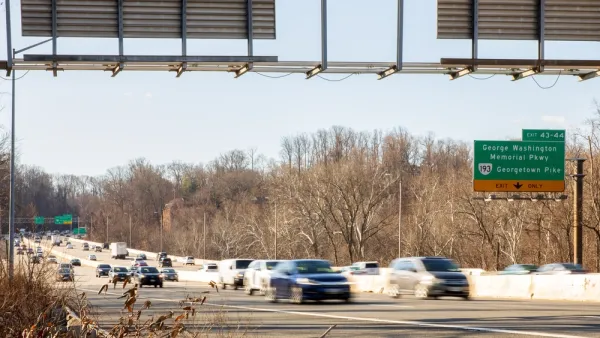
Maryland Toll Lane Plan Gains Federal Approval
In a victory for Governor Larry Hogan, who has championed the project, the Federal Highway Administration is allowing the Beltway expansion project to move ahead.
Maryland's $9 Billion Project Would Be the Nation's Largest P3 for Highways
Gov. Larry Hogan (R-Md.) announced last week plans for the largest highway contract awarded to a public-private partnership: adding four express toll lanes to the Capital Beltway and I-270. A third highway widening will be completed internally.
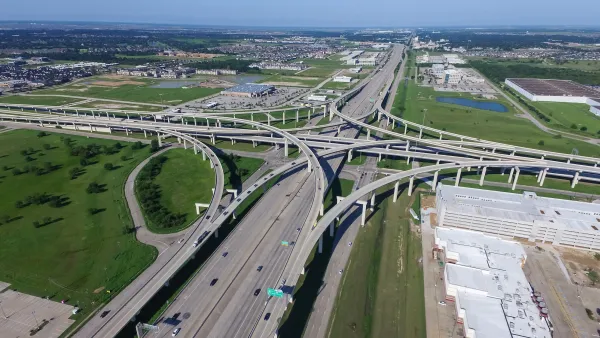
Induced demand is real: Commutes on Houston's 26-lane freeway take 51% longer after expansion
A massive freeway expansion only led to longer drive times, showing that building more lanes won't solve congestion.

Planetizen Federal Action Tracker
A weekly monitor of how Trump’s orders and actions are impacting planners and planning in America.

The state-sanctioned urbicide of Austin
People don’t kill cities. Freeways do.

US to reduce Colorado River water deliveries to Mexico
A new Colorado Treaty amendment reduces Mexico’s Colorado River water allocation by 250,000 acre feet.

5 New England states march closer to 800 megawatt wind energy project
Securing federal approval for the project may be complicated under the Trump administration, which has historically been hostile towards domestic wind power.

Baltimore to break ground on $50 million Transit Priority Project
The project will bring faster bus trips, safer streets and better bike connections to Baltimore.

Airbnb launches $250 million 'last-dollar financing' housing accelerator, makes first investment in Austin
The company will put $6.4 million towards affordable housing development in Texas’ capital.

FREE Course: Walkable City 1: Why Walkability?
After describing his path towards focusing on walkability as the essence of good planning, Jeff Speck marches through his five principal reasons for making more walkable places.
Reinventing Malls: Planning Alchemy—Turning Gray Fields Into Gold
The course focuses on the opportunities and imperatives that shape reinvention of mall sites.

Eagle County Government
Harvard University Graduate School of Design
Nashville Planning Department
The Architects Foundation
University of Cincinnati Online
The Pocatello Development Authority
The Urban Renewal Agency of the City of Pocatello
Journal of the American Planning Association