President Donald Trump rescinded environmental protections put in place by former President Barack Obama after the Deepwater Horizon oil spill.


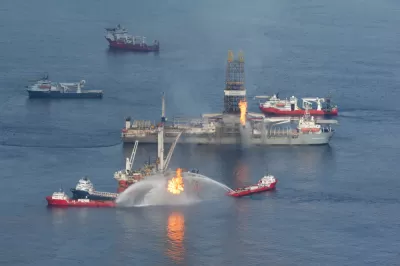
John Flesher of the Associated Press reports that President Trump rescinded an executive order signed by his predecessor in 2010, shortly after the Deepwater Horizon oil spill, to protect U.S. oceans and the Great Lakes.
According to Flesher, President Trump's replacement policy focuses on the economic potential of the bodies of water, rather than their protection.
In a separate news article, Timothy Cama writes that Trump's new executive order "[puts] a new emphasis on industries that use the oceans, particularly oil and natural gas drilling, while also mentioning environmental stewardship."
Criticism of Trump's action was swift. Miyoko Sakashita, director of the Center for Biological Diversity's oceans program, writes an opinion piece arguing that the repeal of President Obama's policy "makes it crystal clear that his administration views our oceans solely as a source of profits for the oil industry and other polluters." Sakashita adds: "He’s prioritizing the plunder of our seas over their protection."
Olivia Rosane also writes a critical opinion piece for EcoWatch, amplifying a statement released by Christy Goldfuss of the Center for American Progress describing Trump's executive order as "just the latest attack in what has become an all-out war on America's oceans."
FULL STORY: Trump scraps Obama policy on protecting oceans, Great Lakes

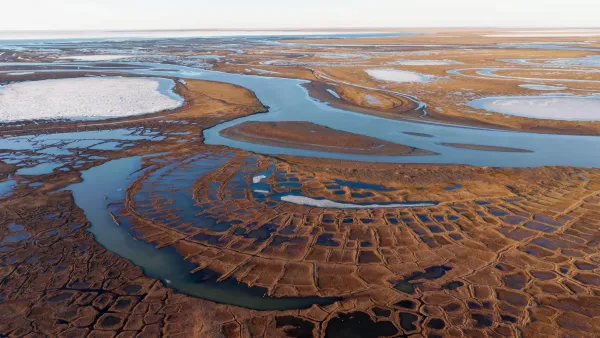
Drilling, seismic surveys in Alaska would require no environmental review under new Trump proposal
Seismic surveys can scar tundra and disturb wildlife, including female polar bears, and drilling has been known to alter caribou behavior and Arctic migration patterns.
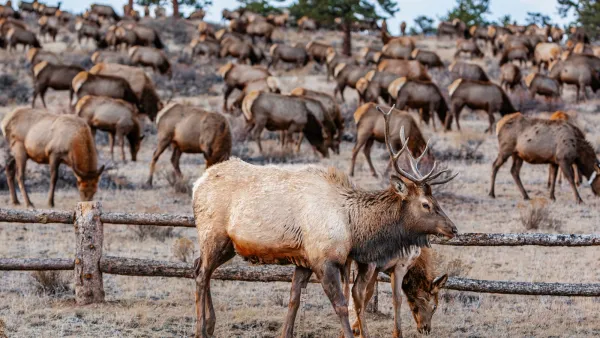
Colorado oil and gas land lease on public land could imperil nation's largest elk herd
The federal government approved the largest land lease to oil and gas interests in Colorado history.
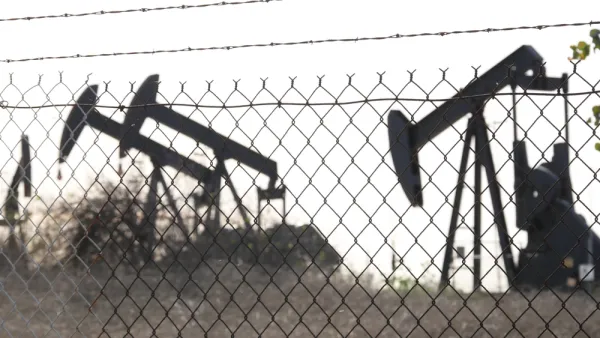
California Seals 21 Urban Oil Wells in South LA After Decades of Activism
The permanent closure of a long-troubled South Los Angeles oil site marks a hard-fought victory for residents and underscores the growing urgency of addressing hazardous idle wells in communities nationwide.

The state-sanctioned urbicide of Austin
People don’t kill cities. Freeways do.

US to reduce Colorado River water deliveries to Mexico
A new Colorado Treaty amendment reduces Mexico’s Colorado River water allocation by 250,000 acre feet.

New Jersey’s second-largest city bans standalone data centers
Jersey City will continue to allow co-location facilities, such as those meant for research institutions that store their own data.

Amtrak not solely to blame for New Jersey commuter rail's unreliability, report finds
A new study from the Garden State Initiative found that NJ Transit’s budget grew 20% across a 4 year period, but reliability declined significantly over the same period.

EPA erases limits on planet-warming pollution from power plants
Under Monday’s plan, power plants would still have some limits on how much mercury, arsenic and other contaminants they can emit.

Phoenix announces new on-demand transit service, more frequent RAPID buses
Both new services will launch in October, and are part of Phoenix's Project Effective Access Solutions for Easing Congestion.

FREE Course: Walkable City 1: Why Walkability?
After describing his path towards focusing on walkability as the essence of good planning, Jeff Speck marches through his five principal reasons for making more walkable places.
Reinventing Malls: Planning Alchemy—Turning Gray Fields Into Gold
The course focuses on the opportunities and imperatives that shape reinvention of mall sites.

Eagle County Government
Harvard University Graduate School of Design
Nashville Planning Department
The Architects Foundation
University of Cincinnati Online
The Pocatello Development Authority
The Urban Renewal Agency of the City of Pocatello
Journal of the American Planning Association