An excellent primer (refresher for many) on Smart Growth and the history of planning generally, by former San Francisco Planning and Urban Research Assoc. Exec. Director Jim Chappell


In this article about the need for Smart Growth, former SPUR President Jim Chappell provides a condensed history of smart planning and development. The topics summarized include Nippur in the Tigris-Euphrates valley 3500 years ago, Greek philosopher Hippodamus in 500 BC, military forts in 13th century England, Baron von Haussmann in mid-19th century Paris, the Supreme Court decision of Village of Euclid v. Ambler Realty Co. in 1926 upholding the legality of zoning, and other historic planning milestones. Chappell then goes on to discuss how zoning has become an impediment to smart growth. Chappell concludes by discussing the Smart Growth movement built on, among other things, the Ahwahnee Principles for Resource-Efficient Communities, and how to accomplish Smart Growth goals. For a primer or refresher on the underpinnings and future of Smart Growth, please see the source article.
Read the full story: What Makes Smart Growth “Smart”

Planning a New Subway to San Francisco's 'Sleepy' West Side
San Francisco is planning for new population growth and new housing developments on the West Side of the city, and is also expecting high quality public transit to fill the mobility needs of current and future residents.
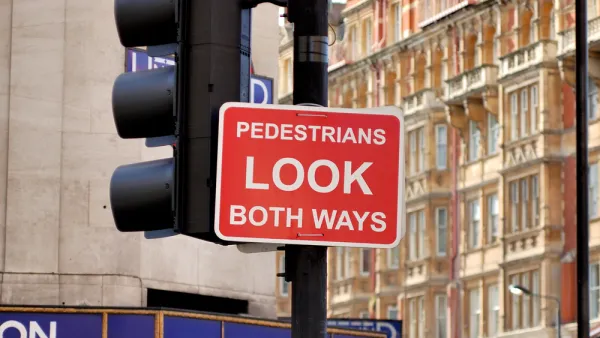
Transit-Walkability Collaborative Established
The new Transit-Walkability Collaborative works to create safe, healthy, equitable, and sustainable communities by harnessing the synergy between walkability and quality public transit service.

Even Chicago Struggles with Transit Oriented Development
As Chicago's population slowly dwindles, Yonah Freemark argues that the city needs to take advantage of one of its greatest assets: its transit network. Housing for residents of all incomes near transit stops may be the key.

Planetizen Federal Action Tracker
A weekly monitor of how Trump’s orders and actions are impacting planners and planning in America.

California plans to bury El Niño’s downpour
If the state plays its cards right, it may be able to store a billion acre-feet of El Niño’s water in aquifers.

Desperate measures: Advocates weigh draining Lake Powell to fill Colorado River
Draining the reservoir could reduce evaporation losses by a couple hundred thousand acre-feet.

US buildings threatened, destroyed by fires set to triple by 2060
Researchers found a high fire risk for socioeconomically vulnerable neighborhoods in the American West.

LA residents may be allowed to paint their own crosswalks
Councilwoman Katy Yaroslavsky put out a motion instructing the Los Angeles Department of Public Transportation to study the feasibility of allowing volunteers to paint crosswalks.

Dallas moves to overhaul its zoning code
The city's zoning reform will allow more multi-family and mixed-use developments.

FREE Course: Walkable City 1: Why Walkability?
After describing his path towards focusing on walkability as the essence of good planning, Jeff Speck marches through his five principal reasons for making more walkable places.
Reinventing Malls: Planning Alchemy—Turning Gray Fields Into Gold
The course focuses on the opportunities and imperatives that shape reinvention of mall sites.

City of Rosemead
Rutgers University, Edward J. Bloustein School of Planning and Public Policy
One Hundred Miles
Hunter College, City University of New York (CUNY)
The Architects Foundation
University of Cincinnati Online
City of Cambridge
Montrose County
The Pocatello Development Authority