Aerial photos show just how completely some areas of the city were transformed before the building typology was eliminated earlier this week.


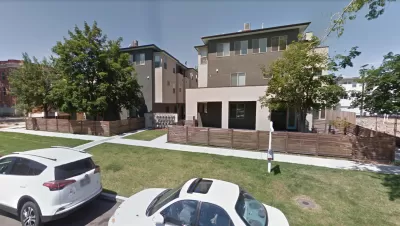
Monday night, the Denver City Council voted unanimously in favor of a zoning code amendment that will effectively shut down further development of the "slot home," a popular but widely derided building type that has proliferated in the city since a major zoning overhaul in 2010.
It's a victory for planners, designers, and neighborhood activists, but an article—with aerial photos—published in The Denver Post just before the vote shows how drastically the enormous number of slot homes in a few areas has changed the character of neighborhoods.
Like many U.S. cities, Denver is struggling to provide enough affordable housing for everyone who wants to live there, and the advantage of slot homes is they allow a maximum number of units per lot. But at half-a-million dollars each, slot homes aren’t exactly a solution for the city's most struggling residents, and as its real estate market continues to boom, Denver is also looking at creative financing and granny flats to address affordability.
FULL STORY: After years of booming development, Denver’s slot home crackdown comes too late for some neighborhoods


California Gives 15 Cities ‘Final Warning’ to Submit Mandatory Housing Plans
Communities are required to produce housing elements that accommodate sufficient housing for all income levels.
Small Connecticut Town Approves Controversial 96-Unit Apartment Complex
Just 1.4 percent of housing in the affluent enclave of Woodbridge qualifies as affordable.
Columbus Introduces New Rules Allowing ADUs in all Residential Districts
The city’s recent zoning code updates include new rules for secondary housing units.

The state-sanctioned urbicide of Austin
People don’t kill cities. Freeways do.

US to reduce Colorado River water deliveries to Mexico
A new Colorado Treaty amendment reduces Mexico’s Colorado River water allocation by 250,000 acre feet.

New Jersey’s second-largest city bans standalone data centers
Jersey City will continue to allow co-location facilities, such as those meant for research institutions that store their own data.

Amtrak not solely to blame for New Jersey commuter rail's unreliability, report finds
A new study from the Garden State Initiative found that NJ Transit’s budget grew 20% across a 4 year period, but reliability declined significantly over the same period.

EPA erases limits on planet-warming pollution from power plants
Under Monday’s plan, power plants would still have some limits on how much mercury, arsenic and other contaminants they can emit.

Phoenix announces new on-demand transit service, more frequent RAPID buses
Both new services will launch in October, and are part of Phoenix's Project Effective Access Solutions for Easing Congestion.

FREE Course: Walkable City 1: Why Walkability?
After describing his path towards focusing on walkability as the essence of good planning, Jeff Speck marches through his five principal reasons for making more walkable places.
Reinventing Malls: Planning Alchemy—Turning Gray Fields Into Gold
The course focuses on the opportunities and imperatives that shape reinvention of mall sites.

Eagle County Government
Harvard University Graduate School of Design
Nashville Planning Department
The Architects Foundation
University of Cincinnati Online
The Pocatello Development Authority
The Urban Renewal Agency of the City of Pocatello
Journal of the American Planning Association