Startup, Cooperative Capital, allows investors to buy into community investment projects and vote on which projects to fund.


Detroit-based investment company, Cooperative Capital, is offering a new kind of investment in small scale community projects. The firm aims to pool community resources from investors who put in as little as $1,000 and get their input on what to fund.
This for-profit development company looks to leverage a Kickstarter-like dynamic and allow citizens to crowd fund projects they'd like to see happen that might not get funding otherwise. "The first fund, which will likely launch this spring or summer, involved a challenging process of working with state regulators. But with that regulatory hurdle cleared, it should be easier to launch similar funds in other Michigan cities like Midland, Flint, Lansing, and others. The startup also is in talks with community groups in Oakland, Chicago, Baltimore, and several other cities nationally," Adele Peters reports for Fast Company.
The group aims to take on projects they determine can return a 6 percent profit annually. "Cooperative Capital, like a venture fund, will charge a small management fee, along with another fee if it reaches a certain performance threshold," Peters writes.
Read the full story: This Startup Lets Neighbors Pool Their Money To Invest In Their Communities

Clean Water Crisis Exacerbated by Coronavirus
Communities have demanded access to clean water for decades, in some cases. The coronavirus pandemic is compounding the struggle and illustrating the inadequacy of most local government responses.
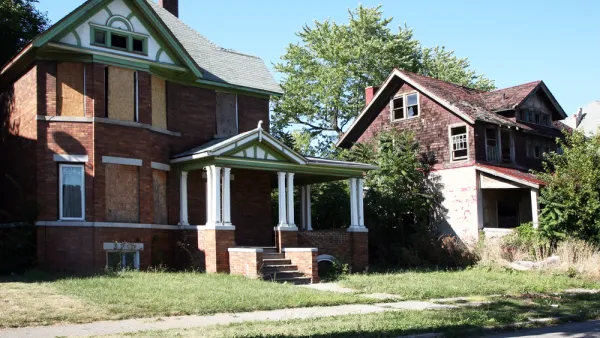
Detroit Receives Funding for Another Demolition Push
A recent influx of money to Detroit for demolitions of abandoned properties brings the city's total to $107 million. That money has established Detroit as the country's proving ground for the idea that demolitions stabilize struggling neighborhoods.
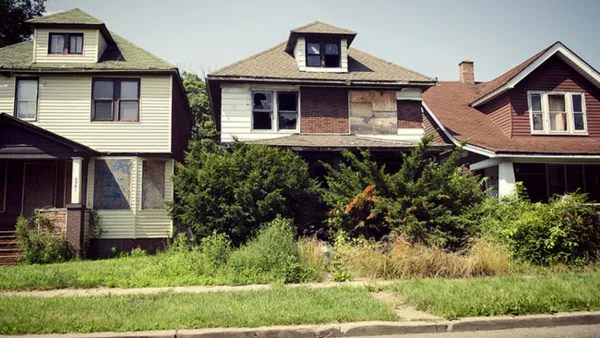
A Better Solution to Reusing Abandoned Property: Evidence from Flint and Detroit
Margaret Dewar of the University of Michigan blogs about her new article in Journal of Planning Education and Research, which investigates reuse of abandoned property in Detroit and Flint. You can download the article free until August 31, 2015.

Planetizen Federal Action Tracker
A weekly monitor of how Trump’s orders and actions are impacting planners and planning in America.

California plans to bury El Niño’s downpour
If the state plays its cards right, it may be able to store a billion acre-feet of El Niño’s water in aquifers.

Desperate measures: Advocates weigh draining Lake Powell to fill Colorado River
Draining the reservoir could reduce evaporation losses by a couple hundred thousand acre-feet.

Chicago voters approve permanent festival grounds, penalty for vacant property owners
Currently, major summer and fall festivals take over public parks for weeks at a time, drawing criticism from nearby residents

NYC votes to cut outdoor dining red tape, speed up permitting
New York City also voted to allow the Department of Transportation to begin work on urgent projects before notifying elected officials.

California appears to reject Prop. 45
The proposition would have expanded the projects that qualify for a streamlined environmental review, effectively paring down the California Environmental Quality Act.

FREE Course: Walkable City 1: Why Walkability?
After describing his path towards focusing on walkability as the essence of good planning, Jeff Speck marches through his five principal reasons for making more walkable places.
Reinventing Malls: Planning Alchemy—Turning Gray Fields Into Gold
The course focuses on the opportunities and imperatives that shape reinvention of mall sites.

City of Rosemead
Rutgers University, Edward J. Bloustein School of Planning and Public Policy
One Hundred Miles
Hunter College, City University of New York (CUNY)
The Architects Foundation
University of Cincinnati Online
City of Cambridge
Montrose County
The Pocatello Development Authority