Advocates and politicians are mustering ideas and support for new tree ordinances that line up with the city's climate goals.


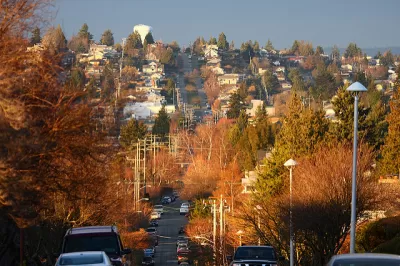
Advocates are pushing for better tree protection practices in the city of Seattle.
According to an article by Amy Radil, the city's complaint-based system is often too late to save trees, Advocate Carolyn Rodenberg, of 150 Trees and Me, says "We need to get it to where we're protecting the trees while they're still standing."
A prominent example of the failure of the city's current protection scheme came when a group of homeowners cut own trees to improve their views. The homeowners ended up paying an $800,000 fine for removing the trees, but the trees are gone.
Rodenberg's group is pushing the city to combine its climate goals with any potential tree ordinance the city might approve in the future. Meanwhile, the city lacks any practices to track trees or to enforce compliance from private landowners. Nearby suburbs, however, can provide the city of Seattle with models for better tracking and enforcing tree regulations.
Read the full story: Seattle needs more trees. But who's counting?

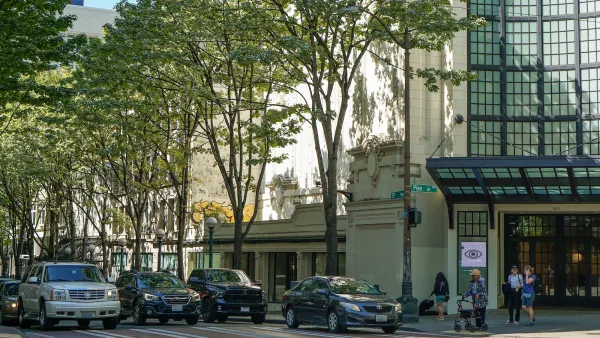
Washington Urban Forestry Program Faces 'Existential' Budget Cut
A proposed budget eliminates funding for a key urban forestry program that funds greening efforts across the state.
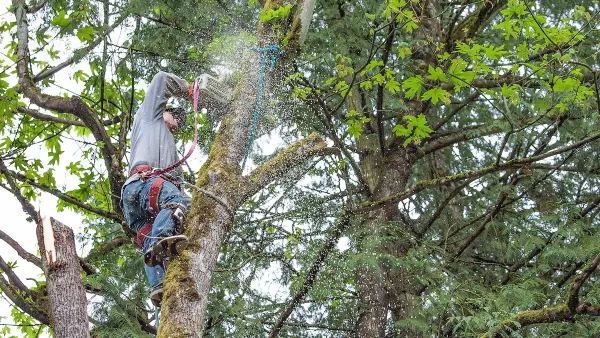
Seattle Conflict Between Trees and Housing Heats up
A 2023 update to Seattle’s tree ordinance has led to sharp increase in the number of trees being cut down for redevelopment, prompting advocates to call for better protection of the city’s tree canopy.
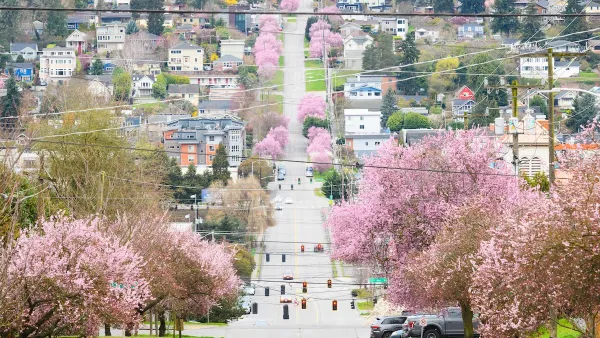
Opinion: Housing Versus Trees Is a False Choice; Swap Pavement for Trees Instead
Seattle’s goal to cover 30 percent of the city with tree canopy by 2037 doesn’t need to be sacrificed in favor of density. There’s a better way.

Planetizen Federal Action Tracker
A weekly monitor of how Trump’s orders and actions are impacting planners and planning in America.

Amtrak, CN end decades-long dispute with eight-year agreement
The new operating agreement establishes an updated framework for the companies to work together, including processes to resolve disputes.

Northwest rail fans eager for Sept. 30 debut of Amtrak’s Airo fleet
Get ready for that new train smell and more seats. But they won’t go faster or run more frequently on the Cascades route in Washington and Oregon.

Brightline Florida files for bankruptcy
The transit company is over $5 billion in debt.

St. Louis Metro to test if single-car trains can reduce operating costs, maintain rider satisfaction
The pilot program will run from October to spring 2027, and begin with one single-car train operating on Metrolink’s Red and Blue lines.

Pennsylvania is building data centers in abandoned mines
Housing data centers in mines provides an alternative to destroying local forests and may spare residents from data centers’ noise and air pollution.

FREE Course: Walkable City 1: Why Walkability?
After describing his path towards focusing on walkability as the essence of good planning, Jeff Speck marches through his five principal reasons for making more walkable places.
Reinventing Malls: Planning Alchemy—Turning Gray Fields Into Gold
The course focuses on the opportunities and imperatives that shape reinvention of mall sites.

City of Thousand Oaks
City of Wisconsin Rapids
Harvard University Graduate School of Design
The Architects Foundation
University of Cincinnati Online
The Pocatello Development Authority
The Urban Renewal Agency of the City of Pocatello