CTA upgrades will speed up trains and increase capacity for four train lines in the city.


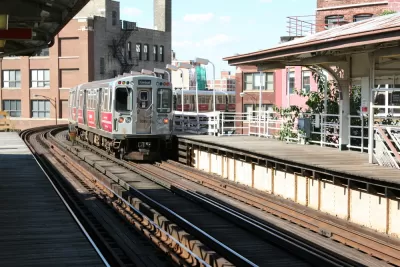
Chicago's new tax on Uber and Lyft will be used to update rail equipment to speed up trains on the CTA's four busiest train lines. "Today the transit agency announced that the projected $16 million raised in 2018, and $21 million generated in 2018, will help pay for a $179 million multiyear, citywide rail, railroad tie, and power upgrade project dubbed 'FastTracks,'" John Greenfield writes for Streetsblog Chicago. The upgrades, the last of which is scheduled to be completed in 2021, will also give the affected passengers a smoother ride.
Thought the CTA has lost ridership overall, these improvements should boost capacity on some of the lines where ridership is growing. "The CTA says electrical power improvements along the Blue Line’s O’Hare branch will allow the agency to run extra trains during high-ridership times like morning rush hours, which will help address crowded trains and reduce the amount of time customers have to wait on platforms," Greenfield reports. This should relieve some crowding in the increasingly dense Wicker Park and Logan Square neighborhoods.
Read the full story: CTA Will Use Ride-Hailing Fee Revenue for “FastTracks” Work

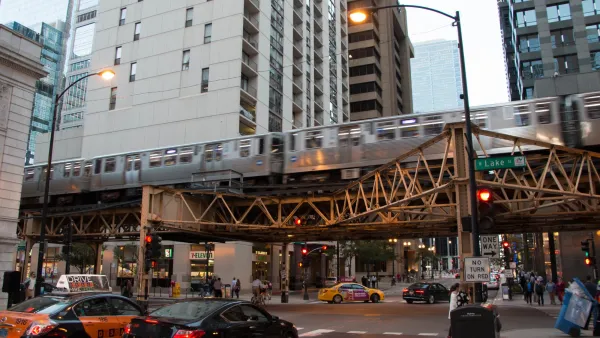
Ride-Hailing Report Examines Effects on Chicago's Congestion
A new report looks at how the increase of ride-hailing in Chicago is affecting infrastructure and mobility.
Ride-Hailing Fee on the Table in Los Angeles
The Los Angeles County Metropolitan Transportation Authority will decide this week whether or not to proceed with separate studies of two ideas that would generate transportation funding from car trips and potentially influence driver behavior.

Congestion Pricing—Only for Ride-Hailing Services
Uber and other ride hailing services have put a lot of cars on the road. Could a congestion fee on users of these services help curb the impact of those cars?

Planetizen Federal Action Tracker
A weekly monitor of how Trump’s orders and actions are impacting planners and planning in America.

California plans to bury El Niño’s downpour
If the state plays its cards right, it may be able to store a billion acre-feet of El Niño’s water in aquifers.

Chicago breaks ground on $3 billion megadevelopment
The new neighborhood, titled Foundry Park, will one day host 3,700 residences.

California High-Speed Rail Authority CEO resigns after $600,000 scandal
Under Ian Choudri, the authority used taxpayer dollars to fund first class flights and trips to nightclubs.

Want to study the Missouri River? Soon, you may need unanimous approval from 10 states
Legislation would require 10 governors’ permission to study or build projects moving water outside the basin.

Desperate measures: Advocates weigh draining Lake Powell to fill Colorado River
Draining the reservoir could reduce evaporation losses by a couple hundred thousand acre-feet.

FREE Course: Walkable City 1: Why Walkability?
After describing his path towards focusing on walkability as the essence of good planning, Jeff Speck marches through his five principal reasons for making more walkable places.
Reinventing Malls: Planning Alchemy—Turning Gray Fields Into Gold
The course focuses on the opportunities and imperatives that shape reinvention of mall sites.

City of Rosemead
Rutgers University, Edward J. Bloustein School of Planning and Public Policy
One Hundred Miles
Hunter College, City University of New York (CUNY)
The Architects Foundation
University of Cincinnati Online
City of Cambridge
Montrose County
The Pocatello Development Authority