The price of a permit to build an accessory dwelling units in the city of Thousand Oaks in Southern California is prohibitive—putting the permitting fee in opposition to the stated intent of the city's zoning code and state law.



It's rare that we post a submission from the letters to the editor section of a newspaper's editorial page, but a letter by Trevor Hughes to the Thousand Oaks Acorn is informative of how California's 2016 law, SB 1069, is playing out at the local level.
According to Hughes, AB 1069 paved the way for Thousand Oaks to adopt accessory dwelling unit criteria—a development that he welcomed and hoped to take advantage of at his home as his parents age. However, Hughes reports he was "shocked and appalled to discover that the permitting fees alone in Thousand Oaks are $13,190 to $26,325." According to Hughes, that explains why only 11 property owners have applied for ADUs in Thousand Oaks.
Hughes is responding to a news article by Becca Whitehall that examines the slow response to the new ADU rules in Thousand Oaks without settling on an explanation for why residents haven't sought more permits.
The Thousand Oaks example is not the first reported case of localities struggling to meet the mandates of the state law. Irvin Dawid reported in December 2017 on the example of Santa Rosa. On the other hand, a recent study by the Terner Center for Housing Innovation at the University of California, Berkeley found evidence of rapid growth in ADU permitting in other cities since the adoption of the law.
FULL STORY: ADU permits are prohibitively expensive

Complying With New State Laws on ADUs No Easy Matter
Santa Rosa is struggling to complying with two laws passed last year to encourage construction of inlaw units to increase affordable housing. Council members are concerned that loosened restrictions would degrade neighborhood character.

Homeowners Blame PG&E for Delays in ADU Permits
The utility says it has dramatically reduced its backlog, but applicants say they still face months-long delays for approvals for new electrical work.
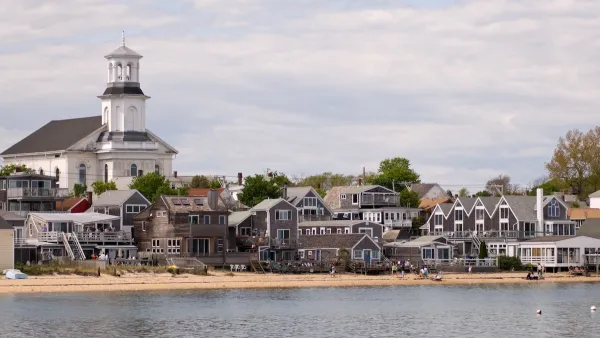
Affordable Homes Act Targets ADUs, ‘Seasonal Communities’ in Massachusetts
State legislators say the new law could support 65,000 new housing units.

Planetizen Federal Action Tracker
A weekly monitor of how Trump’s orders and actions are impacting planners and planning in America.

The state-sanctioned urbicide of Austin
People don’t kill cities. Freeways do.

US to reduce Colorado River water deliveries to Mexico
A new Colorado Treaty amendment reduces Mexico’s Colorado River water allocation by 250,000 acre feet.

5 New England states march closer to 800 megawatt wind energy project
Securing federal approval for the project may be complicated under the Trump administration, which has historically been hostile towards domestic wind power.

Baltimore to break ground on $50 million Transit Priority Project
The project will bring faster bus trips, safer streets and better bike connections to Baltimore.

Airbnb launches $250 million 'last-dollar financing' housing accelerator, makes first investment in Austin
The company will put $6.4 million towards affordable housing development in Texas’ capital.

FREE Course: Walkable City 1: Why Walkability?
After describing his path towards focusing on walkability as the essence of good planning, Jeff Speck marches through his five principal reasons for making more walkable places.
Reinventing Malls: Planning Alchemy—Turning Gray Fields Into Gold
The course focuses on the opportunities and imperatives that shape reinvention of mall sites.


Eagle County Government
Harvard University Graduate School of Design
Nashville Planning Department
The Architects Foundation
University of Cincinnati Online
The Pocatello Development Authority
The Urban Renewal Agency of the City of Pocatello
Journal of the American Planning Association