Permits have shot up after California passed a landmark law in 2016 to make it easier to permit and construct accessory dwelling units (ADUs).


The Terner Center for Housing Innovation at UC Berkeley has released a new brief [pdf] that "discusses the benefits of ADUs for supply-restricted and cost-burdened regions, and examines data from California’s largest cities (and a handful of other jurisdictions) to measure how much interest in, and production of ADUs has increased in the past year."
"The results are telling: across the board cities are seeing significant increases in ADU applications, with many cities doubling, tripling, or even quadrupling their totals from 2016," according to a post announcing the new report. For instance, Los Angeles saw 90 ADU applications in 2015. In 2017, that total reached 1,980.
The policy brief includes recommendations for removing some of the remaining barriers to ADU permitting and construction in cities around the state.
FULL STORY: ADU UPDATE: EARLY LESSONS AND IMPACTS OF CALIFORNIA’S STATE AND LOCAL POLICY CHANGES


ADUs account for nearly 28% of Bay Area housing permits
In Hillsborough, 56 of 58 homes permitted in 2025 were ADUs.
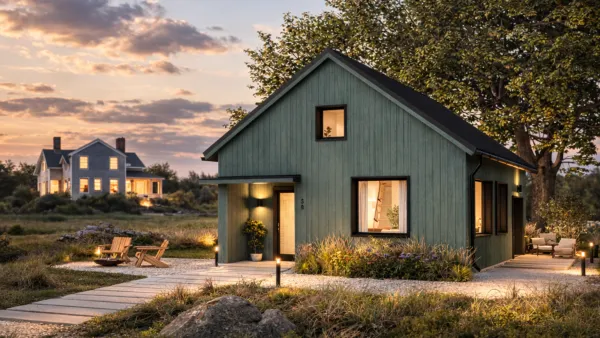
Report: Massachusetts zoning reform not enough to stimulate ADU production
Massachusetts cities issued over 1,200 applications for ADUs in the last year, short of the Healey administration's goal of 1,600 to 2,000 units per year.
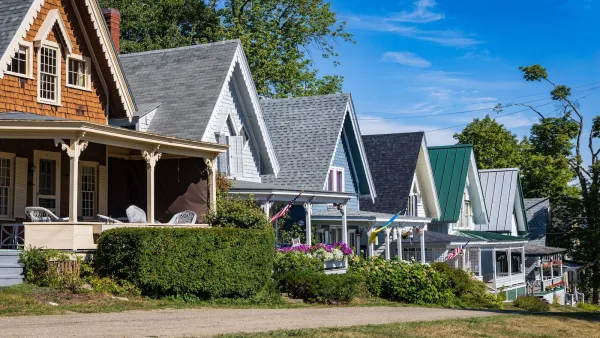
ADUs accounted for 9% of new Maine building permits in 2025
Maine officials approved roughly 500 ADU permits last year.

Planetizen Federal Action Tracker
A weekly monitor of how Trump’s orders and actions are impacting planners and planning in America.

The state-sanctioned urbicide of Austin
People don’t kill cities. Freeways do.

US to reduce Colorado River water deliveries to Mexico
A new Colorado Treaty amendment reduces Mexico’s Colorado River water allocation by 250,000 acre feet.

5 New England states march closer to 800 megawatt wind energy project
Securing federal approval for the project may be complicated under the Trump administration, which has historically been hostile towards domestic wind power.

Baltimore to break ground on $50 million Transit Priority Project
The project will bring faster bus trips, safer streets and better bike connections to Baltimore.

Airbnb launches $250 million 'last-dollar financing' housing accelerator, makes first investment in Austin
The company will put $6.4 million towards affordable housing development in Texas’ capital.

FREE Course: Walkable City 1: Why Walkability?
After describing his path towards focusing on walkability as the essence of good planning, Jeff Speck marches through his five principal reasons for making more walkable places.
Reinventing Malls: Planning Alchemy—Turning Gray Fields Into Gold
The course focuses on the opportunities and imperatives that shape reinvention of mall sites.

Eagle County Government
Harvard University Graduate School of Design
Nashville Planning Department
The Architects Foundation
University of Cincinnati Online
The Pocatello Development Authority
The Urban Renewal Agency of the City of Pocatello
Journal of the American Planning Association