A $20 million hole in the Greater Cleveland Regional Transit Authority's (RTA) budget means 15 bus lines around the city will run less frequently. More cuts are soon to come.


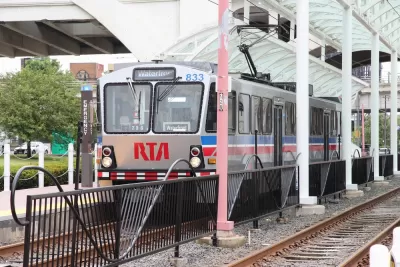
"After losing $20.2 million per year from a source of sales taxes, RTA leaders announced cuts Tuesday in 15 routes' frequency of service effective March 11," reports Grant Segall.
According to Segall, the service reduction will take place on some of the system's least-used routes, but no routes will be cut entirely. The 15 routes in question "will be traveled up to half as often at certain times."
Trouble over transit funding in Ohio has been brewing for several months now, after Medicaid stopped paying its state-mandated sales taxes for managed care. "Ohio officials negotiated franchise fees for managed care that cover their share of those taxes but not the transit or county shares," according to Segall.
Mathew Richmond seemed to predict the announcement of the service reduction when he wrote the day before, and in much detail, on the funding shortfalls facing the RTA.
Read the full story: Coping with a tax loss, RTA will serve 15 routes less often starting March 11 (photos)

A Model for Cleveland's Transit Woes: Houston
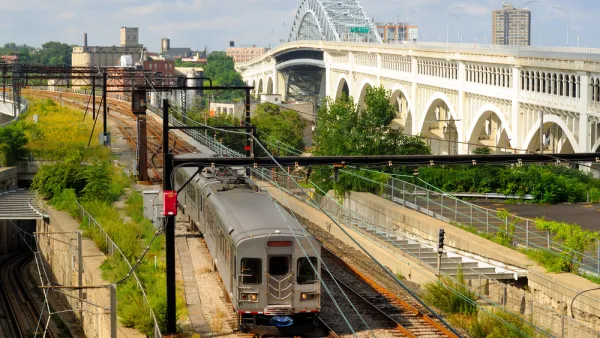
Alex Baca says following Houston's lead could lead the Greater Cleveland Regional Transit Authority out of a budget and ridership spiral.
As the State Abandons Public Transit, Is a Regional Solution Possible for Northeast Ohio?
Many states cover around 20 percent of the costs of public transit. In Ohio, that figure has dropped to 1 percent.

Bay Area Transit Tax Measure Awaits Governor's Signature
A 5-county sales tax measure to head-off the 'fiscal cliffs' facing Bay Area transit agencies may appear on the November 2026 ballot in what would likely be Regional Measure 4. A signature-gathering effort could reduce the voter threshold to 50% + 1.

Planetizen Federal Action Tracker
A weekly monitor of how Trump’s orders and actions are impacting planners and planning in America.

The state-sanctioned urbicide of Austin
People don’t kill cities. Freeways do.

US to reduce Colorado River water deliveries to Mexico
A new Colorado Treaty amendment reduces Mexico’s Colorado River water allocation by 250,000 acre feet.

Nation's most wind-powered state turns to coal as data centers increase energy demand
For the first time in decades, Iowa has increased its generation of coal power.

NYC cools commuters with city's first rain garden above a bus stop
New York City officials say the plants in the rain garden can absorb 16 gallons of rainwater during heavy storms.

Brightline West’s future may rely on $6 billion federal loan
The company has until Nov. 2 to make a $400 million equity investment into its proposed high-speed rail line.

FREE Course: Walkable City 1: Why Walkability?
After describing his path towards focusing on walkability as the essence of good planning, Jeff Speck marches through his five principal reasons for making more walkable places.
Reinventing Malls: Planning Alchemy—Turning Gray Fields Into Gold
The course focuses on the opportunities and imperatives that shape reinvention of mall sites.

Eagle County Government
Harvard University Graduate School of Design
Nashville Planning Department
The Architects Foundation
University of Cincinnati Online
The Pocatello Development Authority
The Urban Renewal Agency of the City of Pocatello
Journal of the American Planning Association