The deliverables in the Future City competition—open to children in grades six through eight—include a virtual city design (using SimCity), a scale model, a project plan, and more.


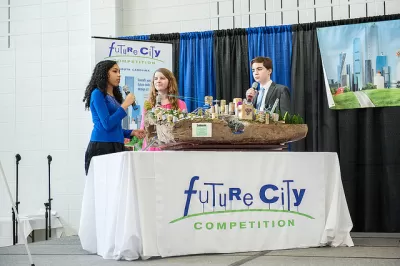
Tatiana Sanchez provides a dispatch from the Northern California Future City competition, where "40 teams of middle school students from across the Bay Area and beyond who showcased their 'future cities' on large tabletop models."
According to Sanchez, Future City "challenges students to imagine, design and build the cities of their dreams." This year's competition focused on the challenges of the "The Age-Friendly City," asking students "to create cities that would be accommodating of older generations."
Sanzhez notes that Future City's mission is to introduce careers in the sciences and engineering to students of all demographic backgrounds—previous competitions focusing on stormwater management, urban agriculture, public spaces, and green energy show that the competition cultivates an early interest and knowledge of the many forms of planning is inherent in the process.
Regional competition winners from around the country will meet in Washington, D.C. this February to determine a national winner.
Read the full story: Middle schoolers compete to create ‘future cities’ for older generations

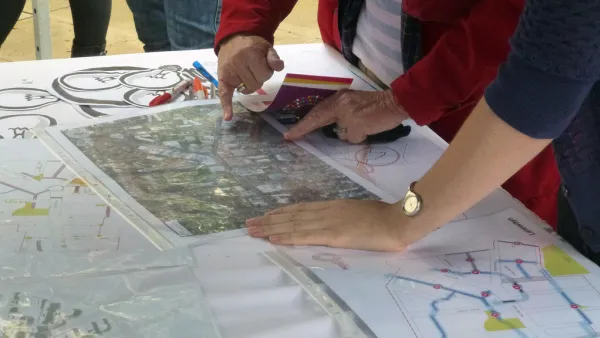
Why Aren’t There More Planners?
Planning can be a great career for socially conscious individuals, but university programs are struggling to attract new students to the field. A trio of academics are raising awareness about the field through community activation.
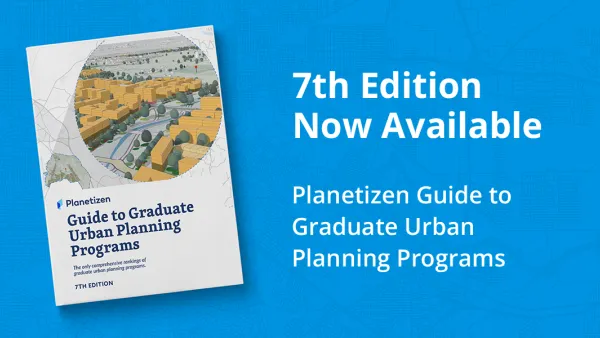
The Top Schools For Urban Planners
The 7th Edition of the Planetizen Guide to Graduate Urban Planning Programs, now available, includes an updated ranking of the Top 25 master’s programs in urban planning, city planning, regional planning, and community planning.

The Top Planning Courses of 2022
A list of the top planning education resources, according to the users of Planetizen Courses.

Planetizen Federal Action Tracker
A weekly monitor of how Trump’s orders and actions are impacting planners and planning in America.

‘Going backwards:’ Baltimore mayor, students rally against state's transit funding plan
Maryland's proposed six-year plan provides no funding for Baltimore’s BMORE bus program and reduces its road maintenance funding.

Detroit to transform waterfront with $2.2 billion investment
Developers will convert about 18 acres of unused parking lot space into civic spaces.

Planned $2 billion courthouse in MA sparks tension with local government
Springfield owns an essential piece of the land developers intend to build on, and some city officials do not want to see the project come to fruition.

Californians can now transform balconies into power generators
Gov. Gavin Newsom has legalized plug-in solar technology, which allows residents to plug solar panels directly into their outlets

This 85-year-old ranch is Texas’ newest state park
The 650 acre ranch is one of the largest parcels of land along Lake Palestine.

FREE Course: Walkable City 1: Why Walkability?
After describing his path towards focusing on walkability as the essence of good planning, Jeff Speck marches through his five principal reasons for making more walkable places.
Reinventing Malls: Planning Alchemy—Turning Gray Fields Into Gold
The course focuses on the opportunities and imperatives that shape reinvention of mall sites.

City of Thousand Oaks
City of Wisconsin Rapids
Harvard University Graduate School of Design
The Architects Foundation
University of Cincinnati Online
Northern Illinois Transit Authority (NITA)
The Pocatello Development Authority
The Urban Renewal Agency of the City of Pocatello