A new speaker of the New York City Council is expected to change the way development negotiations play out for local councilmembers.


Sally Goldenberg offers insight into the potential political effects of a new council speaker in New York City.
The newly elected speaker, Ryan Johnson, has "indicated he will take a more active role in the Council’s land use negotiations," according to Goldenberg.
For context, the previous speaker, Melissa Mark-Viverito, had a "hands-off style" that proved to be an obstacle to Mayor Bill de Blasio's goals for housing and development. "Mark-Viverito, whose term as speaker ended on Dec. 31, agreed with much of the mayor's agenda," according to Goldenberg. "But she gave the other 50 legislators control over the future of development in their districts, allowing them to reject unpopular residential projects and, in recent cases, attempt to block proposals that don't even require public input."
Goldenberg also details how former Mayor Michael Bloomberg and former Council Speaker Christine Quinn negotiated the minutia of development deals, often trading down zonings in nearby neighborhoods to deliver an approval.
During de Blasio's term, several high-profile projects have been shot down by local councilmembers. Although Johnson has said he will support local councilmembers, but also introduced the idea that he might overrule them on occasion.
FULL STORY: As Speaker, Johnson to take a different approach to land use decisions


New York City Polystyrene Ban Took Effect New Year's Day
Thanks to two recent New York State court rulings, disposable food and beverage containers will no longer be made from polystyrene in the nation's largest city. The ban was originally proposed by Mayor Michael Bloomberg in February 2013.
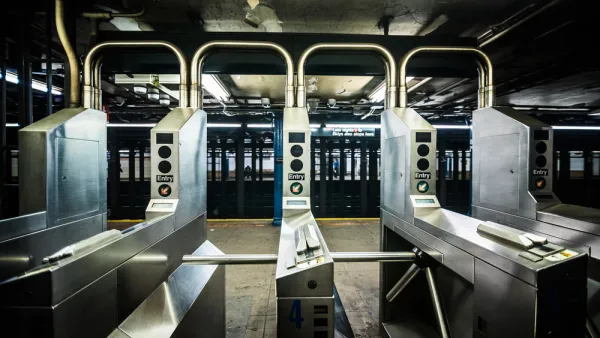
Means-Based, Transit-Fare Discounts Take a Leap Forward in the Big Apple
The 2019 New York City budget includes $106 million to subsidize half the transit fare for qualified residents for six months. The city joins the ranks of Seattle, Toronto, and the Bay Area that offer income-based discounts for transit fares.
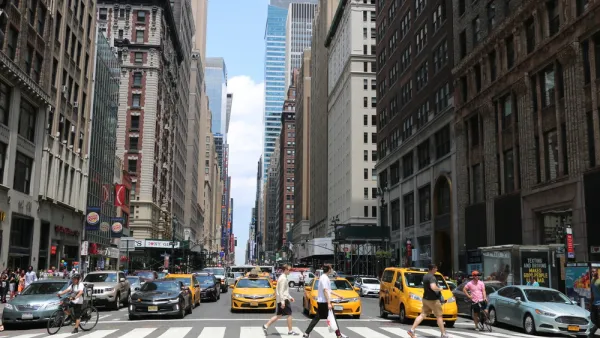
Praise for Gov. Andrew Cuomo from New York Times on Cordon Pricing
Thanks to the governor's support, there is reason for optimism that a plan to charge motorists entering Manhattan below 60th St. and toll the East River bridges will have a better outcome than Mayor Michael Bloomberg's plan did in April 2008.

The state-sanctioned urbicide of Austin
People don’t kill cities. Freeways do.

US to reduce Colorado River water deliveries to Mexico
A new Colorado Treaty amendment reduces Mexico’s Colorado River water allocation by 250,000 acre feet.

New Jersey’s second-largest city bans standalone data centers
Jersey City will continue to allow co-location facilities, such as those meant for research institutions that store their own data.

Amtrak not solely to blame for New Jersey commuter rail's unreliability, report finds
A new study from the Garden State Initiative found that NJ Transit’s budget grew 20% across a 4 year period, but reliability declined significantly over the same period.

EPA erases limits on planet-warming pollution from power plants
Under Monday’s plan, power plants would still have some limits on how much mercury, arsenic and other contaminants they can emit.

Phoenix announces new on-demand transit service, more frequent RAPID buses
Both new services will launch in October, and are part of Phoenix's Project Effective Access Solutions for Easing Congestion.

FREE Course: Walkable City 1: Why Walkability?
After describing his path towards focusing on walkability as the essence of good planning, Jeff Speck marches through his five principal reasons for making more walkable places.
Reinventing Malls: Planning Alchemy—Turning Gray Fields Into Gold
The course focuses on the opportunities and imperatives that shape reinvention of mall sites.

Eagle County Government
Harvard University Graduate School of Design
Nashville Planning Department
The Architects Foundation
University of Cincinnati Online
The Pocatello Development Authority
The Urban Renewal Agency of the City of Pocatello
Journal of the American Planning Association