A rezoning expected to go into effect in the neighborhood of Spruce Hill in Philadelphia chooses historic preservation over potential student housing developments.


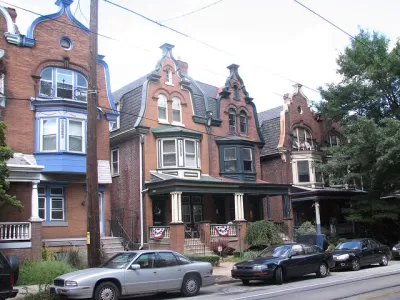
A proposed rezoning of the Spruce Hill neighborhood in Philadelphia "is intended to protect the iconic Victorian homes in Spruce Hill from demolition," according to an article by Jake Blumgart.
The article describes the rezoning proposal as a "backdoor" and a "rearguard action" at different moments. The bill that would enact the rezoning was "quietly slipped through City Council," according to Blumgart.
At stake are what neighborhood booster believe to be the largest collection of Victorian townhomes in the United States on one hand, and the neighborhood's proximity to the University of Pennsylvania on the other. "The current zoning bill would remap strategic areas of the neighborhood from multi-family to single family to make it harder for developers to build student housing," according to Blumgart.
While neighborhood advocates hope the rezoning will slow demolitions, critics fear the rezoning will make Spruce Hill even more expensive. Blumgart also reports that the bill is currently waiting for Mayor Jim Kenney's (expected) signature.
Read the full story: Spruce Hill zoning remapping is backdoor historic preservation


Philadelphia City Council Pushing for More Control Over Zoning Variances
A cause abandoned by the Philadelphia City in 2019 is on the table again.
Mayoral Veto Kills Controversial Philadelphia Downzoning
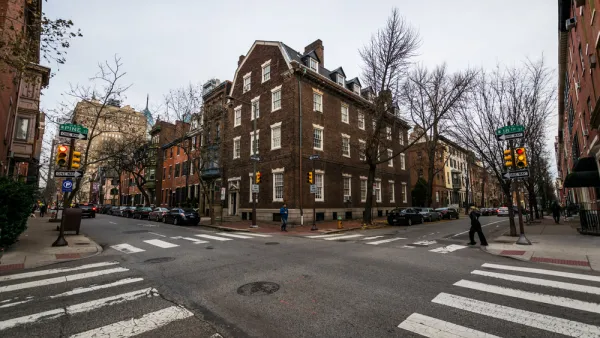
The mayor, planning staff, and the Philadelphia Planning Commission agree. The Philadelphia City Council and residents of the wealthy neighborhood of Society Hill, not so much.
Newly Exclusionary Zoning Expected for Approval in Philadelphia Neighborhood
The Philadelphia City Council is expected to approve new zoning for Society Hill over the objections of the Planning Commission and city planning staff.

Planetizen Federal Action Tracker
A weekly monitor of how Trump’s orders and actions are impacting planners and planning in America.

The state-sanctioned urbicide of Austin
People don’t kill cities. Freeways do.
Colorado’s Largest Data Center Could Rise Next to Homes — Without a Public Hearing
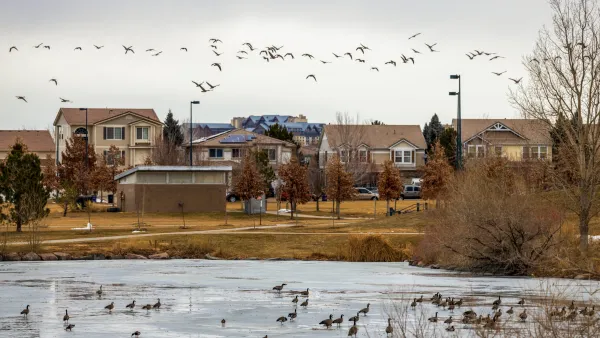
The proposed campus would consume 11 times the power of Denver International Airport; as it has across the country, opposition mounts.

Nation's most wind-powered state turns to coal as data centers increase energy demand
For the first time in decades, Iowa has increased its generation of coal power.

NYC cools commuters with city's first rain garden above a bus stop
New York City officials say the plants in the rain garden can absorb 16 gallons of rainwater during heavy storms.

Brightline West’s future may rely on $6 billion federal loan
The company has until Nov. 2 to make a $400 million equity investment into its proposed high-speed rail line.

FREE Course: Walkable City 1: Why Walkability?
After describing his path towards focusing on walkability as the essence of good planning, Jeff Speck marches through his five principal reasons for making more walkable places.
Reinventing Malls: Planning Alchemy—Turning Gray Fields Into Gold
The course focuses on the opportunities and imperatives that shape reinvention of mall sites.

Greater Baltimore Committee
Eagle County Government
Harvard University Graduate School of Design
The Architects Foundation
University of Cincinnati Online
The Pocatello Development Authority
The Urban Renewal Agency of the City of Pocatello
Journal of the American Planning Association