A victory for local control: Memphis city leaders found a way to rid their city of two racist monuments, over the objection of the State Legislature.


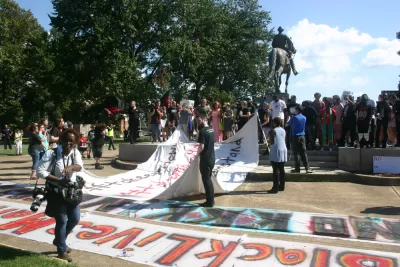
"The city of Memphis sold two public parks containing Confederate monuments to a nonprofit Wednesday in a massive, months-in-the-planning operation to take the statues down overnight," reports Ryan Poe.
"The City Council unanimously approved the sale of Health Science Park, home of Confederate Gen. Nathan Bedford Forrest, and its easement on Fourth Bluff Park, home of Confederate President Jefferson Davis, for $1,000 each to Memphis Greenspace Inc. Fourth Bluff, or Memphis Park, is owned by a group called The Overton Heirs," adds Poe.
Poe offers additional details of the deal that enabled the move, as well as a dispatch from the scene that night statues were removed, where a "chant of "the people united will never be defeated" spread through the crowd," watching the statues come down.
German Lopez picked up the news of the statues' demise for Vox, noting that the "mostly white" State Legislature fought to protect the statues while the "mostly black" city found a way to bring them down.
The state is expected to file a lawsuit to reverse the sale of the parks.
Read the full story: Memphis removes Confederate statues from Downtown parks

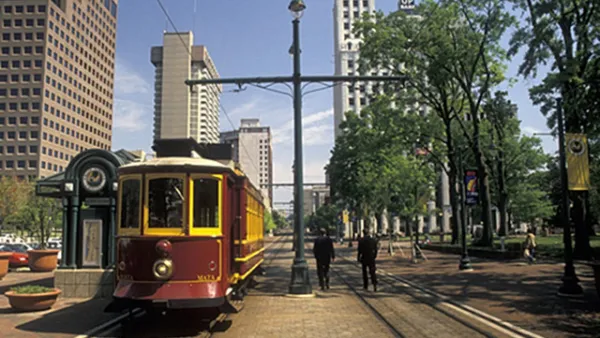
Memphis Downtown Boom Highlights the Potential of Adaptive Reuse
The city of Memphis, Tennessee is in the middle of an understated boom focused on downtown development and adaptive reuse.
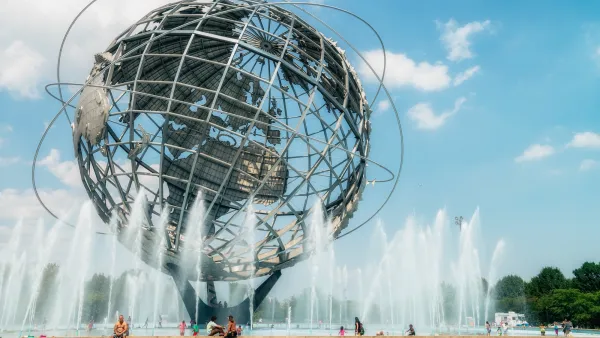
Historic Queens park is getting a $120M upgrade
The borough's largest park will undergo significant upgrades for accessibility, flood mitigation and historic preservation.
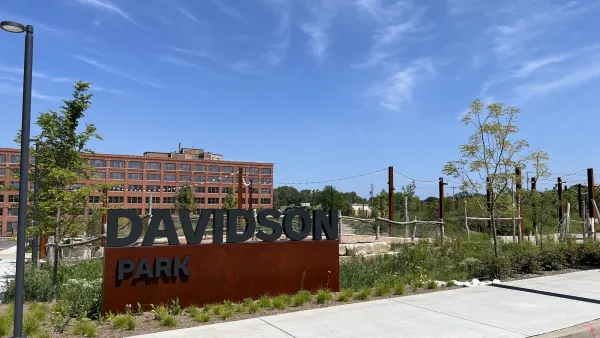
Harley-Davidson turned a Milwaukee parking lot into a green oasis
The park, adjacent to Harley-Davidson headquarters, doubles as stormwater retention infrastructure.

Planetizen Federal Action Tracker
A weekly monitor of how Trump’s orders and actions are impacting planners and planning in America.

The state-sanctioned urbicide of Austin
People don’t kill cities. Freeways do.

Colorado’s Largest Data Center Could Rise Next to Homes — Without a Public Hearing
The proposed campus would consume 11 times the power of Denver International Airport; as it has across the country, opposition mounts.

Nation's most wind-powered state turns to coal as data centers increase energy demand
For the first time in decades, Iowa has increased its generation of coal power.

NYC cools commuters with city's first rain garden above a bus stop
New York City officials say the plants in the rain garden can absorb 16 gallons of rainwater during heavy storms.

Brightline West’s future may rely on $6 billion federal loan
The company has until Nov. 2 to make a $400 million equity investment into its proposed high-speed rail line.

FREE Course: Walkable City 1: Why Walkability?
After describing his path towards focusing on walkability as the essence of good planning, Jeff Speck marches through his five principal reasons for making more walkable places.
Reinventing Malls: Planning Alchemy—Turning Gray Fields Into Gold
The course focuses on the opportunities and imperatives that shape reinvention of mall sites.

Greater Baltimore Committee
Eagle County Government
Harvard University Graduate School of Design
The Architects Foundation
University of Cincinnati Online
The Pocatello Development Authority
The Urban Renewal Agency of the City of Pocatello
Journal of the American Planning Association