While warehousing and ecommerce jobs are steadily increasing in most parts of the country, rural areas are particularly hard hit by the struggles of the retail sector.


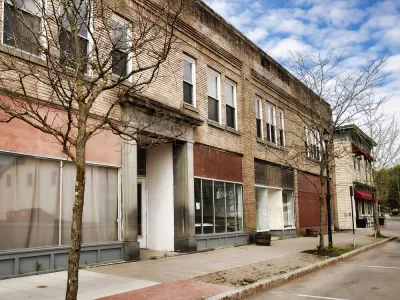
Andrew Flowers shares news of recent research by Indeed, a job posting website, that decribes the negative effects of the struggling retail market as particularly damaging in rural areas.
As far as retail jobs are concerned, the rural/urban split is stark. Retail job gains have lagged overall job growth in urban counties of large metropolitan areas, but such jobs are actually declining in rural counties and small metros. Retail jobs fell 1.1% year-over-year in rural America in the quarter ending in June 2017–even as these jobs were still growing nationwide.
On the other side of the retail coin, ecommerce and warehousing jobs are growing in most parts of the country. "What’s more, the boom in warehousing jobs is remarkably consistent in both rural and urban areas," according to Flowers.
Indeed isn't the only organization sounding alarms about retail employment. Flowers explains:
Similar research by the Federal Reserve Bank of New York confirms this picture. It showed that, between 2012 and 2016, department store jobs, a subset of all retail jobs, dropped in about 75% of counties studied. Meanwhile, a majority of those counties saw growth in ecommerce, that is, nonstore jobs. Combining department store and nonstore retailers, net jobs fell in about 80 percent of counties.
FULL STORY: Retail Jobs Decline Hits Rural America Hardest


Retail Apocalypse Blazes New Trails
The demise of a beloved outdoors gear chain in Southern California suggests that no store is safe in America's high-priced cities.
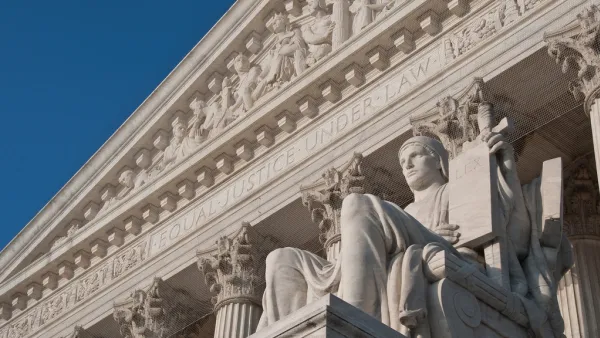
Did the Supreme Court End the 'Retail Apocalypse'?
The decision in South Dakota v. Wayfair certainly didn't hurt traditional retailers, but they're still going to have to help themselves in the face of competition from online retail.
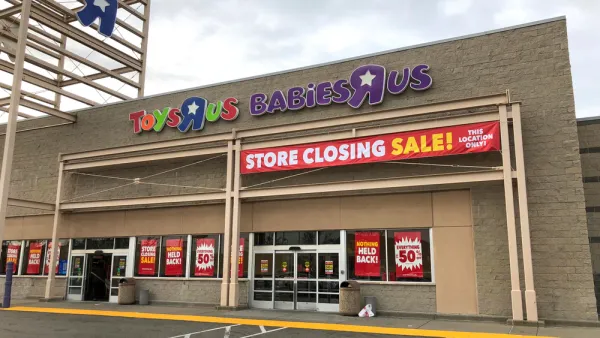
No More Toys R Us, Kids
Toys R Us will shut down all its remaining stores in the final blow of a process that began with bankruptcy filing in September 2017.

Planetizen Federal Action Tracker
A weekly monitor of how Trump’s orders and actions are impacting planners and planning in America.

The state-sanctioned urbicide of Austin
People don’t kill cities. Freeways do.

US to reduce Colorado River water deliveries to Mexico
A new Colorado Treaty amendment reduces Mexico’s Colorado River water allocation by 250,000 acre feet.

5 New England states march closer to 800 megawatt wind energy project
Securing federal approval for the project may be complicated under the Trump administration, which has historically been hostile towards domestic wind power.

Baltimore to break ground on $50 million Transit Priority Project
The project will bring faster bus trips, safer streets and better bike connections to Baltimore.

Airbnb launches $250 million 'last-dollar financing' housing accelerator, makes first investment in Austin
The company will put $6.4 million towards affordable housing development in Texas’ capital.

FREE Course: Walkable City 1: Why Walkability?
After describing his path towards focusing on walkability as the essence of good planning, Jeff Speck marches through his five principal reasons for making more walkable places.
Reinventing Malls: Planning Alchemy—Turning Gray Fields Into Gold
The course focuses on the opportunities and imperatives that shape reinvention of mall sites.

Eagle County Government
Harvard University Graduate School of Design
Nashville Planning Department
The Architects Foundation
University of Cincinnati Online
The Pocatello Development Authority
The Urban Renewal Agency of the City of Pocatello
Journal of the American Planning Association