Universities in the Vancouver area and across Canada are developing housing and investing in amenities, and getting a return on investment that helps the bottom line


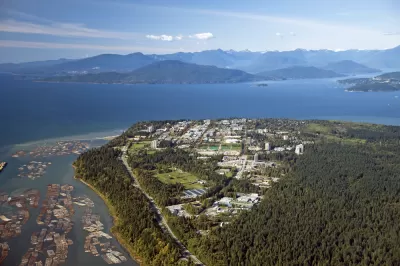
The University of British Columbia and Simon Fraser University are developing real estate, creating housing and amenities. This not only provides much-needed housing options for students, but provides additional revenue for the schools.
Starting in the 1980s, the University of British Columbia began developing housing. Its program continues on, with projects that include ground floor retail and grocery stores. Simon Fraser University expects to some day have 10,000 students living in its UniverCity development.
Elsewhere in Canada, the University of Guelph in Toronto and the University of Calgary are following suit. Generally, universities are held to a higher standard and expected to be civically more responsible, have better design principles, preserve natural spaces and overall contribute to the community more than typical developments.
Read the full story: Universities as Real-Estate Developers
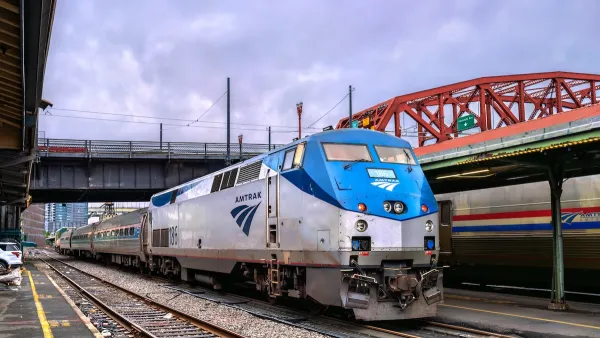
Transit leaders progress high-speed rail from Portland to Vancouver, B.C.
Washington state officials may reveal feasible routes for the high-speed rail in late 2027.

Budget constraints threaten light rail for Oregon, Washington’s new bridge
The current proposal includes only the infrastructure for the light rail, without funding for the train and tracks.
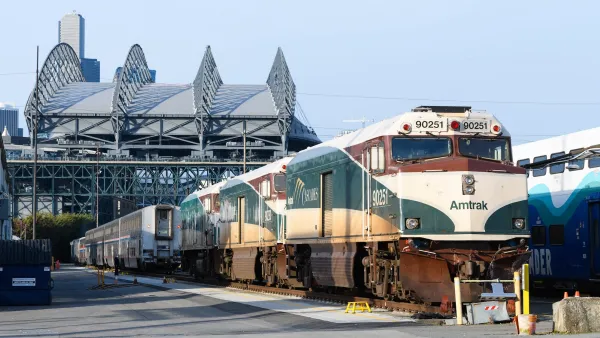
Amtrak opens border preclearance facility for travelers entering US from Vancouver
The first-of-its-kind facility streamlines the border crossing experience, eliminating long waits.

Planetizen Federal Action Tracker
A weekly monitor of how Trump’s orders and actions are impacting planners and planning in America.

California plans to bury El Niño’s downpour
If the state plays its cards right, it may be able to store a billion acre-feet of El Niño’s water in aquifers.

Desperate measures: Advocates weigh draining Lake Powell to fill Colorado River
Draining the reservoir could reduce evaporation losses by a couple hundred thousand acre-feet.

Mamdani’s pied-à-terre tax survives legal challenge
A panel of judges found that the plaintiffs failed to demonstrate injury as a result of New York City's implementation of the tax.

Eastern Nebraska is running out of electricity
Data centers and electrification are straining eastern Nebraska’s grid, throttling economic development.

Seattle passes record-breaking transit services expansion
Proposition 1 will double the city’s transit tax to add 95,000 more bus trips and preserve 180,000 bus trips annually.

FREE Course: Walkable City 1: Why Walkability?
After describing his path towards focusing on walkability as the essence of good planning, Jeff Speck marches through his five principal reasons for making more walkable places.
Reinventing Malls: Planning Alchemy—Turning Gray Fields Into Gold
The course focuses on the opportunities and imperatives that shape reinvention of mall sites.

City of Rosemead
Rutgers University, Edward J. Bloustein School of Planning and Public Policy
One Hundred Miles
University of Michigan School for Environment and Sustainability (SEAS)
Hunter College, City University of New York (CUNY)
The Architects Foundation
City of Cambridge
Montrose County
The Pocatello Development Authority