The city of Pittsburgh's Open Data project recently released a progress report to commemorate its first two years in operation.



Celebrating two years of open data in the Pittsburgh region and one year since the launch of the Burgh’s Eye View mobile web application (covered by Planetizen in July 2017), "the city’s Digital Services Team released an open data progress report, detailing its accomplishments and efforts to make its data an accessible public asset," report Sanjana Dayananda and Robert Burack.
According to Dayananda and Burack, Pittsburgh has been a national leader in open data since the beginning of the Peduto Administration. The city of Pittsburgh partnered with Allegheny County and the University of Pittsburgh to create the Western Pennsylvania Regional Data Center (WPRDC)—"the country’s first truly regional open data platform."
According to the article, the progress report focuses on user stories in the hoes of demonstrating the usefulness of open data to spur adoption in new communities. For instance, the article details the open data applications that the University of Pittsburgh School of Public Health has employed in fighting the opioid epidemic, as well as the open data used by the city of Pittsburgh in crafting new neighborhood plans in neighborhoods like Homewood and Hazelwood.
Read the full story: Two Years of Open Data in Pittsburgh

Allegheny County Charts 2024 Transportation Priorities
The region will see expansions in air travel options, Amtrak improvements, and a redesigned bus system to better serve post-pandemic needs.

Pennsylvania Law Removes Obstacles to Blight Reduction
“We don’t need every old coal miner’s house” to stay standing, says Sen. David Argall (R-Schuylkill).
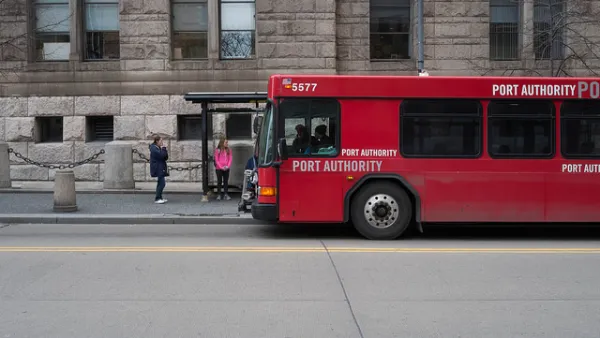
Systemwide Evaluation of Bus Stops Underway in the Pittsburgh Region
The Port Authority of Allegheny County is evaluating how to make improvements at

Desperate measures: Advocates weigh draining Lake Powell to fill Colorado River
Draining the reservoir could reduce evaporation losses by a couple hundred thousand acre-feet.

Eastern Nebraska is running out of electricity
Data centers and electrification are straining eastern Nebraska’s grid, throttling economic development.
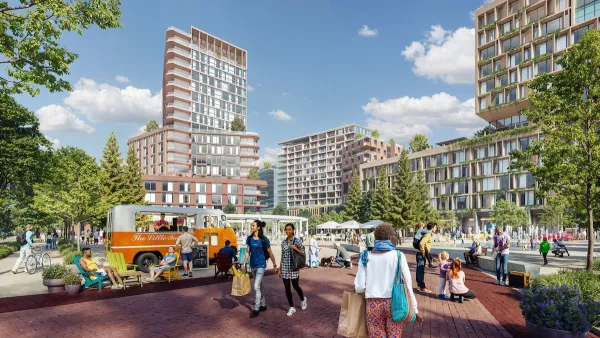
Malls are becoming the midtowns of the future
Mall and office park redevelopments are a generational opportunity to create new nodes of urbanity.

NYC breaks ground on anti-flooding infrastructure project
New York City's new system will reduce stormwater flows to local sewers by 90%.

One Kentucky town’s secret to affordable housing
The Smoketown Community Land Trust has already built seven affordable homes for community members.

Houston gains petal-shaped cooling infrastructure to make streets more ‘delightful’
The city has installed the pavilions along 15 blocks in Houston.

FREE Course: Walkable City 1: Why Walkability?
After describing his path towards focusing on walkability as the essence of good planning, Jeff Speck marches through his five principal reasons for making more walkable places.
Reinventing Malls: Planning Alchemy—Turning Gray Fields Into Gold
The course focuses on the opportunities and imperatives that shape reinvention of mall sites.

City of Rosemead
Rutgers University, Edward J. Bloustein School of Planning and Public Policy
One Hundred Miles
University of Michigan School for Environment and Sustainability (SEAS)
Hunter College, City University of New York (CUNY)
The Architects Foundation
City of Cambridge
Montrose County
The Pocatello Development Authority