Metro Transit's decision to use light rail service for Super Bowl ticket holders rankles some who will be forced to take the bus


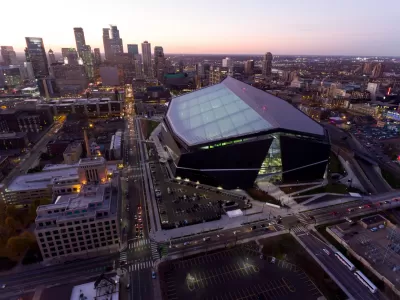
Metro Transit, the regional transit agency in Minneapolis/Saint Paul, is offering express light rail service to ticket holders on Super Bowl Sunday. Ticket holders who buy a $30 "game day" pass will get a nonstop ride from a security screening area directly to U.S. Bank Stadium for the game. Both light rail lines, the Blue Line and Green Line, will offer this service.
Members of the general public looking to ride the Blue Line and Green Line will be offered substitute bus service. This doesn't sit well with some riders and transit advocates in the Twin Cities. Saint Paul resident Nate Hood was quoted in the article:
“It’s creating two tiers of people: Those who can afford expensive Super Bowl tickets, and those who cannot,” said Nate Hood, a Saint Paul resident and Metro Transit user.
The primary rationale for the altered service seems to be that both light rail lines pass within the security perimeter around U.S. Bank Stadium. A similar situation occurred during the 2016 Super Bowl in Santa Clara, California, but the SCVTA was able to maintain regular train service during that time as well.
Read the full story: General Public Won’t Be Allowed to Ride Parts of Light Rail System on Super Bowl Sunday

Two Years In, a Look at the Twin Cities Fare Discount Program
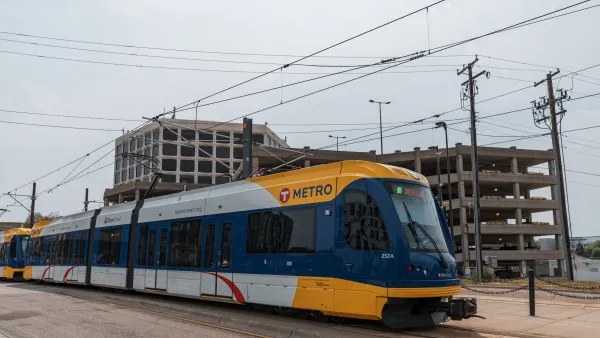
In 2017, Metro Transit in the Twin Cities raised fares but also started a program for low-income riders to help ease the burden of travel costs.
2017 Twin Cities Rail Ridership Up
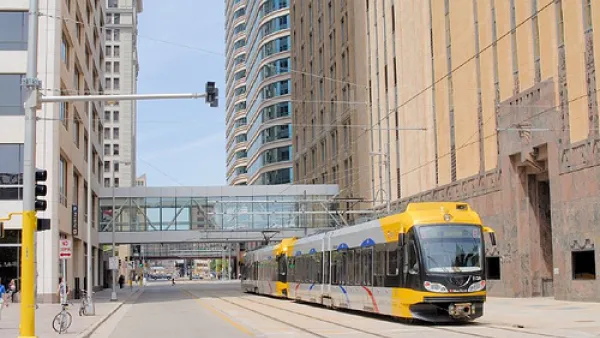
Light rail ridership increased in 2017 in Minneapolis and St. Paul, despite a decline in bus ridership.
Super Bowl Will Highlight Stadium's Surrounding Urban Development
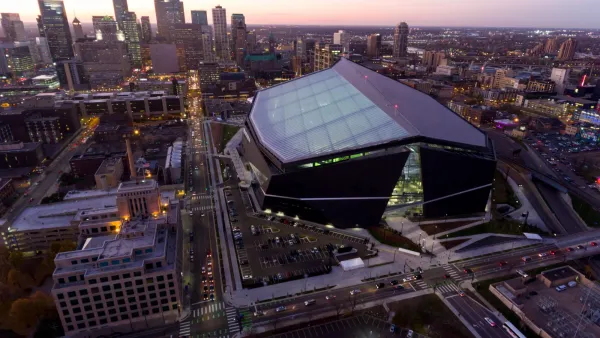
Urbanists and planners might consider looking at the development outside U.S. Bank Stadium in Minneapolis on Super Bowl Sunday. Gone are the vast parking lots surrounding the Metrodome, replaced with mixed use and a popular park, the Commons.

Planetizen Federal Action Tracker
A weekly monitor of how Trump’s orders and actions are impacting planners and planning in America.

California plans to bury El Niño’s downpour
If the state plays its cards right, it may be able to store a billion acre-feet of El Niño’s water in aquifers.

Chicago breaks ground on $3 billion megadevelopment
The new neighborhood, titled Foundry Park, will one day host 3,700 residences.

California High-Speed Rail Authority CEO resigns after $600,000 scandal
Under Ian Choudri, the authority used taxpayer dollars to fund first class flights and trips to nightclubs.

Want to study the Missouri River? Soon, you may need unanimous approval from 10 states
Legislation would require 10 governors’ permission to study or build projects moving water outside the basin.

Desperate measures: Advocates weigh draining Lake Powell to fill Colorado River
Draining the reservoir could reduce evaporation losses by a couple hundred thousand acre-feet.

FREE Course: Walkable City 1: Why Walkability?
After describing his path towards focusing on walkability as the essence of good planning, Jeff Speck marches through his five principal reasons for making more walkable places.
Reinventing Malls: Planning Alchemy—Turning Gray Fields Into Gold
The course focuses on the opportunities and imperatives that shape reinvention of mall sites.

City of Rosemead
Rutgers University, Edward J. Bloustein School of Planning and Public Policy
One Hundred Miles
Hunter College, City University of New York (CUNY)
The Architects Foundation
University of Cincinnati Online
City of Cambridge
Montrose County
The Pocatello Development Authority