Voters around the country will go to the ballot box tomorrow to consider transportation- and infrastructure-related measures.


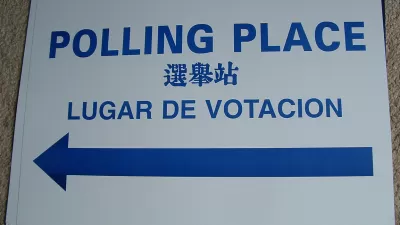
Robert Puentes surveys ballots from around the country for specific measures to watch closely tomorrow as results come in, and tries to located some larger trends about the state of infrastructure politics in a complicated and contentious era. "While is it not always easy to draw conclusions from these ballot box questions given their diversity, one thing is clear: Discussions about raising money and investing in transportation and infrastructure in Washington, D.C. are very different from what is happening in cities, states and metropolitan areas around the country," writes Puentes.
Puentes also notes that 2017 is an "off year" compared to last year's massive amount of infrastructure-related ballot measures approved by voters alongside an historic presidential election, but there are still plenty of ballot measures of interest. In addition to "routine proposals" in Athens-Clarke County, Georgia; Bath, Maine; and Chikaming, Michigan, Puentes notes a few "unique measures" in Kansas City, Dallas, and Denver.
Check back in later this week for a summary of the results of all these elections.
Read the full story: Infrastructure Is a Big Ballot Issue

Voters Approved $30 Billion for Transportation This Election
Nationwide, voters approved nearly 70 percent of transportation ballot measures on the ballot.
Colorado Voters OK New Toll Lanes on Interstate 25 by Passing Two Measures
Colorado Springs and El Paso County voters agreed to add the highway widening to a list of projects that a regional transportation authority can fund. They passed an additional funding measure enabling county funds to be spent rather than refunded.

Behind the Popularity of Transportation Tax Increases
Transportation ballot measures are popular this November: over 70 populate ballots across the country. In California and elsewhere, they supplement declining federal and state funds for local infrastructure.

Planetizen Federal Action Tracker
A weekly monitor of how Trump’s orders and actions are impacting planners and planning in America.

Amtrak, CN end decades-long dispute with eight-year agreement
The new operating agreement establishes an updated framework for the companies to work together, including processes to resolve disputes.

Judges permit Denver to divert 77,000 acre feet from the Colorado River for reservoir expansion
Overuse and climate change have caused the Colorado River’s water levels to plummet.

NYC DOT wants faster, more permanent street upgrades
The city is examining ways to build more concrete infrastructure without getting entangled in 'decades-long' projects.

'Something we’ve never seen before:' rising utility rates could strain city finances nationwide
Data centers, climate change and other factors have caused utility rates in the United States to increase by 38% since 2020.

Trump to overrule local leaders, lease millions of acres of America’s Pacific Island territories’ seafloors to mining companies
International law says that the Indigenous people of America’s territories have a right to prior and informed consent regarding projects that impact their countries.

FREE Course: Walkable City 1: Why Walkability?
After describing his path towards focusing on walkability as the essence of good planning, Jeff Speck marches through his five principal reasons for making more walkable places.
Reinventing Malls: Planning Alchemy—Turning Gray Fields Into Gold
The course focuses on the opportunities and imperatives that shape reinvention of mall sites.

Harvard University Graduate School of Design
KFH Group Inc.
Greater Baltimore Committee
The Architects Foundation
University of Cincinnati Online
The Pocatello Development Authority
The Urban Renewal Agency of the City of Pocatello