Now open for public comment, a proposed rewrite to the county's zoning code embraces green buildings, lower parking minimums, and increased public engagement by developers.



Taking a favorable view toward the Maryland county's proposed zoning ordinance, "The current zoning ordinance is more than 50 years old [...] In the past several decades, piecemeal updates and amendments to the code have been made to address specific issues or specific areas. The result is a 1,200-page, overly complex code with varying processes, inconsistent standards, regulations within regulations, and a non-intuitive structure."
The new code would require increased attention to green building standards. It would also reduce parking minimums, and even eliminate them for projects next to Metrorail stations.
Another stipulation "would require developers of large projects to meet with members of the public and inform them of their development plans even before an application is submitted to the Planning Department."
"The proposed ordinance is still a draft and has not yet been adopted by the County Council, nor endorsed by the Prince George's County Planning Board. Both the Council and the Prince George's County Planning Department are soliciting comments and suggestions from the public until mid-December."
Read the full story: Prince George’s zoning code rewrite could make the county greener and less car-dependent

No More Parking Minimums in Hartford
Earlier this month, the Hartford Planning and Zoning Commission voted unanimously on a revised zoning code that lets builders forgo parking citywide.
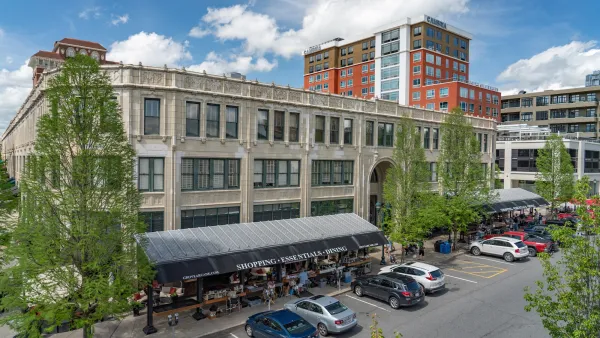
Asheville Could Eliminate Parking Minimums
The city is working on a multiyear overhaul of its Unified Development Ordinance.

Spokane Could Eliminate Parking Minimums Near Transit
A Washington state proposal to reduce parking minimums failed in the state legislature earlier this year.

Planetizen Federal Action Tracker
A weekly monitor of how Trump’s orders and actions are impacting planners and planning in America.

California plans to bury El Niño’s downpour
If the state plays its cards right, it may be able to store a billion acre-feet of El Niño’s water in aquifers.

Desperate measures: Advocates weigh draining Lake Powell to fill Colorado River
Draining the reservoir could reduce evaporation losses by a couple hundred thousand acre-feet.

Housing is the top priority of Seattle’s sole new councilmember
Jenks campaigned on building 1,000 new units of affordable housing.

New tax cuts may slash $1.5 billion in funding for Miami transit, public parks
Amendment 3 will save Miami-Dade homeowners $2,700 in 2028.

Arizona, Wisconsin, Pennsylvania hope to finally advance climate goals post-midterms
The three states have spent years under Republican or divided control.

FREE Course: Walkable City 1: Why Walkability?
After describing his path towards focusing on walkability as the essence of good planning, Jeff Speck marches through his five principal reasons for making more walkable places.
Reinventing Malls: Planning Alchemy—Turning Gray Fields Into Gold
The course focuses on the opportunities and imperatives that shape reinvention of mall sites.

City of Rosemead
Rutgers University, Edward J. Bloustein School of Planning and Public Policy
One Hundred Miles
University of Michigan School for Environment and Sustainability (SEAS)
Hunter College, City University of New York (CUNY)
The Architects Foundation
City of Cambridge
Montrose County
The Pocatello Development Authority