A new series from the Chicago Tribune explores the Midwest's complicated relationship with Lake Michigan.



The Chicago Tribune has published an in-depth series of reports on Lake Michigan, more specifically, who uses the water from Lake Michigan.
To supplement the two other articles in the series, Jemal R. Brinson , Kori Rumore, and Cecilia Reyes have written a companion posts that centers on a large interactive map of the lake, which shows some of the largest kinds of users drawing from the lake, in addition to the terrain of the lake bottom and the land surrounding the lake.
"Along the more than 1,600 miles of shoreline are power plants, factories, museums, parks and much more," explains the article. "Some manufacturers and utilities set up near the lake because the resource is so central to what they do, whether it’s a power plant that uses water to cool components or a brewery that uses water as part of its beermaking."
The other two articles in the series are titled "Same lake, unequal rates" and "Residents pay for billions lost."
FULL STORY: Who Uses the Lake?

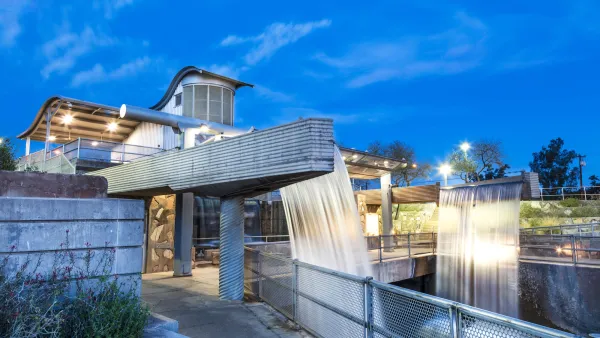
Phoenix and Tucson create emergency water reserve, anticipating Colorado River cuts
The Secure Water Arizona Program will allow participating cities to use a reserve of water or make agreements to buy it from other jurisdictions.

Colorado River States Fail to Strike Deal After ‘Historic Meeting’
The Colorado Basin states have until February 14 to agree on new water conservation measures.
Planning Trends for 2026: States and Cities Take Initiative, Passenger Rail Gains Steam, and the Costs of AI Revealed
With federal funding for everything from transportation projects to housing assistance under threat, city and state governments are poised to take a stronger role in building strong, resilient local economies and public services.

The state-sanctioned urbicide of Austin
People don’t kill cities. Freeways do.

US to reduce Colorado River water deliveries to Mexico
A new Colorado Treaty amendment reduces Mexico’s Colorado River water allocation by 250,000 acre feet.

New Jersey’s second-largest city bans standalone data centers
Jersey City will continue to allow co-location facilities, such as those meant for research institutions that store their own data.

Amtrak not solely to blame for New Jersey commuter rail's unreliability, report finds
A new study from the Garden State Initiative found that NJ Transit’s budget grew 20% across a 4 year period, but reliability declined significantly over the same period.

EPA erases limits on planet-warming pollution from power plants
Under Monday’s plan, power plants would still have some limits on how much mercury, arsenic and other contaminants they can emit.

Phoenix announces new on-demand transit service, more frequent RAPID buses
Both new services will launch in October, and are part of Phoenix's Project Effective Access Solutions for Easing Congestion.

FREE Course: Walkable City 1: Why Walkability?
After describing his path towards focusing on walkability as the essence of good planning, Jeff Speck marches through his five principal reasons for making more walkable places.
Reinventing Malls: Planning Alchemy—Turning Gray Fields Into Gold
The course focuses on the opportunities and imperatives that shape reinvention of mall sites.

Eagle County Government
Harvard University Graduate School of Design
Nashville Planning Department
The Architects Foundation
University of Cincinnati Online
The Pocatello Development Authority
The Urban Renewal Agency of the City of Pocatello
Journal of the American Planning Association